
Send us a text with a question or thought on this episode ( We cannot replay from this link)
Pain that makes you faint is not “just periods,” and “just get pregnant” isn’t a plan—it’s a myth. We open the Endo Year Reflection series with a clear-eyed look back at the stories and science that reshape care for endometriosis and chronic pelvic pain. You’ll hear how harmful narratives spread, why they stick, and what actually helps when you’re stuck between dismissal and a diagnosis that takes too long to arrive.
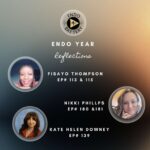
Fisayo’s journey lays bare how predictably timed fainting, ER visits, and back pain were waved away for years—even with a physician in the family. Naming endometriosis became a turning point, and her documentary Walking Through Walls transforms private suffering into public advocacy. Nikki’s path mirrors what so many endure: repeated ER trips, migraines tied to cycles, sports and school sacrificed, and well-meaning but wrong answers. Excision surgery changed her trajectory, but honest talk about fertility loss and the quiet grief of parenting through pain offers the validation many have been missing.
We also reflect on getting curious about the mechanics of cramps. Why do some cycles feel manageable while others become “death cramps”? With a nod to the GYRL lab’s research and Kate Helen Downey’s blend of humor and rigor from the podcast Cramped, we explore dysmenorrhea, prostaglandins, and why basic questions about menstrual pain still lack basic answers. Then we get practical: a holiday survival kit with meds, heating pads, safe snacks, and comfort items; travel pacing; and boundaries that protect your energy without apology. Stories matter, accuracy matters, and community matters—because none of us should navigate this alone.
Take one idea from this conversation and let it sit. If it helps, share this episode with someone who needs better information or a reminder that they aren’t imagining it. Subscribe, leave a review, and tell us the biggest myth you want gone for good.
Website endobattery.com
Year-End Reflection Series Kickoff
SPEAKER_02
0:00
With the Indo Year coming up, it's a perfect time to reflect on all the lessons, growth, and amazing guests we've had on Indobattery. But instead of one big recap, I'm breaking it into quick, bite-sized reflections multiple times a week. Let's revisit what inspired us, learn what we missed, and recharge together in our Endo Year Reflection series. Join me each episode as we look back. Welcome to Indobattery, where I share my journey with endometriosis and chronic illness while learning and growing along the way. This podcast is not a substitute for medical advice, but a supportive space to provide community and valuable information so you never have to face this journey alone. We embrace a range of perspectives that may not always align with our own, believing that open dialogue helps us grow and gain new tools. Join me as I share stories of strength, resilience, and hope. From personal experiences to expert insights.
Why Mythbusting Matters
SPEAKER_02
1:06
There are some episodes that feel important, and then there are those episodes that feel necessary. One of those is what I lovingly call Mythbusting 101. An episode that honestly, if I could rewrite podcast history, might have been the very first episode of Indobattery. Because it moves fast, it's direct, and it tackles the myths so many of us have been told, sometimes casually, sometimes repeatedly, and sometimes by people in positions of authority. Things like, this is normal, just get pregnant, we didn't see anything, it'll get better on its own. With the guidance of board certified patient advocates, I wanted to clearly lay out why so many of these statements are wrong and what the actual facts are. This episode exists as a resource, something you can share with someone who's early in their journey or someone who's been told these things for far too long. And this episode
Harmful Endo Myths Called Out
SPEAKER_02
2:05
exists because of stories like Vasaio Thompson's. She saw countless doctors, she had a hospital bed that was essentially all hers, and yet she was still dismissed, still not believed, still not helped.
SPEAKER_00
2:32
Like clockwork that it was two weeks before my period, and during my period, I'd always faint and I had to be taken to a hospital. And it progressed so much, it was like every two to three days I was in the hospital. It was clockwork. All the teachers' name. The teachers will say, Fisayo, wait, let me finish teaching before you faint. And I'd clean the building down. Everyone knew Fisayo had to come again, you know, and say, Come on, it's just periods, manage. No, I can't manage. My back is killing me. And in I think in my culture, they say only pregnant women and elderly people have backaches. So why are you having backaches? But I didn't want to say it's not just the backache, it's my stomach, it's my pelvic, you know, I've got pelvic pain as well. Until my family doctor said, I realize you're always here on your period. And two weeks before your period, I said yes. He said, Do you have
Fisayo’s Journey From Dismissal
SPEAKER_00
3:25
tummy aches? I said, Yes, I have really bad pain, especially during my period. And he just said, and that was the end of that conversation. And he didn't say anything. You know, he checked, check here, check there, you know, physical exam, and that'd be the end of it. I had a permanent bed in the hospital. There was a bed that wasn't given to any other patients because I was constantly in the hospital, two, three days in the hospital. It was that bad throughout secondary school.
SPEAKER_02
3:52
What makes Vasyo's story even more striking is that her husband is a physician, and even then, he had to fight again and again for her care.
SPEAKER_00
4:02
I remember being in so much pain, and he's reading for his exams, and I'd say, open, can you read through your book and see if you can find what is wrong with me, you know? And he says, Something is at the back of my mind, like, I don't know what it is, but something is almost clicking, but not clicking. I don't know what it is. And when when I finally heard the word endometriosis, I remember driving back home. If I I just had to pack and I called him and I said, Dear, have you ever heard of endometriosis? The doctor said I don't have it, but that's the probably the only last thing. And he said, Oh my goodness, endometriosis, oh yeah, it fits the pill. And I said, What? Are you serious? You know what endometriosis is? He said, Yes, they just mentioned it once in medical school. They teach them about hundreds of thousands of diseases and conditions. And this was just it was an elective class, so you didn't have to attend. And it was just mentioned as a rare disease.
SPEAKER_02
5:05
One of the myths we hear so often is that you can't get pregnant with endometriosis, or that pregnancy somehow cures it. Vasio has three daughters. She didn't struggle with fertility, and yet her endometriosis was severe. She went years without
Naming Endometriosis At Last
SPEAKER_02
5:22
diagnosis, allowing this disease to quietly ravage her body. She turned that pain into advocacy by creating the documentary Walking Through Walls. A raw, heartbreaking look at her life, her family, and the dreams this disease tried to take. Despite everything, Fasayo still has joy. She still laughs, she still shows up. And as she so beautifully shared, while this disease can take so much, it can also give. And I am incredibly grateful for the friendship that I have with Fasayo. Her story is branded in my heart. Another story that deserves its own space is Nikki Phillips, shared across episodes 180 and 181. Nikki and I met because of this podcast. She was a listener first, and over time she became a dear friend. Her journey reflects what so many people experience years of delated diagnosis while living with PCOS, adenomiosis, and endometriosis, and more. She brought up her symptoms again and again, had terrible periods from a young age, along with migraines, fainting, vomiting, symptoms that were repeatedly dismissed or viewed in isolation instead of as part of a bigger picture.
SPEAKER_03
6:36
I remember I passed out in church on Easter Sunday. I was on my period and it was super painful. And I stood up and I didn't feel well
Pregnancy Myths And Reality
SPEAKER_03
6:45
and I fell down and hit my head on a pew and they had to take me out in an ambulance because I kept passing out and I get to the ER and they're like, oh, this just happens. It's called some vasalvagal reaction. I don't even know if I'm pronouncing that right, but just this happens to young women and you'll outgrow it and you'll be fine. And it did. It happened repeatedly throughout up until I was in college, maybe even grad school. And I just kind of would deal with it. But by that point, I had given up some things like volleyball. I was an avid volleyball player through middle school. And so by my sophomore year in high school, I just felt like I couldn't keep up with the conditioning. I switched over to other things and just made it work. I would always have to take lots of painkillers. I'd miss school occasionally, but I didn't think anything of it.
SPEAKER_02
7:24
She heard all the familiar lines. Just get pregnant. We don't see anything. This is normal. Eventually, Nikki had excision surgery and is doing much better, but so much of her journey could have looked different had she been believed sooner. She also courageously shared her fertility journey. The repeated loss, the heartbreak, and the things that were said to her during one of the most vulnerable seasons in her life. Things that were shocking
Nikki’s Story Of Delayed Care
SPEAKER_02
7:52
and yet painfully familiar to too many in this community. One of the most honest and necessary parts of this conversation was about parenting with endometriosis. And I want to say this clearly. But parenting while living with chronic illness is not what many of us imagined it would be.
SPEAKER_03
8:15
I used to, I used to be a teacher, and then I had my son, and then I had my daughter. And when my son was in kindergarten, I decided to switch to homeschool. But I thought, okay, I can homeschool. And I'll never forget the first year I was doing it. I could sit with both the heating pads and all the pain medicine and not be like judged the way I was, maybe with my students wondering. I should want to hide it from my son. And I do remember one of my students going back in the day when I was a teacher, this happens to you every month. Are you okay? Like even the students picked up on it. But I remember thinking, okay, I can get I can do this in homeschool. I can tough it out. But it got to a point where there were days where I'd have migraines. That was another symptom I started to have in the last five years. Migraines that were very tied to my cycle and would just take me out for an entire day. And so I would have a migraine and it would start to come and I would try to like push through and do school and take care of my daughter and work and do things, you know. And I remember my son coming over and being like, No, you have another headache. So I would tell him, Mom has a headache, and he'd say, Oh no. And he would get hit, put the blanket on me and tuck me in and then get his iPad and then just wander. Oh, like he knew it was time to play on the iPad. And he, of course, he felt sorry for me, but to him, it was like, oh,
Loss, Fertility, And Unseen Grief
SPEAKER_03
9:21
I get hours of uninterrupted screen time and I just was surviving, you know? And the fatigue, like when I would have those those hours of just pain where I couldn't get out of bed. Like, and it, I don't, I look back and like, I don't even know how I did it, or if it just got worse over the years by the time I was homeschooling, like trying to parent, trying to just be there for my kids.
SPEAKER_02
9:41
There is love and there is grief, and often they exist at the same time. Nikki and I spoke openly about what it means to parent through pain, exhaustion, and limitations, and how rarely that grief is acknowledged. Beyond her story, Nikki has made a profound impact on my life. She inspires me, she challenges me, she shows up for this community with honesty and heart, and she has become one of the biggest cheerleaders behind this podcast. I am deeply grateful for her. Another voice that inspired me this year was Kate Helen Downey. In episode 139, we talked about periods, why they're so painful, why answers take so long, and why so many of us are left doing our own research.
SPEAKER_01
10:29
Trying to answer the question, what is actually hurting when I have cramps? Like what is what are the mechanics of this pain? And why do sometimes I get quote unquote regular cramps that are like unpleasant, uncomfortable, but not debilitating? And then sometimes I get what I call death cramps, which are excruciating, debilitating. They make me throw up, they make me pass out. And so what is something different actually physically happening? Or is it just regular cramps like turned up to a 15? You know, I had this question. Doctors couldn't
Parenting While In Chronic Pain
SPEAKER_01
11:08
answer it for me. Uh, so I went to a lab in Evanston, Illinois called the GYRL lab, uh, the gynecological research lab. And they are specifically studying dysmenorrhea, which is the medical term for uh severe period pain. And they're doing things that I thought were like very basic research questions that you would think at this point in 2025 have been answered, had been answered in the 60s or 70s. Right. But they haven't.
SPEAKER_02
11:41
Through her podcast, Cramped, Kate brings humor, curiosity, and compassion into conversations that deeply need all three. I love connecting with other podcast hosts because there is something incredibly validating about sitting across from someone who gets it, who asks the questions that no one taught us how to ask, and who wants to make things better for the next person. What these episodes reminded me is this stories matter, accuracy matters, and community matters. This podcast exists because misinformation still harms people, because dismissal still happens, and because none of us should have to navigate this alone. If you take anything from these conversations, I hope it's this. You're not imagining it, you're not weak for needing help, and even in the hardest stories, there is still room for connection, meeting, and yes, joy. Sometimes that's enough to keep us going. Oh, and here's what you can put into your holiday survival guide. Bring your own survival kit, meds, heating packs, safe snacks, emotional support items. Because going around traveling and being in places that aren't your home can be challenging. It's okay to be prepared and not feel bad for doing that. Don't let anyone stop you from doing what's
What’s Actually Hurting During Cramps
SPEAKER_02
13:05
best for you. As we wrap up this reflection, I'm always struck by just how much learning lives inside these conversations. Looking back, it's not just about the information. It's what continued to inspire me, challenge me, and sometimes gently nudge me to see things a little differently. My hope is that something you heard today sparked a moment of recognition, curiosity, or even a quiet, huh, that makes sense now. So here's what I'm gonna challenge you with. Take one idea from this episode, just one, and let it sit with you. You don't have to fix anything, change anything, or suddenly become a brand new person by Monday. Growth counts even when it happens in sweatpants. Be gentle with yourself. Honor how far you've come this year, and remember, you're allowed to learn, unlearn, rest, and repeat. Thank you for reflecting with me. Continue being curious until next time. Continue advocating for you and for others.