
Send us a text with a question or thought on this episode ( We cannot replay from this link)
What if the most compassionate choice you make this season is the quiet one—leaving early, resting without apology, or finally asking for the support your body has needed all along? This reflective chapter pulls together the most resonant insights from recent conversations on grief, hormones, and the everyday work of living with endometriosis and chronic illness.
We look back into how grief moves in spirals, not straight lines, and how perfectionism can turn pain into a private contest no one wins. Through a trauma lens, we unpack avoidance, intrusive thoughts, and the family stories that shape how we carry stress. Then we shift into the hormonal landscape: the messy, human reality of perimenopause, surgical menopause, hypermobility, and endo—plus how progesterone and estrogen changes can drive anxiety, sleep loss, hot flashes, joint pain, and brain fog. Clear, practical takeaways emerge around HRT basics and why local therapy matters: vaginal estrogen and DHEA can restore tissue health, reduce pain with sex, calm urinary symptoms, and support sexual function in ways systemic hormones alone can’t.
We also name a hard truth: the research gap in women’s health has left too many of us feeling confused and blamed. Reframing testosterone as a human hormone, not a male-only one, opens space for better care and better questions. Across these threads, one message holds: you’re not broken for needing help. Choose one next step—book that appointment, try local support, track symptoms for patterns, or give yourself permission to leave the party early. Subscribe for more honest, practical conversations, share this with someone who needs it today, and leave a review to help others find their way here. What’s the one idea you’ll let sit with you this week?
Website endobattery.com
Year-End Reflections Begin
SPEAKER_01
0:00
With the Indo Year coming up, it's a perfect time to reflect on all the lessons, growth, and amazing guests we've had on Endobattery. But instead of one big recap, I'm breaking it into quick, bite-sized reflections multiple times a week. Let's revisit what inspired us, learn what we missed, and recharge together in our Endo Year Reflection series. Join me each episode as we look back.
Mission And Community Context
SPEAKER_01
0:27
Welcome to Indobattery, where I share my journey with endometriosis and chronic illness while learning and growing along the way. This podcast is not a substitute for medical advice, but a supportive space to provide community and valuable information so you never have to face this journey alone. We embrace a range of perspectives that may not always align with our own, believing that open dialogue helps us grow and gain new tools. Join me as I share stories of strength, resilience, and hope. From personal experiences to expert insights. Some episodes teach you something new, and some episodes arrive exactly when you need them, whether you realize it at the time or
Grief, Generations, And Perfectionism
SPEAKER_01
1:15
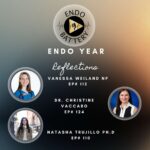
not. Episode 111 was one of those moments for me. I had the honor of sitting down with Dr. Natasha Traheel, a fellow Wyoming native and doctor of psychology. And this conversation hit me right where it counts. I actually first encountered her work last Christmas. I remember driving out to look for Christmas trees and Laramie, listening to her book in the car, and silently wiping away my tears as I looked out the window. And here's the irony. She talks about generational experiences and how they shape the way we grieve. And there I was, in deep grief myself. Because we do grieve chronic illness. And that grief isn't linear. It doesn't follow a timeline, and it certainly doesn't care what month it is, though December tends to be especially hard for me. Dr. Trujillo spoke about how to honor your grief journey, how perfectionism becomes entangled with loss and self-worth, and how family history shapes the way we carry chronic stress and illness. And as I listened, I saw myself in so many of those words. Something you said in your book, and I'm probably paraphrasing this, is that you talked about hating your body for what it couldn't do, often lied about the pain you were in and finding ways to punish your body without showing others that you were human.
SPEAKER_03
2:33
Yes. One, you had mentioned perfectionism earlier. And I mean, there's an entire chapter on the book about perfectionism because I feel like there's so much grief and loss inherent in perfectionism. And that's not often a connection that people make. But I think that adds to this too, because as a as people who struggle with perfectionism, it's like, okay, but I'm the exception. So yeah, I can say all these things and uh everyone else should do this, but I have to figure out a different way, or I have to, you know, be successful without doing A, B, C, and D. That makes me more perfect, or I don't need, you know, I don't need X, Y, and Z. So I think that can make it very, very complicated. And then again, that sense of what are we in control over and what are we not in
Trauma Lenses And Intrusive Thoughts
SPEAKER_03
3:15
control over? That can make the relationship that we have with ourselves very, very complex and very complicated. And of course, grief is interwoven with all of us. Give yourself permission to explore and to kind of consider it. Uh, from a trauma lens, I often think about avoidance. How much does an experience that you have had in your life make you hesitate or make you push things aside or make you fearful of things in a way where, you know, you'll take a take a route that's a little longer. Yeah. You'll do something to truly not have to confront something. And I think that awareness is oftentimes something where it's like, yeah, there's there's something here. I also think another huge sign is just intrusive thoughts. You know, how often do you, as much as you want to push it aside, does it always seem to find its way back? So I'll see this a lot with people who will tell me, I just think about a flare-up happening all the time, and I can't stop thinking about, you know, what this doctor said to me or what this doctor didn't say to me, or, you know, this experience in the lab or when I was getting imaging or whatever it may be. So I think that in those intrusive thoughts that come up when you're not expecting it, when you when they aren't wanted, and if you have a really hard time working through it, that is also a huge indication.
Full-Circle Wyoming Connection
SPEAKER_01
4:32
What made this episode even more surreal is that she's from Laramie, Wyoming. And as I was listening to her book, I was literally driving through Laramie. She mentioned landmarks I could see out my window. I felt like one of those full circle moments where life gently taps you on the shoulders and says, pay attention. We connected before and after the episode about growing up in small towns and shared experiences that came with that and how those roots shaped us far beyond grief or chronic illness. There was something deeply healing about that connection. This episode met me in a season where I was struggling and it helped me realize I had some work to do, but I didn't have to do it alone. If you haven't read her book and she was never the same, I truly believe it can change the way you understand grief and the way you see yourself inside of it, especially when chronic illness is part of that story.
Hormones, Hypermobility, And Menopause
SPEAKER_01
5:31
Episode 112 took me into a very different but equally important conversation. As I sat down with Vanessa Whelan, this episode came at a time when I was really beginning to explore the role of hypermobility and hormones. Vanessa has a unique understanding of the intersection between hormones, hypermobility, and endometriosis. And honestly, I needed this conversation more than I realized. We were both still learning, and I think that honesty mattered. As someone who's gone through surgical menopause, hearing her clearly lay out how hormones interact with endometriosis and how surgical menopause changes the landscape was incredibly grounding for me.
SPEAKER_02
6:13
So normally menopause is a clinical diagnosis, and we use periods to kind of help figure out where you are in the transition. So oftentimes early perimenopause, you're still having periods, but they get longer and closer together and heavier. And then later perimenopause is when they start to get more spread out. And then the definition of menopause is one year without a period at all. So obviously, all that is all out the window if you don't have a uterus. But all the other symptoms ought to be pretty similar. So a lot of people in that early perimenopause phase, the reason you're having heavier and longer periods is that you have less progesterone on board. And progesterone also can make you sleepy and calmer. You know, our progesterone is naturally highest when we're in that week before a period. You know, everyone likes talking about the luteal phase now,
Perimenopause Signs And HRT Basics
SPEAKER_02
7:03
you just chill out and be left alone. So when you're low on that, you can get anxious and have trouble sleeping. So if you start to notice that, that can be a sign of early perimenopause. And then in that middle perimenopause phase where your periods are getting spaced out, that means that you're starting to lose the estrogen. And so low estrogen symptoms are the stereotypical symptoms of menopause, hot flashes and night sweats and vaginal dryness. And some common things that are less well known are heart palpitations, itchy skin, itchy inside your ears, joint pain. Um, a lot of people notice brain, brain fog, and forgetfulness during this time. And those symptoms tend to basically ramp up to their most extreme.
SPEAKER_01
7:47
Now, I would be lying if I said this episode didn't come with its challenges. There were some tech issues, internet issues, those moments where you take a deep breath and remind yourself to, you know, stay calm. And through it all, Vanessa was professional, patient, and incredibly committed
Vaginal Estrogen And Quality Of Life
SPEAKER_01
8:07
to making sure this information got out. She spoke passionately about HRT, perimenopause, menopause, and how hormonal shifts don't just affect us individually, but ripple through our families, our relationships, and our daily lives. And then came episode 124 with Dr. Christine Vegaro, another powerhouse when it comes to hormones and quality of life. Dr. Vigaro brought such clarity to the conversation around hormones, the pain generators, and especially vaginal estrogen. And let's be honest, it's not always fun to talk about something you need, but don't necessarily love doing. She gave practical, realistic tips for using vaginal estrogen, different ways to approach it, and reassurance that yes, it can be messy, but it's also incredibly valuable.
SPEAKER_00
8:57
So I think sometimes or, you know, even a good doctor that talks about full body replacement might forget about local vaginal hormones, which are also really important. So full body hormones, even though they're called full body or systemic hormones, they're actually not enough to support the genitourinary systems. Because again, full body hormones are just getting
Research Gaps And Testosterone Truths
SPEAKER_00
9:20
a little bit of gas in the tank. We're not giving back the full amount that most women have. And so the genitals really suffer in that regard and generally need local support. So that's generally in the form of either vaginal estrogen, either creams, tablets, suppositories, there's vaginal rings, or through other suppositories like DHEA, which converts to estrogen testosterone in the cell level. So there's different ways that we can replace the hormones in the vagina, which protects against, you know, pain with sex, so dryness-related pain protects against overactive bladder like urgent urinary urgency, potentially leakage, it protects against recurrent UTIs, and again, changes in sexual function. So again, blood flow to the vulva, vagina, clitoris is really important to maintain a healthy sexual function. Again, all these places are really sensitive to a decline in hormones. Even if it's still a half a, you know, quarter gas in the tank, it's not enough for the genitals. So it's really important.
SPEAKER_01
10:20
What stood out to me most was her honesty about the lack of research in women's health and how that gap has led so many of us down confusing, frustrating paths.
SPEAKER_00
10:30
So testosterone, of course, the most data we have is in males. Again, testosterone
You’re Not Broken For Needing Support
SPEAKER_00
10:35
is not a male-only hormone. It's a human hormone. Women have more testosterone at all times in their life than estrogen. The only time where this may not be true is late in pregnancy when estrogen levels are really, really high. But other than that, we have more testosterone than estrogen, which I think is a revelation to some patients. It's a revelation to some doctors because, again, we just don't have good education on hormones in our medical education.
SPEAKER_01
11:01
She spoke thoughtfully about topical estrogen, testosterone, and why vaginal estrogen plays such a critical role in quality of life. What these episodes collectively reminded me is this: hormones matter, grief matters, and quality of life matters. We are not broken for needing support. We are not weak for asking questions, and we are certainly not alone in trying to understand bodies that don't always follow the rules. I walked away from these conversations, knowing I still had a lot to learn, but also knowing that there's a village behind me, experts, advocates, and fellow humans willing to sit at the table, share knowledge, and help us navigate the complicated, messy, very human experiences of living with chronic illness. And sometimes that's exactly what we need. Not all the answers, but just the reminder that we don't have to figure it out alone.
Holiday Tip: Leave Early
SPEAKER_01
11:57
And for your holiday gift today, I want to give you this tip for surviving this holiday season. You are allowed to leave early. Irish goodbye equals medical accommodation. Just so you know, you don't have to stick around just because you think you should. If you're not feeling good, it's okay to say thank you so much for having me. It is time for me to go and go rest. As we wrap up this reflection, I'm always struck by just how much learning lives inside these conversations. Looking
Gentle Challenge And Closing
SPEAKER_01
12:28
back, it's not just about the information. It's what continued to inspire me, challenge me, and sometimes gently nudge me to see things a little differently. My hope is that something you heard today sparked a moment of recognition, curiosity, or even a quiet, uh, whatever that makes sense now. So here's what I'm gonna challenge you with. Take one idea from this episode, just one, and let it sit with you. You don't have to fix anything, change anything, or suddenly become a brand new person by Monday. Growth counts even when it happens in sweatpants. Be gentle with yourself. Honor how far you've come this year, and remember, you're allowed to learn, unlearn, rest, and repeat. Thank you for reflecting with me. Continue being curious until next time. Continue advocating for you and for others.