
Send us a text with a question or thought on this episode ( We cannot replay from this link)
Start with a question that matters: What single idea would make your care feel lighter, clearer, and more doable this week? That’s the heart of our year-end reflection, where we revisit the formats that changed how we learn together—Quick Connect and Fast Charge—and the experts who made complex topics feel human. We swapped long lectures for focused Q&As, brought your toughest questions to clinicians and researchers, and kept the tone honest, hopeful, and grounded in real life.
We dig into surgical realities with excision: what improvement can look like, why outcomes vary, and how to plan recovery with informed hope instead of guarantees. We move to nutrition with practical, compassionate steps—eating enough, prioritizing protein, and using colorful produce in ways your gut can handle—without guilt or rigid rules. Then we zoom out to the science with a clear look at liquid biopsy: how sampling blood or uterine bleeding might bring less invasive insight, and why any new tool must prove it truly improves care for specific patients.
This conversation grew from your curiosity. Your questions shaped the episodes, your lived experience sharpened the focus, and your hunger for clarity kept us grounded in what actually helps. The big takeaway is simple but strong: meaningful progress can be small, consistent, and deeply personal. Hold one idea, let it settle, and give yourself room to learn, unlearn, rest, and repeat.
If this resonated, follow the show, share it with someone who needs a lift, and leave a review telling us the one idea you’re taking with you. Your questions power the next season—send them our way so we can keep building smart, kind, and usable conversations together.
Website endobattery.com
Launching Year-End Reflections
SPEAKER_03
0:00
With the Indo Year coming up, it's a perfect time to reflect on all the lessons, growth, and amazing guests we've had on Indobattery. But instead of one big recap, I'm breaking it into quick, bite-sized reflections multiple times a week. Let's revisit what inspired us, learn what we missed, and recharge together in our Endo Year Reflection series. Join me each episode as we look back. Welcome to Indobattery, where I share my journey with endometriosis and chronic illness while learning and growing along the way. This podcast is not a substitute for medical advice, but a supportive space to provide community and valuable information so you never have to face this journey alone. We embrace a range of perspectives that may not always align with our own, believing that open dialogue helps us grow and gain new tools. Join me as I share stories of strength, resilience, and hope. From personal experiences to expert insights. I'm your host, Alana, and this is Indobattery, charging our lives when Indometriosis drains us. Welcome back to Indobattery Indo Year Reflections.
Why Quick Connect Was Created
SPEAKER_03
1:09
This year also brought something new to the table, something I honestly didn't plan on creating. The Indobattery Quick Connect series. If I'm being totally honest, this series was born out of listening. Last year, so many of you loved the Endo Year Reflection series, but what I kept hearing was, I wish I had something like this all year long. Shorter, more digestible, still meaningful, and that's how Quick Connect came to life. I didn't know how much I would love these episodes, but I really do. Life is busy. Sometimes I don't have the capacity for a full long episode. And sometimes what we really need is one clear answer, one focused topic, one small, powerful takeaway. What made Quick Connect special is that it wasn't just me talking, it was you asking. These episodes give space for your questions to be answered by experts and people who truly know this space. And as we all know, if one person is asking a question, there are usually a dozen, if not hundreds, of others wondering the same thing.
What Listeners Needed Most
SPEAKER_03
2:17
The series kicked off with Dr. Laura Liu answering questions about how to find an excision specialist and what patients should realistically expect from excision surgery.
SPEAKER_02
2:27
There's some patients, and I'd say this to my all my patients, you know, I have no idea how much your pain will improve after surgery. It can be 30% improvement, it can be 50% improvement, it can be 100% improvement. I don't have a crystal ball. I can't predict that. My hope is that it's 100% improvement. As you mentioned before, a lot of times the surgery does help, but it can't get rid of all of the pain because the body's been traumatized for years and decades, and just a four-hour surgery can't undo all
Excision Expectations With Dr. Laura Liu
SPEAKER_02
2:59
of that. So I do think that it can be highly effective in some patients for pain relief. I think it can be if, and I tell my patients, if your symptoms are coming from endometriosis, by removing the endometriosis, you can expect improvement in the symptoms, but I don't know if you can get resolution, like a complete resolution.
SPEAKER_03
3:21
From there, I was able to ask thoughtful, community-driven questions to people like Dr. Mings, Dr. Jeff Errington, and Sarah Ray, a nutritionalist who focuses on endometriosis infertility. Sarah is one of those people who takes complicated information and makes it practical and doable.
SPEAKER_01
3:37
Taking small steps. So I would kind of take a step back and look at the areas where you're finding challenges. So if it's most of the time I see people are not eating enough and not getting enough nutrients in, and then maybe they feel really guilty because they're having cravings or going for kind of quick processed foods later in the day, or they feel like they just shouldn't eat. Um, and then they feel really tired and crummy. So step one, I would say make sure you're eating enough. Most women need around 2,000 calories a day, especially if they're active. So that what we've been told as teenagers and growing up that you need only 1,200 to 1,500 calories a day, most people are not going to feel well at that. So make sure you're eating enough. Make sure you're getting enough protein. So once we kind of get that food frequency up, making sure you're getting protein at every meal and snack so that you have enough to support your muscle function, your blood sugar levels, and your hormones, we're getting enough to replete that inflammatory process that's happening. That goes a long way for people. And then try to crowd your plate with lots of color. So challenge yourself, kind of once you've had those steps in to get a variety of produce in. And you know, if it's doesn't feel accessible to buy a lot of fresh fruits and veggies and go to the farmer's market, frozen produce is also fine to incorporate. Or if you're really struggling with how that feels on your gut, cooking your produce is also fine. So doing roasted things or mixing your veggies into your spaghetti sauce, things like that, just adding a little bit as we go. And then once you've kind of done that, like I said before, a lot of the processed types of inflammatory
Community Q&A With Clinicians
SPEAKER_01
5:21
foods, which I would say is mainly just like sugar. I don't put dairy on there. That's helpful with getting calcium and things like that. But those processed starchy types of foods that we need to limit for most health conditions will kind of start to crowd out when we're getting enough protein and fiber and vegetables and nutrients in.
SPEAKER_03
5:40
And one of the really cool things about this work is that these relationships don't always stay online. I actually got to spend time with Sarah here in Colorado and have lunch with her and her daughter. Being able to connect digitally and in real life is something I don't take lightly. It's incredibly special. As the year went on, Quick Connect grew. More voices, more questions, more short, meaningful episodes that people truly connected with, just like the name says. I didn't realize
Practical Nutrition With Sarah Ray
SPEAKER_03
6:11
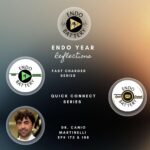
just how much this format would resonate. But clearly, simplicity paired with substance was something many of you were craving. And when the Quick Connect series is paired with the Indobattery Fast Charge series, honestly, those have become some of my favorite episodes to create. Not headlines, not hype, but solid science. And I wanted help sorting through what was good, what was flawed, and what was still evolving. This year, Fast Charge took a really special turn because for the first time I had a guest join me on these series. Dr. Canyo Martinelli, a research scientist studying cancer, endometriosis, and women's health, joined me for episodes 175 and 188. I met him at the endometriosis summit and we connected instantly. He is brilliant. But what I love most about him is that he doesn't feel doctory, I guess is what you could say. He's just a deeply compassionate, curious, and joyful human who happens to be doing important research. And yes, he's Italian, so of course there's passion involved.
SPEAKER_00
7:24
One of the things that has been game-changing is liquid biopsy. It's a kind of uh strange concept because whenever we think about biopsy, it's something that you do in medicine when uh you took a solid part of the body out of the body of the patient, and then you examine on a pathological uh examination and you get the report. Here the liquid biopsy is a conceptually a completely another stuff because uh you can get some sample of any liquid of the body. Basically, the the project started with blood, but it can be saliva, urine, it can be tears. And the idea is uh being able to find in that sample
From Online To Real-Life Connections
SPEAKER_00
8:07
something that we can use to better understand the disease, but also to improve our management in uh in healthcare. And that's the beauty of things, because for example, how is it possible that if you have an ovarian cancer or endometrial endometriosis, you know, those are diseases that start in the ovary, in the peritoneum, or uh like uh all over the body, even for endometriosis. But uh, how do you get sample of that disease in the blood, for example, on or in the menstruation on in the uterine bleeding? Uh well, the beauty of this is that first of all, you need to understand the biology of the disease. Because whenever you develop a tool in medicine, uh it's not just enough developing the tool. It needs to be then you need to show how you want to implement the management within with the new tool. Because if you introduce something new, it doesn't mean that's necessary much better than what you're already doing. And
Fast Charge And Evidence Clarity
SPEAKER_00
9:10
now we are in a point of healthcare, especially in oncology, where the where innovation really brought us in in a fantastic period of humanity where we can really, there are still very, very uh fatal diseases, especially when you get ovarian cancer late time. But uh most of the time, if you can get them, you can still give hope to people and give nice uh chances. So whatever you are doing now has to be specific, for specific patients, that needs to for sure give much uh more benefit than before. So you cannot just try. Uh in the liquid biopsy, it's it's extremely innovative stuff because uh you can be less invasive because you can take, you know, uterine bleeding or blood sample, and you can do extreme fine diagnosis.
SPEAKER_03
9:59
Those fast-charged episodes were a little longer than usual simply because he
Liquid Biopsy Explained
SPEAKER_03
10:04
has so much knowledge and explains it in a way that makes you want to keep learning. The truth is, he's just getting started. His work isn't slowing down, and neither of those conversations. I've shared those episodes with advocates, clinicians, and community members because they're that valuable. What both Quick Connect and Fast Charge reminded me of this year is how powerful curiosity can be. These series exist because you asked the questions, because you send research, because you want to understand your body, your care, and the science behind it. So as we move forward, keep sending those questions, keep sharing those studies you're curious about, keep asking for clarity because these are the questions that light me up. They challenge me, they push me to dig deeper. And honestly, they're just really fun to make. And if something's fun and helpful, that's a pretty great place to land. And here is your words of wisdom for your holiday survival guide. Let go of normal. Your normal is enough. You don't need to be as normal as everyone else. You are enough, you don't need to prove yourself. And your normal is just as great as anyone else's. As we wrap up this reflection, I'm always struck by just how much learning lives inside these conversations. Looking back, it's not just about the information. It's what continued to inspire me, challenge me, and sometimes gently nudge me to see things a little differently. My hope is that something you heard today sparked a moment of recognition, curiosity, or even a quiet, uh, that makes sense now. So here's what I'm gonna challenge you with. Take one idea from this episode, just one, and let it sit with you. You don't have to fix anything, change anything, or suddenly become a brand new person by Monday. Growth counts even when it happens in sweatpants. Be gentle with yourself. Honor how
Why Innovation Must Prove Benefit
SPEAKER_03
12:07
far you've come this year, and remember, you're allowed to learn, unlearn, rest, and repeat. Thank you for reflecting with me. Continue being curious until next time. Continue advocating for you and for others.