
Send us a text with a question or thought on this episode ( We cannot replay from this link)
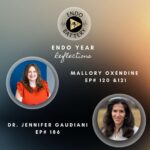
What if the most healing thing isn’t a fix, but finding the right words for what hurts and what helps? We revisit two listener-favorite conversations that reshaped how we think about intimacy, food, and self-trust while living with endometriosis and chronic illness. With therapist Mallory Oxendine, we move past the myth that closeness equals performance and create space for grief, tenderness, and clearer scripts. With Dr. Jennifer Gaudiani, we challenge diet culture’s noise and explore what “normal eating” looks like when pain, nausea, and fatigue are part of daily life—and how neurodiversity and sensory needs change the plan without inviting shame.
Mallory helps us ask better questions: How do I approach you when I want intimacy? What words feel safe? How can we protect connection when plans shift? She shows how partners can support rather than fix, validate both sets of feelings, and build rituals that honor fluctuating capacity. Intimacy becomes broader—touch, presence, humor, and steady care—so bodies aren’t forced to perform to be worthy of love.
Dr. G brings nuance and care to disordered eating in chronic illness. She offers a science-backed view of nourishment that reduces mental load, embraces satisfaction, and respects symptoms. We talk about ADHD, autism, and sensory profiles that make fullness or textures overwhelming and why care plans must flex to those realities. Her practical guidance centers progress over perfection and energy over rules, including a simple seasonal tip: pick one thing to care about and let the rest go.
If you’re craving validation, language, and doable tools, this reflection is for you. Listen, share with someone who needs gentleness today, and if it resonates, subscribe and leave a review so others can find this space.
Website endobattery.com
Year-End Reflection Series Begins
SPEAKER_00
0:00
With the Indo Year coming up, it's a perfect time to reflect on all the lessons, growth, and amazing guests we've had on Indobattery. But instead of one big recap, I'm breaking it into quick, bite-sized reflections multiple times a week. Let's revisit what inspired us, learn what we missed, and recharge together in our Endo Year Reflection series. Join me each episode as we look back. Welcome to Indobattery, where I share my journey with endometriosis and chronic illness while learning and growing along the way. This podcast is not a substitute for medical advice, but a supportive space to provide community and valuable information so you never have to face this journey alone. We embrace a range of perspectives that may not always align with our own, believing that open dialogue helps us grow and gain new tools. Join me as I share stories of strength, resilience, and hope, from personal experiences to expert insights. I'm your host, Alana, and this is Indobattery, charging our lives when Indometriosis drains us. Welcome back to
Setting The Show’s Purpose
SPEAKER_00
1:07
Indobattery, Indo Year Reflections.
Intimacy And Chronic Illness
SPEAKER_00
1:09
When I think back to the episodes 120 and 121, my conversations with Mallory Oxendein still sit with me in a very tender way. Because these weren't just episodes about relationships. They were about what it means to stay connected to yourself and to someone you love when your body doesn't cooperate. Mallory walked us through something so many people quietly struggle with: the emotional layers that come with intimacy and chronic illness. The pain, the frustration, the guilt, and that deep, unspoken feeling of betrayal when your body keeps you from showing up in ways you wish you could. She reminds us that intimacy isn't just physical, it's emotional, relational, and deeply human. And when pain enters the picture, it can change how safe, connected, or confident we feel in our own bodies. One of the things Mallory did so beautifully was normalize the grief that comes with this. Grieving that ease you once had, grieving spontaneity, grieving versions of yourself that no longer feel accessible. And instead of rushing past the grief, she gave us permission to sit with it without shame. But she didn't stop there. Mallory also offered something incredibly grounding, practical tools, real ways to communicate with partners, ways to name your needs without apologizing, ways partners can support, not fix, not rescue, but genuinely support. And just as importantly, ways you can support your partner too. So the relationship doesn't feel like another casualty of chronic illness.
SPEAKER_02
2:52
I'm a big fan. I say this all the time. I'm like, let's talk about talking about it. Yeah. You know, like let's take it one step back. And so being able to go in and go, hey, how can I approach
Communicating Needs Outside The Moment
SPEAKER_02
3:05
you when I have a desire for intimacy? Like, what's the best way to do that? So that you know that I just desire you and I love you, and not an expectation of for you to perform or show out or show up in a certain way. So I think talking about it when it's not in the moment is helpful. So we're a little bit more regulated, we're a little bit more calm, we have our more of our thinking brain operating, you know, so we can just maybe make better word choices or be able to control if our emotions come up, we can control how they're exhibited a little bit better. So I love encouraging like let's talk about it in advance. So we're not in the moment flailing around trying to figure this thing out together. Um, the other thing I want to encourage encourage partners with is like this is an experience that you are living in a junction to and living in part of your story as well. So your experience and feelings matter and they do not matter more. Right. And so they matter. It's good to like, well, how do you feel when y'all had planned to have intimacy and that now you're not sad, frustrated? Okay, that's valid. And the why is also important. Like why you're not having it, your partner's pain, your partner's, you know, maybe they had a doctor's appointment and they felt triggered, and like that's important too. And so it's not no one's more important, no one's feelings are more important than the others.
SPEAKER_00
4:41
What stayed with me most was how approachable she made such a vulnerable topic feel. Sitting down with Mallory, I felt seen, and I've heard from so many of you since those episodes aired. People said, I finally feel less alone. Because intimacy and connection don't disappear when chronic illness enters the room, they just evolve. And Mallory helped us see that while it may look different for everyone, there is a way forward, even when our bodies feel like they're working against us.
Disordered Eating Amid Chronic Symptoms
SPEAKER_00
5:13
Another episode that continues to stay with me, and one that so many of you asked for, was episode 186 with Dr. Jennifer Gattiani. It was a heavy topic, yes, but it was also a deeply healing conversation. We talked about disordered eating in the context of chronic illness, the guilt of knowing you should eat, but feeling unable to, the complicated relationship many of us feel with food when pain, nausea, fatigue, or GI symptoms are constant companions.
SPEAKER_01
5:42
Well, there are formal criteria for eating disorders, of course. The notion of disordered eating is very nebulous, and we have to contextualize it in the society we live in, which is so diet culture focused.
SPEAKER_00
5:56
Yes.
SPEAKER_01
5:57
You know, I mean, everyone is talking about what they're no longer eating, not because it doesn't, you know, sit well with their tummy or their body, but because, you know, they think it's the right thing to do to avoid inflammation. I'm not eating this, I'm not eating that, I'm eating less of this, I'm only eating at these times a day. I mean, this is so normalized and typical in our society that even though I, as a very health-privileged physician who specializes in eating disorders, would be like, no, no, no, all of that is disordered eating. It's so broadly found that people might be like, hey, are you just trying to pathologize me by telling me I've got a problem? And the answer is I want to be far gentler than that, but also kind of come back to really good science about what truly healthy eating is. And I use that H-word roll roll carefully, um, because boy, is that a tricky word. Yeah. What I would say is that if there aren't physical impediments to nourishing, which of course many people have, and many of your listeners have, I would say that normal eating means that you spend relatively little brain energy on what did I just eat and what I'm about to eat, and what did I eat yesterday and what will I eat tomorrow. You pretty comfortably can listen to hunger and fullness cues, and you can nourish yourself with satisfying, tasty foods in a mindful way, reasonably consistently throughout the day, without much chatter or shame or fear that revolves around these topics, and that you can fuel yourself to do what your unique body wants to do that day. I would say that is sort of broadly speaking normal eating. And therefore, theoretically, I would say that anything outside of that could be disordered. That doesn't mean judgment. That doesn't mean someone with severe IBS, irritable bowel syndrome, who has to avoid a bunch of foods is like, oh,
Neurodiversity, Sensory Needs, And Food
SPEAKER_01
8:05
you have disordered eating and I'm judging you. It says, gosh, you must have to spend a lot more time and energy on how to fuel yourself. And you must suffer a lot more than other people when they can just bolt down a sandwich and go back to work, and you're trying to figure out how your tummy's gonna do that day. Eating disorders, of course, have really formal criteria in the diagnostic and statistical manual five that follow certain criteria. Folks who have gotten into a relationship with food in their bodies, whether or not, again, there's body image stuff involved, which let's face it, if you were human on the planet, probably there's some body image stuff involved because thin privilege is so powerful in our culture. But what I'd like to talk to is just the breadth of conditions that might lead somebody to have to spend so much time on how to feed themselves and how to deal with their body's reaction, and that they're not alone, they're not a mystery, and they can feel better.
SPEAKER_00
9:09
And then we layered in something so many people quietly carry ADHD or neurodivergence and chronic illness, and how the two can collide in ways that are often misunderstood or dismissed.
SPEAKER_01
9:22
The last couple of years have really humbled me as I have learned the importance of neurodiversity and relationship with food. It's a topic I just adore because a lot of the time it has been ignored or it has been underaddressed. And as a result, folks feel like they're failures of the system when in fact the system has been failing them. The system is normed around neurotypicality. And the truth is, so many people who have struggles with food do have some form of neurodiversity. It could be at the formal ADHD or autism level, and it could also be at a sort of subclinical but still very much important relationship with food textures, tastes, scents, colors, the feeling of fullness in one's body, the people, you know, for me, when I in my health privilege, when I'm satisfiedly full after a meal, I feel good. But other people who have absolutely no, you know, overwhelming pathologic drive for body change feel terrible when they're full. Not because they have sort of an eating disorder necessarily, but because their sensory input is you've just some done something yucky and dangerous. And you know, guess what? That can certainly end up leading to a formal eating disorder.
SPEAKER_00
10:53
I can't fully express how seen I felt in this conversation. Dr. G put words into experience I've carried since childhood. Experiences I didn't realize had names, context, or compassion attached to them. She spoke with gentleness, with such care and such validation, not just to me, but to all of us living in bodies that don't always tolerate food the way we wish they would. What made this episode so powerful wasn't just the validation, though that alone mattered deeply, it was that Dr. G paired the compassion with realistic practical tools. She talked about experiences that actually made sense for chronically ill bodies, about progress that doesn't require perfection, about health that doesn't demand punishment or shame. That conversation healed something in me, not because it fixed everything, but because it gave my experience language. And when our experiences have words, they become lighter to carry.
Practical Compassion And Holiday Tip
SPEAKER_00
11:54
And for your holiday survival guide in that heavy topic, here it is. Pick one thing to care about. Not everything deserves your energy budget. As we look back through these conversations, I'm reminded of how much learning and on learning and quiet healing has happened this year, often in ways we didn't realize at the time. So as you continue listening through these reflections, I want to gently invite you to stay curious. You may stumble upon an episode you missed or hear something differently now than you did then, or you might just find the conversation from months ago is exactly what you need in this moment. Thank you for being here. Thank you for reflecting
Closing Gratitude And Invitation
SPEAKER_00
12:39
with me, and thank you for continuing to come back to this table, where your experiences are valid, your questions matter, and your body is worthy of care, compassion, and connection. We'll keep moving through this year together, one conversation at a time. Until next time, continue advocating for you and for others.