
Send us a text with a question or thought on this episode ( We cannot replay from this link)
You know that feeling when your symptoms refuse to fit the script—racing heart when you stand, brain fog, rashes, and reflux that laughs at PPIs? We revisit two powerful conversations that changed how we approach endometriosis care by connecting the gut, the nervous system, and the immune response. Instead of chasing single labels, we map patterns: the hallmark features of POTS beyond “it’s just stress,” the skin and ENT clues that point to MCAS, and the very real GI turbulence that follows autonomic shifts and histamine surges.
We also zoom out on endo as a long-haul inflammatory condition. Excision is the gold standard, but years of inflammatory signaling can reshape the microbiome, strain the endocrine and immune systems, and wire the body for constant “threat.” That’s why parallel care matters: gut repair, nervous system regulation, pelvic floor therapy, and thoughtful nutrition that expands tolerance instead of collapsing into permanent restriction. With clear screening, smarter questions, and gentler habits, surgery works better and recovery feels more stable.
What stood out most is the power of clinicians who listen and connect dots. Neurogastroenterology offers language for symptoms many patients struggle to describe; functional strategies offer traction when “normal” labs miss the story. We share practical takeaways: how to spot orthostatic patterns, when to suspect MCAS in stubborn reflux, and how to protect your energy during the holidays—no explanations needed for “Uncle Opinions.” If you’ve felt dismissed or siloed, this is your reminder that your body makes sense, and there’s a path forward when systems talk to each other. If this resonates, follow the show, share it with someone who needs a kinder map, and leave a review to help others find these tools.
Website endobattery.com
Reflection Series Kickoff
SPEAKER_02
0:00
With the Indo Year coming up, it's a perfect time to reflect on all the lessons, growth, and amazing guests we've had on Indobattery. But instead of one big recap, I'm breaking it into quick, bite-sized reflections multiple times a week. Let's revisit what inspired us, learn what we missed, and recharge together in our Endo Year Reflection series. Join me each episode as we look back. Welcome to Indobattery, where I share my journey with endometriosis and chronic illness while learning and growing along the way. This podcast is not a substitute for medical advice, but a supportive space to provide community and valuable information so you never have to face this journey alone. We embrace a range of perspectives that may not always align with our own, believing that open dialogue helps us grow and gain new tools. Join me as I share stories of strength, resilience, and hope, from personal experiences to expert insights. I'm your host, Alana, and this is Indobattery, charging our lives when Indometriosis drains us.
Discovering Neurogastroenterology
SPEAKER_02
1:06
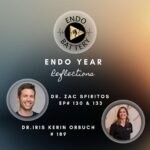
Welcome back to Indo Year Reflections, where we continue to look back at all these amazing episodes and guests. When I look back on episodes 130 and 133, my conversations with Dr. Zach Spiritos feel like one of those moments where you don't even realize how much you needed the information until you were sitting in it. To be completely honest, before coming across Dr. Spiritos on social media, I didn't even know neurogastroenterology was a thing. And yet, once I started listening to how he talked about the gut, the nervous system, and the way our body communicates, it all started to make sense. Dr. Spiritus is not only an incredible listener, because, yes, he does that for a living, but he's deeply compassionate about the symptoms many doctors overlook, many people misunderstand, and many patients struggle to find words for. What stood out most in these episodes was that he allowed space for questions people are often afraid to ask or told not to ask. He didn't just rush past complexity. He didn't minimize overlap.
POTS Explained Beyond “It’s Stress”
SPEAKER_02
2:11
Instead, he helped us slowly put pieces together for conditions like MCAS, POTS, hypermobility, EDS, and endometriosis. Conditions that rarely exist in isolation and so often are misunderstood. And he didn't leave us alone to figure it out.
SPEAKER_00
2:27
Initially, when I first graduated and I was in practice, I took on a lot of IBS patients. I just happened to love taking care of that patient population. But then someone would say, You don't have IBS, but all of a sudden, when I get up, my heart just races. That's not IBS. I think an antiquated view of that is like, oh, you're stressed, and stress causes anxiety, and stress causes palpitations. But this is different. So in POTS, the hallmark feature is standing up and just feeling like your heart is racing. With that, I would say that brain fog is a really big symptom there. And then kind of secondarily, you know, some people get a lot of blood pooling in their feet, like their feet get swollen. But yes, certainly the standing tachycardia or the heart racing from going to sitting to a standing position is the hallmark features of postural orthostatic tachycardia syndrome.
MCAS Signs And Misdiagnosis
SPEAKER_00
3:12
But they also may have a lot of GI systems, getting full early, tons of bloating, loose stools, conversely, constipation. So the POTS GI system doesn't really follow any specific rule book unfortunately.
SPEAKER_02
3:22
Yeah.
SPEAKER_00
3:22
Okay, so mast cell activation syndrome is, and of course, this can be linked with POTS too. So when I'm talking to one of these patients, I'm asking all these questions. I'm screening for every one of these things to see if we can kind of piece this together. But the hallmark feature of mast cell activation syndrome is probably skin manifestations. So itching, rashes, secondarily kind of um ears, nose, and throat issues, rhino, eyes watering for like no good reason. And then GI symptoms are kind of probably come in third there, and that's loading diarrhea, lots of heartburn in someone who like shouldn't get heart. You know, heartburn traditionally affects people who are, you know, a little bit older, you know, have their BMIs or are you probably closer to 30? Like we see these young women who are 22, 23 with riparing heartburn. I'm like, that ain't it just doesn't make any sense. And that's MCAS. That's where um, so just like one of the without getting into too into the nitty-gritty of the pathophysiology of MCAS, but these mast cells are just very twitchy. They're intended to be selectively defensive against certain pathogens that our body doesn't like, like, you know, mold. If anybody's in North Carolina like me, just the pollen is insane. So mast cells are supposed to be acting at. But these mast cells become twitchy and react to virtually everything, from temperature changes to emotional changes to poor sleep to medications, it's really wild. And one of the chemicals that it releases, and it releases hundreds of chemicals, is histamine. And histamine plays a big role in creating acid secretion from the stomach, which could lead to heartburn symptoms. But for all intents and purposes, patients don't behave like traditional gastroesophageal reflux patients. They don't respond to proton pump inhibitors. And they have no darn reason to have reflux to begin with, right? They're not they don't have a big idle hernia, which is a traditional risk risk factor for hurt reflux, or they're not, you know, they're not um they're not overweight.
SPEAKER_02
5:14
And so that's where you have to start this doesn't he explored these patterns with
Connecting Overlooked Patterns
SPEAKER_02
5:19
us. In many ways, Dr. Spiritus felt like an investigator, curious, thoughtful, committed to understanding how these symptoms interact rather than treating them as separate silos. One of my favorite behind-the-scene moments from these episodes is learning that this was actually Dr. Spiritus' first ever podcast recording, which amazes me because given his depth of knowledge, clarity, and presence, I would have sworn he'd been on dozens. But here we were. And I was incredibly grateful, not only for the conversation we recorded, but for the connection before we even hit record. By the time we'd rapped, I truly felt like I'd hit the jackpot, the pot of gold at the end of the rainbow, with the perspective and insights he shared. Yes, he's a GI doctor, but honestly, he does so much more than most people expect. He's real, he's kind, and he's genuinely one of the most approachable, thoughtful humans I had the privilege of talking to. I learned so much in such a short amount of time, and I continue to learn from him even
Whole-Body Endo Care With Dr. Iris
SPEAKER_02
6:24
now. And speaking of the gut, in episode 189 with Dr. Iris Karen Oribuck was another conversation that deeply expanded how I think about healing, especially in the context of endometriosis care. Dr. Iris walked us through what she believes should be the standard of endometriosis treatment for whole body healing. That includes gut health, yes, but also mental health, pelvic fluorophysical therapy, nervous system regulation, and care that extends far beyond the operating room.
SPEAKER_01
6:56
I I do think that functional medicine needs to be paralleled with endo excision surgery. And it's because the implants of endometriosis are inflammatory. So what's being released to the whole body are these inflammatory mediators that are going systemically to the body, making us feel so fatigued and exhausted. Inflammatory meteors are going to the gut, causing like a quote unquote, if use an Instagram term, like leaky gut, right? So small intestinal dysbiosis and a large intestinal, also overgrowth and dysbiosis, it's going to the endocrine system. Like that's where our we develop autoimmune disease. It's going to the endocrine system. The inflammation is throwing those off, causing our body to start attacking ourselves. So when you think of the implants and then you think of like a 10-year diagnostic delay. So, and typically once you have symptoms, those implants have been firing away, releasing inflammatory meters for a very long time. But if you just think about day one of symptoms until, you know, 10 years of a diagnostic delay, there's 10 years of an inflammatory environment that our bodies have been living in. So if you go to the internist, right, like who works for a hospital, they're going to send off a panel of labs, they're going to tell you everything's normal, you look fine. And you're going to be like, but I don't feel fine, right? Because they're not even testing for the right things, right? They're not, they're not even understanding what to look for or testing. They're not looking at the gut. So I think it's the inflammatory effect of endometriosis. And when I wrote my book, what drove me to really think about endo differently is because I was in New York and there was a lot of Lyme disease in New York, right? Because I'm not far from Connecticut, Lyme, Connecticut. A lot of my patients would be on the Long Island shore, out in the Hamptons, where there was a lot of tick-borne illness. And I started to have like a lot of patients who were educating me about Lyme disease. I'm like, this is so fascinating. So I started doing a deep dive into Lyme, and I realized that it's an inflammatory, like the ticks cause this whole inflammatory cascade in our body. And I'm like, this is how I have to approach endometriosis. And that's sort of what drove me to then further go from the inside out in terms of treating endometriosis. Obviously, coupled with excision of endo. Excision of endo is still the gold standard. We need excision, but when you're 10 years into anything, right? I don't care if you're 10 years into not exercising, right? You can't work with a trainer for four weeks and expect to like have a habit of exercising, right? If you ate poorly andor restricted your eating for 10 years,
Inflammation, Delays, And Dysbiosis
SPEAKER_01
9:43
right, because you had tummy aches or food hurt, you thought that you're allergic to a lot of things. That restriction has led to such microbiome imbalances that it's going to take time to fix these things. So we need to cut out the implants and undo the inflammatory component of the disease.
SPEAKER_02
10:02
What she shared was powerful. The work done before surgery often makes surgery more successful and recovery significantly easier afterwards. And when patients continue caring for their gut, their brain, and their overall health by reducing stress and toxins, she's seen the quality of life dramatically improve. This isn't a theory for her. It's years of clinical experience and it's deeply personal. Dr. Iris shared that her own diagnosis came through her children's diagnosis. She's not just an excision specialist. She's a patient, she's a mom, and she's a care team support person who truly understands what it means to live inside this complexity. Sitting down with Dr. Spiritus and Dr. Iris illuminated something that feels essential. The gut plays a profound role in inflammation, healing, histamine response, and how our bodies respond to stress and environment. This isn't a quick fix. It's not just excision, it's not just one medication or one specialist. It's a bigger picture. How our bodies respond to the world, how supported our systems feel, and how kind we are to ourselves along the way. And here's your gift for your survival guide kit this holiday season. You don't have to explain your illness, especially to Uncle Opinions, because Lord knows they're probably not gonna understand it anyway. You don't need to explain it. It is what it is, and that's okay. I truly hope these episodes helped you because I know how many questions I've received about GI symptoms, excision, inflammation,
Excision Plus Functional Support
SPEAKER_02
11:42
and healing that doesn't fit neatly into one box. I know they helped me. I walked away more informed, more empowered, and more confident in my own care. And I'm incredibly thankful for providers like Dr. Spiritos and Dr. Iris, people who are changing the trajectory of patient-centered care and reminding us that healing is layered, complex, and deeply human. As we continue reflecting back through the year, I hope you'll listen with fresh ears and gentle curiosity. You may hear something differently now, you may catch a moment you missed before, and you may discover that an episode from months ago holds exactly what you need today. Thank you for continuing to come back to these conversations, for learning, for reflecting, and for honoring your body with compassion. We'll keep moving forward together, one thoughtful, honest conversation at a time. Until next time, continue advocating for you and for others!