
Send us a text with a question or thought on this episode ( We cannot replay from this link)
A lot of us carry the same question: why does the care we need feel out of reach even when we find the right experts? This reflection pulls together the most eye-opening insights from a season of conversations—where surgical reality, overlooked diagnoses, and brain-based tools meet practical advocacy you can use right now.
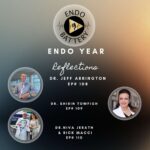
We revisit Dr. Jeff Arrington’s straight talk on insurance and excision: why RVU models reimburse quick ablation and hours-long, meticulous excision the same, and how that mismatch shapes access, outcomes, and burnout. He breaks down informed consent as a true exchange—listening, differential diagnosis, and clear options—then shows how dynamic imaging and pre-op mapping help prevent incomplete treatment and reduce complications. That framework alone can change how you choose a surgeon, what questions you ask, and how you prepare for the OR.
Then we shift to Dr. Shirin Towfigh’s essential lens on hernias in women. Without the classic bulge, they press on nerves and mimic pelvic, hip, and groin pain—often mislabeled as endometriosis. Add male-centric studies and devices, and misdiagnosis becomes routine. We talk hysterectomy scars, EDS, collagen, and why tailored, minimally invasive repairs matter. Awareness becomes action: consider other pain generators, get the right imaging, and seek specialists who know the female presentation.
Finally, we connect mindset and neuroscience with Dr. Niva Jerath & Rick Macci. Not toxic positivity—evidence-based tools that reduce threat signals and increase agency. Gratitude, reframing, and steady habits can lower the cognitive load of pain and help you engage more effectively with medical care. Healing isn’t one-dimensional; the best results often come from aligning precise surgery, accurate diagnosis, and a regulated nervous system.
If you’re ready to advocate with more clarity, this is your map: understand the system, expand the differential, and strengthen your daily tools. Subscribe, share with someone who needs it, and leave a review with the one insight you’re taking into your next appointment.
Website endobattery.com
Welcome And Series Setup
SPEAKER_00
0:00
With the Indo Year coming up, it's a perfect time to reflect on all the lessons, growth, and amazing guests we've had on Indobattery. But instead of one big recap, I'm breaking it into quick, bite-sized reflections multiple times a week. Let's revisit what inspired us, learn what we missed, and recharge together in our Endo Year Reflection series. Join me each episode as we look back. Welcome to Indobattery, where I share my journey with endometriosis and chronic illness while learning and growing along the way. This podcast is not a substitute for medical advice, but a supportive space to provide community and valuable information so you never have to face this journey alone. We embrace a range of perspectives that may not always align with our own, believing that open dialogue helps us grow and gain new tools. Join me as I share stories of strength, resilience, and hope, from personal experiences to expert insights. I'm your host, Alana, and this is Indobattery, charging our lives when Indometriosis drains us.
Why Expert Excision Rarely Fits Insurance
SPEAKER_00
1:06
This year truly started off with a bang. And by bang, I mean one of those moments where you think, okay, this conversation has been a long time coming. It actually took about nine months, almost a full year, to get this guest on the podcast. Not because he didn't want to be here, but because he's incredibly busy doing work so many of us desperately need. Dr. Jeff Errington joined me in episode 108 to talk about something that almost every single one of us feels to our bones, the deep frustration around insurance and excision care. Because here's the reality we want expert care. We need expert care. And yet so often we simply can't afford it. And what I appreciate most about this conversation is that Dr. Errington didn't sugarcoat it. He broke down exactly why the system is so challenging, not just for patients, but for providers too. How the insurance models make it incredibly hard to do things the right way, to keep the lights on, and to practice medicine with integrity and time and precision. So for many of us, insurance feels like the villain in the story. Why so many expert excision surgeons end up practicing outside of traditional insurance models?
SPEAKER_02
2:36
There is there is far more complexity to really doing good endometriosis work, doing the dissections, separating the adhesion, separating the bowel, working around the ureters, than somebody that goes in and says, Oh, that endometriosis directly over the ureter. I very carefully just touched cottery to it so I didn't damage the ureter instead of doing the appropriate dissection and separating the disease out, or if they go in and see some bowel endometriosis to maybe just very easily, carefully safely burn across the surface, but not really treat it. Or the the risk of that is far less than a doctor actually going in and cutting the disease out and repairing the bowel or dissecting the ureter out. The thing where that comes into play when insurance companies look at that RVU for laparoscopy, they don't make any adjustments on the complexity risk between superficial ablation and excision of disease. To the insurance companies and to that CAMS RVU system, it's all the same. And, you know, and that's that's just the malpractice side of things. Certainly the work involved, you know, taking 10, 15 minutes to quickly burn a few places rather than two or three hours to cut disease out, they they have zero accounting for the extra work involved and the tedious work involved in full excision rather than just spot burning a couple places and saying that's the best I can do. So when when we look at the way that insurance looks at things, they consider a superficial, you know, let's say somebody gets in and there's just endometriosis everywhere, but no adhesions. And let's just say that it, you know, there is some depth to the disease, but there's no bowel involvement, no ureter dissections, but really widespread endometriosis with some depth to the to the tissues, to the side of the rectum. Going in and cutting that out, you know, can take an hour and a half, a couple hours sometimes compared to a dog just going in and saying, well, here's a few spots, let's burn those, and then leaving everything else untreated and untouched. We're talking a 10, 15 minute surgery versus an hour and a half surgery, and the compensation, the RVU value
Complexity, RVUs, And Surgical Tradeoffs
SPEAKER_02
4:36
for those procedures is exactly the same.
SPEAKER_00
4:38
One of the biggest takeaways for me in this episode was the conversation around informed consent. Because informed consent isn't just about signing a piece of paper, it's understanding what's happening in your body, what your options are, and what the long-term implications might be.
SPEAKER_02
4:55
The most important thing, I mean, both both words in that informed consent, both are equally important. Patient cannot give consent if they're not informed. And we have to start by basically providing information. And that starts with the doctor just sitting and listening to a patient, understanding and considering the history and formulating in my mind as a physician what I think is going on. This is what's called the differential diagnosis. We basically try to piece all the symptoms together together and try to think of all the different things that could explain what the patient is experiencing. Certainly in my line of work, the most common are endometriosis, pelvic floor pain, adenomyosis, interstitial cystitis, nerve impingements or nerve irritations, those sorts of things. And then we try, and then we step back and think, okay, what can I do to explore that a little bit more and see if we can wean down or get a better idea between all those possibilities, what the most likely sources are. That's where the exam comes into play, and then that's when any imaging comes into play.
SPEAKER_00
6:10
We also talked about dynamic imaging, specifically dynamic ultrasound and why it can be such a powerful tool in endometriosis diagnosis when it's done by someone who truly knows what they're looking at. Expert mapping before surgery can change everything. As many surgeons will tell you, and Dr. Errington explains this beautifully, they would often rather operate on a stage four endometriosis case than someone who's had multiple surgeries labeled stage two or three. Why? Adhesions, scarred tissue, the damage that happens when disease is missed, minimized, or incompletely treated. That alone is something I wish everyone could hear. But what makes this relationship with Dr. Errington so special goes far beyond the podcast, Mike. He didn't just show up to educate, he showed up for the community. As many of you know, he actually traveled all the way out here to Colorado to support the nonprofit that I'm part of, an event that we had. This is where I need to tell you a little behind the scenes story. Because on the day of the event, my car battery died. Not my old car, my nice car. Now, I also own what we lovingly referred to as the barn car. And if you've never ridden in a barn car, let me paint you a picture. It smells exactly like what you'd think it'd smell like. Horses,
Informed Consent Done Right
SPEAKER_00
7:38
hay, manure, the full experience. I was running late, so instead of picking up Dr. Errington myself, I had one of my teammates grab him from the shuttle. I thought I was being kind. I thought I was being courteous. I thought, surely, no one wants to smell like a barn on the way to an endometriosis event. Turns out I was wrong. He was actually disappointed he didn't get to ride in the barn car. Apparently, it brought him straight back to his childhood. So, yes, we now know this about Dr. Errington, world-class excision surgeon, insurance expert, and nostalgic about the smell of a barn. Oh no. All humor aside, I continually learned so much from Dr. Errington. He has this rare ability to break down incredibly complex topics, insurance, hormones, informed consent, imaging in a way that's factual, clear, and actually understandable. And the best part of education doesn't stop here. We'll be continuing this conversation in the new year, including discussions around hormones and you know, things like ACOG updates. So definitely be on the lookout for that. If there's one thing this episode reminded me of, it's this knowledge is power, but shared knowledge is how we change outcomes. And while the system is frustrating, conversations like this help us advocate more clearly, ask better questions, and understand why finding true experts matters so much. So as you listen to these clips, I invite you to reflect on what stood out to you, what clicked, and what you wish you had known sooner. And if nothing else, maybe we will all remember that sometimes even the heaviest topics can still leave room for learning, connection, and apparently the occasional barn-scented memory. Some episodes stay with you because they teach you something new. Others stay with you because they change the way you think about pain entirely. And this episode did both. In episode 109, Dr. Sharin Tofi joined me to talk about hernias. And I know if you're listening to this right now, you might be thinking, what do hernias have to do with endometriosis? Turns out a lot more than we've been led to believe. Because endometriosis isn't always the pain generator in the body. And for so many people, especially women, hernia pain flies completely under the radar.
Dynamic Imaging And Surgical Mapping
SPEAKER_00
10:11
Dr. Tofi explained something that really stuck with me. The hernias that affect women often don't look like the classic bulge we've been taught to watch for. They're subtle, they press gently on nerves, they whisper instead of shout, and yet they can cause significant life-altering pain. Pain that mimics pelvic pain, hip pain, groin pain, pain that so many of us have been told is just part of endometriosis. One of the most striking things Dr. Tofi shared is that men often don't feel pain from hernias, but women do. And that alone should make us pause. Because if women experience hernias differently, but we're using male-centric diagnostic expectations, of course, things are going to get missed.
SPEAKER_03
10:57
So, you know, when I talk to my medical students, when I teach them, I ask them, when do you guys get taught about hernias? And it's during the male genital urinary system. So it's always connected to a male disease. There are gynecologists that don't know that women can get hernias. So it's we have to do better job teaching as early as medical school that women can get hernias. And we actually publish another paper that specifically outlines how women present differently than men for the same exact disease. Men tend to present with a bulge, women tend to present with pain. Men tend not to present with pain, actually. And so there are surgeons that say if it's if it's painful, it's not a hernia. And that I'm like, that's completely wrong. So there's a lot of misinformation out there. And I think because it's always been a male-dominated view of hernia disease and male-dominated care, all of our surgical techniques are for man, men. All of our randomized controlled trials included only men, our mesh is designed for a male anatomy. So there's a lot of bias against women for this disease and diagnosis and their treatment.
SPEAKER_00
11:59
She also shared something incredibly important for anyone who's had a hysterectomy. In her experience, women who have had hysterectomies often do have hernias, and many of them have had no idea, not because the pain isn't real, but because no one thought to look.
SPEAKER_03
12:15
So the Ehlers Download syndrome patients, the EDS patients that have the hyperflexibility, hypermobility syndrome, they are more likely to just have like loose fascia and muscles. And if they have surgery, let's say they have a hysterectomy, they're going to get a hernia from that incision.
SPEAKER_00
12:31
Interesting.
SPEAKER_03
12:32
Because they don't have enough collagen. Their collagen is like not normal. So you need normal collagen to heal. And so if you're not healing the incision, that's why we would prefer we prefer laparoscopic surgery for these patients because the incisions are much smaller to heal. There's not a big incision, for example. That's number one. Number two, they get pelvic pain because everything is loose. Their pelvic floor is loose and their groin is loose. And I've noticed
Community, Support, And The Barn Car
SPEAKER_03
12:59
that when I go in there, I have this special technique technique for these um patients with EDS, and I tighten their inguinal floor, a lot of their pelvic floor symptoms go away. I can't explain it, but it's happened on every single patient I've done it on. So they don't need the organ prolapse surgeries and all the other operations, which they don't do well with anyway, because you're operating on unhealthy collagen, low collagen kind of tissue. So you have to be very careful with those patients that you don't treat them like a typical hernia patient.
SPEAKER_00
13:30
That moment really hit me because awareness alone can change the trajectory of someone's healing, knowing that there may be another pain generator and that it's identifiable on imaging when done with the right specialist can be the difference between staying stuck and finally moving toward relief. What made this episode especially meaningful for me was that I was genuinely excited, and if I'm being honest, a little nervous going into it. I know how respected Dr. Tofi is. I know how deep her expertise runs when it comes to hernias. And sometimes when you sit across from someone like that, you just hope your brain keeps up. And she was so kind. She was generous with her time, generous with her knowledge, and incredibly patient. Even on a day when I was completely exhausted, we had such a thoughtful conversation both before and after we hit record. And it reminded me that true experts don't just lead with credentials, they lead with compassion. Then came episode 110. And this one surprised me in the best possible way. I sat down with Dr. Navita or Neve and Rick Macy. And if you would have told me ahead of time that this duo would end up being one of the most inspiring conversations of the season, I might not have fully believed you. But what they brought to the table was something I hadn't seen done quite like this before. They connected neuroscience, the literal wiring behind pain, with mindset. Not in a dismissive, just think positive way, but in a grounded, science-backed understanding of how thoughts, beliefs, and nervous systems shape how we experience our days and our bodies.
SPEAKER_01
15:18
One thing, and my patients are all struggling with chronic pain and chronic
Hernias As Overlooked Pain Generators
SPEAKER_01
15:22
illness. And the most important technique, I think we're talking about perspective and reframing, but one of the main things is gratitude. And as soon as we fill up our parts with gratitude, we see things so differently. And I can give an example. And I'll never forget our dean told us, he said, go. And she said, Today's exercise, all you guys are complaining. She was at the auditorium in the pride, she's like, all of you are complaining. I'm wanting all to go to the lobby of the Mayo Clinic in Rochester, Minnesota, and just sit there for 20 minutes and watch. Okay, now we all sat there. I remember watching, there's like beautiful chandeliers, beautiful floors, and there you see the sickest kids that have maybe three or four months left to live. You see a kid having a seizure, you're seeing another person with a leg cut off, another one with their arm cut off, and then you see someone like you know, with dementia and their family members pushing them, and someone with a brain tumor, and all of a sudden there's no more complaining. Yeah, because you're like appreciative of what you have. So it doesn't mean that you minimize what you're having. I mean, everybody has struggles and pains, but it's it's a it's a combination of gratitude and perspective and recognizing that if we're grateful for what we have, all of a sudden everything else is not as it it's a way, it's a technique to get out of the pain, maybe and to improve it and to it to feel the situation in a different way. And that's what you're talking about, perspective. It really means a lot.
SPEAKER_00
16:57
What struck me most is that they don't just teach this, they live it. They talked about how mindset sets the pace for our day, how it influences how we move through pain, through challenges, through life itself. And while mindset doesn't replace medical care, it absolutely plays a role in how we function and how we heal. I walked away from that conversation feeling inspired, not fixed, not magically cured, but reminded that there is still agency, even in the hard bodies and hard days. And then because life is funny like this, there is a little moment that still makes me smile. Rick Macy, yes, that Rick Macy, legendary tennis coach, the man who coached Venus and Serena Williams when they were kids, and yes, that one portrayed in King Richard, a little slice of Hollywood tucked into neuroscience and mindset conversation on Indobattery Podcast. Because apparently you can talk about pain, the brain, elite athletes, and resilience all in one episode. If this conversation taught me anything, it's
Gender Bias In Hernia Diagnosis
SPEAKER_00
18:06
this healing is rarely one-dimensional. Pain has layers, causes overlap, and sometimes the answers we're looking for live just outside the box we've been told to stay in. So as you listen back, I invite you to stay curious, to consider other pain generators, to notice how your mindset supports or challenges you, and to remember that learning more about your body is never a step backwards. It's a step towards life with more understanding and hopefully less pain. And just because I'm in the season of giving, I want to give you just a little bit of advice to get you through this holiday season. And here it is. No is a complete sentence. You don't owe a dissertation. Just say no. Our plates are full enough. It is okay to say no. As we wrap up this reflection, I'm always struck by just how much learning lives inside these conversations. Looking back, it's not just about the information. It's what continued to inspire me, challenge me, and sometimes gently nudge me to see things a little differently. My hope is that something you heard today sparked a moment of recognition, curiosity, or even a quiet, uh, that makes sense now. So here's what I'm gonna challenge you with. Take one idea from this episode, just one, and let it sit with you. You don't have to fix anything, change anything, or suddenly become a brand new person by Monday. Growth counts even when it happens in sweatpants. Be gentle with yourself. Honor how far you've come this year, and remember you're allowed to learn, unlearn, rest, and repeat. Thank you for reflecting with me. Continue being curious until next time. Continue advocating for you and for others.