
Send us a text with a question or thought on this episode ( We cannot replay from this link)
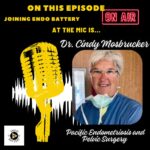
Can removing ovaries in young women with endometriosis do more harm than good? Join us asa we discuss the critical long-term implications of surgical decisions with Dr. Cindy Mosbrucker. We tackle the often-overlooked consequences of oophorectomy (removal of ovaries), such as accelerated aging, bone brittleness, and cognitive decline. Dr. Mosbrucker emphasizes the necessity of comprehensive patient discussions and appropriate hormone replacement therapy to mitigate these effects. We also examine the disparity in medical approaches between genders, questioning how differently men’s health issues would be handled.
Discover the truth about hormone replacement therapy (HRT) that many women have been missing. Dr. Mosbrucker guides us through the flawed conclusions of the early 2000s Women’s Health Initiative study, which led to a widespread cessation of HRT and subsequent health issues. We dissect how this study’s design flaws misled women and explore more recent research showing the benefits of estrogen-only HRT, including a lower risk of breast cancer. Tune in to gain a deeper understanding of how medical research and study designs impact health decisions, and empower yourself with knowledge that’s crucial for navigating this complex landscape.
Website endobattery.com
Navigating Endo Treatment and Hormones
Alanna
0:03
Welcome to Endo Battery , where I share about my endometriosis and adenomyosis story and continue learning along the way . This podcast is not a substitute for professional medical advice or diagnosis , but a place to equip you with information and a sense of community , ensuring you never have to face this journey alone . Join me as I navigate the ups and downs and share stories of strength , resilience and hope . While navigating the world of endometriosis and adenomyosis , from personal experience to expert insights , I'm your host , Alanna , and this is Endo Battery charging our lives when endometriosis drains us . Welcome back to Endo Battery . Grab your cup of coffee or your cup of tea and join me at the table as we continue with our discussion with Dr Cindy Mosbrucker in this part two of a two-part series . Dr Mosbrucker shared historical knowledge with us last time and if you haven't had the opportunity to do so , I encourage you to go back and listen to the part one of this series . But just in case you need a refresher , here's where we left off and where we're going .
Dr. Cindy Mosbrucker
1:08
Right now , standard of care is people doing ablations . It's okay for doctors to remove totally normal ovaries in a 25-year-old , you know . If the patient decided to take them to court to say you took my ovaries out , all they have to do is say you signed the consent form and it's because it's within standard of care . If somebody has persistent pain and thought to be from endometriosis , it's okay to castrate a 25-year-old and to me that's not okay in any world and it certainly isn't okay without a very long discussion . Even in my 40-year-old patients who come in and say , you know , I really want you to take my ovaries out .
Dr. Cindy Mosbrucker
1:55
I talk to them for a long , long , long time about what are you going to feel ? You're going to be menopausal , your bones are going to get brittle , your brain is going to get old , your vagina is going to dry up , your bladder is going to be irritable , you're going to have to pee all the time , you're going to be incontinent . All these things are going to happen to your body , not right away , but over time , and your aging process is going to be accelerated . And yes , we can reverse some of that and abate some of it with hormone replacement . But there was a study a few years ago that showed that women who have bilateral oophorectomies prior to menopause have an increased what's called all-cause mortality , which means death by any reason , and giving them hormone replacement will minimize that somewhat and make that increased risk come back towards one which is no increased risk but it never quite gets to one . It gets close to it but it never quite gets there .
Dr. Cindy Mosbrucker
3:06
And then the other thing that I see , a lot is women who've had their ovaries out and they're not appropriately replaced hormonally . So they've got hot flashes , they don't sleep well , they're emotional , they feel like crap and nobody takes the time to say well , you need estrogen , you need testosterone , you might need a little progesterone , maybe , maybe not , but we need to get you . If you're 30 years old and you have no ovaries , you can't just give them a 0.05 patch , which is perfectly fine for a 55 or 60 year old woman , because they're 30 , you know , and they're used to estradiol levels fluctuating between 103 or 400 , you know , whereas when you're 50 and you're about to be menopausal , your average estradiol level is probably , you know , you'd be happy at 50 . You , you know these younger gals . They need a higher dose and they need higher levels , and that's just normal and physiologic , but doctors are afraid to do it . I don't know why .
Alanna
4:15
I think doctors are just as afraid as patients , especially when it comes to endometriosis . Because when you're talking testosterone , the number one thing that they're thinking is it's going to aromatize into estrogen , my endometriosis is going to come back , and that is just not true , Like there's no evidence to say otherwise when it's removed correctly .
Dr. Cindy Mosbrucker
4:34
When it's been removed correctly , absolutely yes . So they don't want the people who don't do excision and they just say well , you have endo , we'll do a hysterectomy and take your ovaries out . But then they don't want to give them estrogen because they don't want to feed the endo . But they don't realize that the endo has aromatase and it can feed itself hormones for cognitive abilities .
Alanna
4:57
You need these hormones to be able to live a semi-functional life beyond a shriveled up raisin . You know you need these and we shouldn't be afraid of these things because there's no evidence to say otherwise . There's actually quite a bit of evidence to point adversely that you need these things . You know so , but that's true . I think that the more that these residents , or the more that fellowships are educating , the more the patients are going to be educated in their care and sitting down and having these discussions , and we're not going to just remove any organ , just to remove potential of disease . We're going to keep organs that are essential and remove the disease if it's possible . I think that has to be the conversation .
Dr. Cindy Mosbrucker
5:53
Yeah , I mean I hate to flip this around into a misogynistic comment , but you know , if men had endometriosis , none of them would agree to being castrated to fix their end up . I mean , it would be world ending .
Alanna
6:12
Yeah , I mean , and there's so much truth to that , because castration is not just removing body parts , it's removing a lot more , even from a psychological and physiological standpoint .
Dr. Cindy Mosbrucker
6:23
Right and so not just for men , but for women too , absolutely , absolutely . And that's what the world in general I mean . Obviously we're generalizing , but you know , that's what people don't realize Right , and I think a lot of women don't realize it either how important their ovaries are for who they are and how they think and how they view themselves and how they view the world , and how much mojo they have .
Alanna
6:50
Yeah , and I can speak to that on a personal standpoint because , you know , when I first had my surgery and I was put on Estradiol which was you know I didn't even really know why to the full extent I knew that there was reasons for it , but no one had mentioned testosterone to me and I started viewing myself a lot differently , incapable of doing things . I felt inadequate in so many different areas , not only when it comes to intimacy , but when it comes to being able to function and drive a car or make decisions or carry on a conversation , all of those things . It wasn't until I started testosterone . Someone had mentioned it to me and I was like what do you mean I can have testosterone . I had no idea . No one told me about this .
Alanna
7:36
So when I started testosterone , my trainer was one of the first people to notice . He said you are totally different . He's like you're able to lift more . He's like you're so much more clear in mind , you're not nearly as sleepy , you're able to process what I'm telling you a lot faster . Your proprioception awareness has completely changed , and so we should talk about this prior , and I'm working on talking to another OBGYN who's really big into hormones about this very thing , the importance of doctors educating their patients and I think part of that education comes in their education as well of how to talk to patients .
Hormone Replacement Therapy Misconceptions
Dr. Cindy Mosbrucker
8:16
Well , a lot of the problems with hormone replacement , even in menopause . You know problems with hormone replacement even in menopause . You know . Naturally , menopausal women started after the stupid women's health initiative study that was published in 2001 or two and I was in Hawaii doing general OBGYN back then and the study comes out that says Frempro . The study comes out that says PremPro , prem and Provera . So horse piss urine and the worst synthetic progestin in the world increases women's risk of breast cancer and strokes and doesn't protect their brain and doesn't do all these things that we always thought that it did . So you should really stop it . So all these women , just whole turkey , stopped their hormones and a month or two later , man , the doors were being broken down . I feel horrible and all this stuff . And it's like , okay , well , let's read not the abstract that was given to everybody , but let's read the details .
Dr. Cindy Mosbrucker
9:23
Okay , this was a study done in 65 year old women who did not need hormones . They were asymptomatic . Because they wanted them to be asymptomatic so that they wouldn't know who was in the placebo group and who was in the drug group , and so they were giving something to a group of people who did not need it . Secondly , these were not newly menopausal women . The average age was 64 . And so of course there's no benefit , because they weren't having hot flashes , they weren't having night sweats , they weren't having mood swings , they weren't feeling the effects of brain fog acutely like they did when , you know , 10 years earlier , right . And so when it was on the benefit side , there was really nothing to be gained . You could have predicted that from the get-go . The breast cancer risk was eight cases per 10,000 per year , which is like 0.08 . To me that's not a very high percentage rate , like 0.08 . To me that's not a very high percentage rate . And then the memory group was 10 years older . So they took 75-year-old women who again were asymptomatic , and they gave them Prevara and Provera , the same dose that they gave the younger patients , which now we know that hormone replacement should be tapered gradually as women age , so that when you get to be 75 or 80 , you're on a teeny tiny dose because that's all you need . And so they didn't do that and what they found was that it actually hormone replacement worsened their memory . Why was that happening ? Because they were having these little mini strokes and it's completely not physiologic . So that study was so far out there in the . This is just bad design .
Dr. Cindy Mosbrucker
11:19
So the second phase of the Women's Health Initiative came out a couple of years later and it was in women who did not need progesterone because they did not have a uterus , so it was estrogen only , and their average age was 51 or 52 .
Dr. Cindy Mosbrucker
11:37
So they were much closer to menopause I mean the onset of menopause and what they found was there was less risk of breast cancer , no risk of worsening their memory and all the things that we always thought that estrogen did for women , which is protect their brain , protect their bladders , protect their vaginas and all these other things it does .
Dr. Cindy Mosbrucker
12:02
And so since then , since the mid-2000s , there have been a number of studies looking at estrogen , estradiol specifically with and without various different progestins , and some of them , a lot of them , show that estrogen-only hormone replacement actually decreases the risk of breast cancer . And it certainly is not a given that estrogen increases the risk , and probably only in combination with progestins does it increase the risk . And the other progestins so , like natural micronized progesterone , which is the same chemical that our bodies make , probably has very minimal risk at all of increasing breast cancer . And some of the other synthetic the newer synthetic like Northendrone and things like that have less risk than the Provera did . So it's really fascinating to do kind of a deeper dive into all this stuff . It's really fascinating to do kind of a deeper dive into all this stuff . But the problem is the cardiologists and the internal medicine docs . They only saw that first part of the Women's Health Initiative and that's what's stuck in their brain . They haven't gone into the weeds and looked for all the rest of the newer studies on hormone replacement .
Alanna
13:22
And a lot of it was retracted .
Alanna
13:25
So I mean that's pretty key if you're actually looking at the research , to look at the fact that it was retracted , and that's huge Like for a paper to be published and then retract .
Alanna
13:38
That's like a big deal in the medical world . I think that really set us back a long ways and that's why I think it's important that I mean I talk about this often understanding where research is coming from . And that's why I started the whole endobattery fast charge is because you know a lot of research is coming out but we don't always know as a patient how to understand this research and how to understand if it's valuable or if it's impactful in any way , shape or form . So sometimes we go off of what sounds good but we are not uncovering the nuances of the research or nuances of the study . And so when I started endobattery refast charge , that very reason was to understand it as it pertains to us in the community . You know you have to understand who is behind the research , who's doing the research , how they did the research , how the statistics are done , and all that .
Dr. Cindy Mosbrucker
14:31
Yeah , all of that .
Alanna
14:32
So that's so important for our health and why it's important to understand those . So , oh , this is . We could probably go on for hours . I think we could . Yeah , I know , welcome to the table . You know , and that's when I say to join us at the table because , again , the best conversations happen at the dinner table . Whether you're eating or not , you get the best information , you can have conversation and you can let it flow and you learn the best when you're sitting and having a meal with people at the dinner table . So that's why I've always done the podcast at my table , because I want people to join us at the table .
Dr. Cindy Mosbrucker
15:10
Well , I should have cooked for you .
Alanna
15:12
I know , see , that would have been great . Next time we're going to make that happen . I'm going to come out there one of these days , but I can't eat seafood , so I'm out of the mix . Oh , you can't .
Dr. Cindy Mosbrucker
15:21
So Crystal , our nurse practitioner , she is such a special girl , she has the biggest heart and she does such a good job of nurturing our patients and I just love her to death . Well , a video on how to make scallops and it's a recipe from Windows on the World , which was the restaurant that was in the World Trade Center , and it's a very simple scallop recipe with . You know , you just brown the scallops and then you make . It's almost like a beurre blanc , but not quite as much butter and shallots and capers and a little bit of vermouth to deglaze the pan , and then a little bit of butter , but about a third of what you would put in a beurre blanc , and it was delicious . So , anyways , I can figure out something else to make you , though . Okay , my specialty is seafood .
Alanna
16:24
I know , See thatific northwest vibe is the seafood that's why I wouldn't make it there . I'm in cattle country here . That's why I make it in cattle country , but I can't eat beef anymore I got a smoker , I can make you some pretty good barbecue brisket I'm here for it . I will eat that all day long . I will eat . I'm a Wyoming girl . So meat and potatoes is like my thing , that's , that's what . I'm . You know I've turned a little bit more Colorado into the veggies , a lot of veggies . But it's .
Alanna
16:55
I grew up on the meat and potatoes , so that's my jam . But it's always so good to sit down at the table with people . It's always so good to get perspectives that widen our horizons and help us better educate ourselves . And I think when we sit down and when we're honest in conversation and we have a history to go off of , like your history is by far some of the most interesting .
Alanna
17:18
You and Nancy , that's what I'm going to come . For you and Nancy to give a history lesson , that would be amazing , but it's so refreshing . And yet I do want to leave with just a little bit of hope , because I think that we do need to have that hope for what is to come in the future . We can't live in a place of where we've been , and so I think you are perfect evidence of that , of continuing to push and strive forward , and you've learned that from Dr Redwine and Nancy , and now you are continuing in this trajectory as well of making it better for future generations . So for that , thank you , thank you for taking the time to do that .
Dr. Cindy Mosbrucker
17:57
Well , Alanna , thank you for doing what you're doing , because those of us who are endosurgeons , we couldn't do what we do without the advocates directing the patients to the right places , and we don't have the time to educate patients as much as they need to be , and it's , I would say , probably 80% of our patients , if not 90% , have come because they've been on Nancy's Nook or they've listened to podcasts or they have done their research and found the endo advocates who have kind of guided them to the right place , to somebody who can take care of them appropriately , to somebody who can take care of them appropriately , and so none of us would be where we are , we would not have the volume that we have , we wouldn't have the capabilities that we have without you guys , and so I appreciate your work more than I could ever tell you Thank you .
Alanna
19:00
That really means a lot to me , so thank you .
Dr. Cindy Mosbrucker
19:16
Anything you want to impart on our listeners before we wrap up in the right , and don't let somebody take your ovaries out without having a very , very , very good explanation for why that is necessary . Don't take your ovaries out until all of your endo has been excised . Or you know if you've had three cystectomies ? You know two or three cystectomies for recurrent endometriomas and in your forties , okay , fine . But even in that situation you need to be counseled appropriately as to what the risk is and what the downside is and what you're going to have to do for the rest of your life , you know . And then the other thing is don't let a generalist operate on an endometrioma because you may lose your fertility , you may lose the function of your fallopian tube . In my experience , either they take out half of a normal ovary or they don't get all of the cyst wall out and then you have a recurrent endometrioma and you have to have another surgery which is , you know , is more damage to the ovary .
Dr. Cindy Mosbrucker
20:24
But hang in there , there is hope . There are becoming more endosurgeons who can do good surgery . And beyond surgery , there are a lot of people doing a lot of research on biomarkers and treatments and the genetics and the epigenetics of endo . Hopefully one day there will be some sort of a treatment that will get at the cellular nature of endo , almost like a chemotherapy . We're not there yet and you know I don't know when that's going to happen . I don't know that anybody knows when that's going to happen . But you know we'll keep on doing what we know works now , which is excision .
Alanna
21:07
Good excision , good excision , yep . And it is not endometrium . It's endometrium Like let's define that clearly for those like Sallie . She's right , we have to define that clearly and understanding the disease and everything else . And I want to say too I think that you made a good point to this before we wrap up you as a patient out there , listening , you are intelligent , you are wise enough to advocate for yourself , even if you've been told otherwise . You are smart , you're capable of doing that and you are empowered to do that . And if anyone on a care team says otherwise , that's probably not the right care team for you . I think all these things really points to your ability to do so , but with support of others , and we need to be this team to be able to do that . We need the advocates , the patients , the doctors , the providers to all make this happen . So thank you for your time and for your wisdom and just being an advocate alongside the rest of us . So thank you for that .
Dr. Cindy Mosbrucker
22:13
Well , you're welcome . Thank you too , and it's been a pleasure .
Alanna
22:16
Yes , and until next time , everyone continue advocating for you and for those that you love .