
Send us a text with a question or thought on this episode ( We cannot replay from this link)
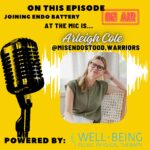
Imagine being nine years old and feeling a constant, unexplainable pain that no one seems to take seriously. That’s exactly what Arleigh Cole experienced, and in this powerful episode of Endo Battery, she shares her incredible journey from those early days of fatigue and bowel issues to becoming a fierce advocate for endometriosis and adenomyosis awareness. Join me, Alanna, as we uncover Arleigh’s story of enduring two surgeries, a hysterectomy, and the harsh realities of inadequate medical care. This episode shines a light on the importance of proper diagnosis, specialized treatment, and the unwavering support of a community that truly understands.
Arleigh and I dive deep into the emotional and physical challenges of living with an invisible disease. We discuss the cycles of false hope, the frustration of societal disbelief, and the profound sense of isolation that often accompanies such conditions. By sharing her personal battles and triumphs, Arleigh emphasizes the healing power of validation and community support. We also touch on the difficult transition through menopause and the impact of being constantly unseen and unheard, while highlighting the strength and resilience that comes from shared experiences.
We also explore the systemic issues plaguing women’s health, from the impact of endometriosis on pregnancy and motherhood to the disparities in healthcare access and treatment. This episode tackles the misconceptions, misdiagnoses, and emotional toll of chronic fatigue and pain, and underscores the urgency of educating young women about their bodies. Through personal anecdotes and broader societal insights, Arleigh and I stress the importance of advocacy, education, and continued research to support women facing these challenges. Tune in to be inspired by Arleigh’s transformation into a powerful advocate and to learn how you can contribute to raising awareness and driving change.
Thank you to our sponsor for this episode, Well-Being Pelvic Physical Therapy
Website endobattery.com
Journey Through Endometriosis and Adenomyosis
Speaker 1
0:03
Welcome to EndoBattery , where I share about my endometriosis and adenomyosis story and continue learning along the way . This podcast is not a substitute for professional medical advice or diagnosis , but a place to equip you with information and a sense of community , ensuring you never have to face this journey alone . Join me as I navigate the ups and downs and share stories of strength , resilience and hope . While navigating the world of endometriosis and adenomyosis , from personal experience to expert insights , I'm your host , alana , and this is EndoBattery charging our lives when endometriosis drains us . Welcome back to EndoBattery , grab your cup of coffee or your cup of tea and join me at the table .
Speaker 1
0:47
Today I'm joined by my guest , arlie Cole . Arlie is an incredible Indo warrior who began her public advocacy journey by courageously sharing her story on Instagram through her page , missindostoodwarriors . Since then , she's continued to be a powerful voice in the community as a certified health coach , using her platform to be a powerful voice in the community as a certified health coach , using her platform to speak out about the challenges of living with endometriosis . I'm excited to dive into her journey and the important work she's doing to raise awareness . Please help me in welcoming Arlie Cole . Thank you so much , arlie , for joining me today and allowing me to sit down at the table with you for this really important conversation . Not only important , but it's a conversation where I feel like people are going to feel validated because your story has been impactful for many online . If you've been following , you'll know that your story is many people's story , so thank you so much for joining me .
Speaker 2
1:41
Thank you so much for joining me . Thank you so much for opening the conversation with me . I'm really happy to share my own personal experience because , like you said , I think it's super important that other people understand that they're not alone , and all of our stories are very similar and overlapping in a lot of areas .
Speaker 1
2:03
Yeah , I think that's part of what going through this journey has taught me is that people who have lived experiences together thrive together . We heal together , we grow together . We experience life differently , we feel validated , we feel very uplifted oftentimes and then we can walk through the trenches together with understanding , and so I think that's important to highlight overall . But in saying that , your story didn't start when social media started , can you give us a background as to what you've gone through and part of your journey and what's taking you to where you are today ?
Speaker 2
2:41
Sure . So yes , my journey began way before social media . It began around age nine and I was sick in terms of having a lot of fatigue . I had bowel issues and pelvic pain , and it just wasn't ever questioned . Really , it was never brought up to the pediatrician . It just sort of seemed like to me that that was something that everyone was experiencing . That was just like a part of life . And then when I started getting my period at 13 , again , it was getting my period at 13 , again . It was not really ever a big conversation . It was just more about the fact that , as women in our family , this is what we dealt with , that that was a norm . There was nothing abnormal about bleeding through sanitary napkins and waking up in a pool of blood and not being able to get out of bed to go to school . Just sort of was something that I dealt with on a monthly basis until it became more of a regular issue in terms of pain and fatigue and other sort of mystery ailments and symptoms .
Speaker 2
4:04
And it took me 24 years to be properly diagnosed with endometriosis . And that was after having two surgeries , one for what was suspected cancer and then two was a hysterectomy and my my pain and issues actually became worse after the hysterectomy because I did not see a specialist . I really didn't know very much about the disease at all . It had been mentioned to me in my early 20s . I just remember somebody saying and it may have been my mom , because she also had endometriosis but after she had a hysterectomy she never had any pain . So I think somebody said to me along the way you might have trouble getting pregnant , but that was really the only thing that was ever mentioned . And then I remember being pregnant and literally in labor , about to push , and the nurse said to me oh well , now you'll never . You know , you don't have to worry about endometriosis because you had a baby . Um , so clearly that's not the case and it wasn't the case and my issues , like I said , after I had a hysterectomy with an oncology gynecologist , it got worse .
Speaker 2
5:32
It got worse because it was burned out and it wasn't excised . I started developing other sort of autoimmune issues and my inflammation was really high . I had rashes on my face . I had like burning in my eyes constantly , obviously like the abdominal dissension looked like six months pregnant on a regular basis , to the point where it didn't matter anymore about what I ate . You know , if I restricted pasta or rice or bread or you know , carbs , that would help . And then it was like , well , I just ate a piece of chicken , you know . Or I just had a tomato . I removed all like nightshades and inflammatory foods . I did learn a lot about diet and how that can worsen symptoms and contribute to bowel problems , but I knew that that was not like , that wasn't going to fix my issues .
Speaker 2
6:31
But it did definitely help . But it was so bad to the point where I did go see a specialist and I had stage four deep infiltrating endo with frozen pelvis . Everything was completely glued together . I ended up with a bowel resection . It had not just been on the surface of the bowel , but it actually penetrated the layers of the bowel , causing an obstruction . And you know , funny enough , my imaging never showed that . In fact I had multiple colonoscopies and no one said anything about obstruction . In fact I was told that I didn't do the bowel prep properly and that I must not have done it right which was super infuriating because I definitely did the bowel prep .
Speaker 1
7:23
You're like I know what happened and it was correct , Exactly .
Speaker 2
7:28
So you know it's . It's been a wild , wild journey . I just had my fifth surgery , which was removing my final ovary . I'm already in menopause . Prior to removing that ovary , we had figured that out and the ovary that was just taken out was completely black and it had all these cysts on it . And if I had waited one more month for surgery and another cycle , those cysts would have ruptured and I would have been full of cells again , which would have required a much larger surgery . So I'm very grateful that I have pushed and advocated for myself and shared my story so that other people don't have to go
Finding Community in Endometriosis Healing
Speaker 2
8:15
through this . It's wild that you can have a disease that's completely not recognized or fully understood and then have that diagnosis and still continue to have to like , advocate and fight and educate . If I didn't do all those things , I would probably go crazy . I feel like it's inside me to just have to share my experience because I can't , I guess , harbor any more of all of that , like a lot of people have .
Speaker 1
8:43
It is hard when you walk through a long time of this horrible experience . And I don't know if you experienced this , but initially , when I was diagnosed again , I had a doctor who was great . She was fighting for me , she wanted to do her best by me , but again I had ablation and I just had that false sense of hope over and over and , over and over again . And I just feel like sometimes , when you compile all of those years of false hope and those years of pain and triggers and trying to advocate constantly for yourself , just so that you have some quality of life , like you're not even looking for top-notch quality of life , you're looking for some quality of life , right . Yeah , that's such a good point , yeah , and I feel like saying something and not living in that space of , I want to say , trauma a little bit and living in that , I really think , helps our bodies heal and helps our minds heal and helps our souls heal .
Speaker 1
9:49
To talk about it and everyone's going to be different , but I know for me , this is why I'm doing this is because it has been extremely healing to sit down with other people and not only feel validated and heard , but also again to feel like , okay , I'm not the only one who's walked through this , I'm not crazy , I'm not doing it .
Speaker 2
10:11
You know 100% . I mean , I think the amount of us that have been told that it's in our head or that we just need to see a psychologist or go on antidepressants is wild . That word crazy is such a trigger word for me because I feel like I've been called crazy my whole life . I've been dismissed .
Speaker 2
10:37
My entire life I've been criticized , I've been not believed by you know , friends , family , employers , doctors . You know you name it because it's an invisible disease that you can't see , and so when we can't see things , we just automatically think that there's something mentally wrong with the person . Right , that there's something mentally wrong with the person and the tremendous amount of damage that that does . You carry it throughout life and into adulthood and even when , if you're lucky enough to raise your own children , you question yourself . It's something that I've been focusing on a lot lately . I think sort of in this next chapter in my life , like I'm in menopause now and my son is going to be 18 . Like there's all that like midlife stuff sort of happening . But I'm really reflecting back on all of the words , all of the things that have been said that have been super damaging and only because of people's you know , outside judgment or criticism over something that can't be seen .
Speaker 1
11:50
Yeah , and it's hard because they can't see it , they can't feel it . Therefore , it must not be real , right , and that's so harmful because many things are on scene . Many things are on scene . I mean , you look at social media and it has its place and it can be very good . But again , you look at social media for those that put a really pretty picture on there but maybe are suffering in the depths , you know , and it's very similar to this disease .
Speaker 1
12:17
I think that I don't know about you , but for me there are moments that I have had to put on a brave face , put on a happy face , and no one would know that I was in so much pain and I would even say sometimes still in that pain . When it comes to I have , you know , same thing menopause , it's been wonderfully horrible , that's such a good way to put it . I mean it's been great I don't have the endomiosis symptoms anymore , I don't have the endosymptoms . But man , there's all these other things I have to deal with now and trying to understand those things . But sometimes you have to put on a brave face just to make it through the day , whether you want to or not , and you still sometimes have to live life , and I think that's what's hard is we can only do that so much before it really impacts our lives and our quality of life and our outcome long term . And so to not be believed , to not be heard , to not be seen , man , it takes a toll on all of us to not be seen , man .
Speaker 2
13:29
It takes a toll on all of us . Yeah , totally what you said before about us needing to , you know , connect on that level with other people because they understand it . It's interesting to me , like how I've met people within this community and I recently did a below the belt event and a bunch of them came and , like you know , we're friends online , right , we like each other based on what we post and we really don't know each other very well at all , but there's such a sense of community when you meet somebody else that has this diagnosis . It's just like an instant connection between you and that person , which has been incredibly helpful when it comes to mental health and healing and not feeling alone because it is a lonely disease .
Speaker 2
14:22
And a lot of people will say well , even though I know that there's lots of us out there , I still feel very isolated and alone . And that's true because every one of our situations is very different in the ways of what we've experienced from doctors and just our cases , our degree of disease .
Speaker 2
14:40
But , there's so many positive things that I've found about sharing my story and the community response , because there are definitely days where I feel like no one else gets it and I will share the hard stuff and I try not to focus so much on that . But there are days where it is really hard . There are days where you physically just can't function just getting up to go to the bathroom . It takes a lot of energy and there's a lot of guilt and shame attached to that , like I often feel that way . I recently had a day where I just was beyond exhausted and I had to , you know , cancel my plans and you do feel , you just feel crappy all around when it comes to dealing with this . You know there's so many different emotional , mental components to having a chronic illness .
Speaker 1
15:45
Yep , absolutely , and I think what you said about having that community is key and I talk about this all the time . I talk about how important community is and you will never find a community who gets you more than those in the endo community , because we've experienced
Uncovering Health Disparities for Women
Speaker 1
15:58
it . We've been called lazy because we're so tired . I was called that for the longest time , even as a kid . I remember wanting to for the longest time . Even as a kid , I remember wanting to sleep all the time and I'm looking back at it and I'm more aware now of what not to say or do to my kids if they're feeling a certain way because of what I went through . But also just looking at the times , like you said , the nurse saying you won't have to worry about endometriosis Same thing . I had that very same thing . Yes , I was fortunate to be able to have kids , but it wasn't easy and it didn't go away . It didn't solve the issues . In fact , it made it worse in a lot of ways . For me it did , and I no same .
Speaker 2
16:41
That's exactly like my pregnancy was really hard . It was really really rough and essentially , oddly enough , like getting pregnant . Having my son was a tipping point for my problems . Like it started , it plummeted , my health plummeted and you know that was a scary , scary time . I had a brand new baby . People still weren't listening to me , people were still calling me crazy and then I ended up with the misdiagnosis of cancer . So the pregnancy for me like all those hormones in the body and everything I felt like it revved everything up and it is something that again like I attach the pain and the trauma of endo to the birth of my son Because it was incredibly traumatic the night before I had him . That is something I've been working on for almost 18 years is sort of how you detach like something that was so traumatic and life altering to something so wonderful and a miracle . You know it's really hard .
Speaker 1
17:54
Mm , hmm , I hadn't really thought of that before . That's a really great point to make . Not that you wanted to make it , but I think it's important to highlight it . I didn't put that together , that the correlation between something so wonderful catapulting something so awful .
Speaker 2
18:12
Yeah , it really , it really did , and it's it's like the irony , I guess . But you know , I think there's got to be other women who have similar experiences in terms of having a very uncomfortable pregnancy , and that also has made me sort of carry , you know , a sense of loss or grief , because I feel like I wasn't able to enjoy that time and all of those moments that you sort of picture in your head while being pregnant and then after delivery , because I was struggling so hard to just be well enough to take care of him . So , you know , I feel like we don't . We definitely don't talk enough about postpartum , obviously , either , but we definitely don't talk about the effects on women's bodies when they have endometriosis and they're pregnant , like it would be interesting to see , statistically and research wise , like , how many people with endo see an increased risk in either morning sickness or that .
Speaker 2
19:23
To me would be super important because , like , what effects does that have on the fetus and , you know , mentally on on mom while this is all happening , to her body and her hormones ? So hopefully we're talking yeah , but yeah , my , my brain sort of goes back to all of those things that I wish could have been happier times .
Speaker 1
19:50
Yeah , the first endometriosis summit I went to . I had the privilege of walking into Epcot with Dr David Redwine and we had this conversation actually .
Speaker 2
20:02
And .
Speaker 1
20:03
I asked him . I said you know , why do you think it is that some women with endometriosis really struggle during pregnancy and they feel awful and then others feel fantastic . It's like the first time their symptoms turn on or off . And he said , you know , there's just not a lot out there that indicates one way or the other . He goes it's likely a hormonal thing and where the endometriosis is in your body and the inflammation you know , and where it's inflamed and what it's affecting . And so it was just . I will always cherish that time to sit down and have that conversation with him because he was so honest and real about just the effects of endometriosis on many people who , in various forms of life , have struggled . But that specific topic was one that I had always questioned . And he took the time and just sat down and said you know , we just don't know enough about it . We don't know enough about the disease as it is . And I mean he did great work , but from that standpoint they couldn't pinpoint it . I was like , well , golly , gee whiz .
Speaker 2
21:07
Dr David Roadwine isn't sure he was such an incredible person and I also had a couple opportunities to speak with him and hear him speak and you know , I feel like he's like the father figure that everyone wishes that they had , you know , like he just so kind and so caring and so genuine and such a level of intelligence and reason , but not unbiased way , something very special about , about that man . But I'm thinking now because I'm in menopause , a lot of my mindset has sort of shifted to what's happening to our hormones . During that time A light bulb went off in my head , like you must be either perimenopause or menopause . In the last year I was like this is interesting . This is how I felt postpartum and this is how I felt when I was on birth control . So there's 1000% of correlation between what happens to the hormones when we're put on birth control , when we have postpartum and when we're in menopause , and whether's the drop in estrogen or you know all levels .
Speaker 2
22:28
I don't know . But I'm hopeful , with all of the new research and information coming out about menopause , that we'll sort of be able to use that information and that will help support other theories within endometriosis . And you know , pmdd is something that's sort of on the rise , being talked about more . I 100% had PMDD and again just thought that I was crazy , because it does make you feel that way and , sure enough , people also felt that way . But you know , that is also something that they've been looking into . And now there is a drug out there . I don't know the name of it , but I've heard rumors that there's a drug for PMDD and postpartum .
Speaker 2
23:17
So , I do wonder is that something that could help patients with endometriosis and also , you know , women in menopause ?
Speaker 1
23:25
Right To clarify . Pmdd is premenstrual dysphoric disorder , so it's not PMS , it's on another level . It's on another level .
Speaker 2
23:37
I think there's overlapping . You know it's probably a spectrum like everything , but it's really severe depression symptoms during the week before leading up until your period . It's something that I feel like we're seeing a rise of .
Speaker 1
23:56
I think we're becoming more aware of it too . I think that people are starting to talk a lot more , and I think this is where it's important to understand the value of social media , if you can use it for good , because , as a whole , women's health and I say women's in the sense that that's how it's categorized , but in women's health it has been very misunderstood . There hasn't been a lot of research towards women's health in general . They're for a long time had a very misogynistic viewpoint in medicine and still does , I think , a lot in research and in the health industry , and so , for women's health specifically , our role was to produce children and take care of a house for years , right and so there was no point in looking at any other symptoms or any other ways that women would benefit from medical care , even though we are the highest consumers of medical care . Right and so , but there's just not the research for that , there's not an understanding for that .
Speaker 1
24:58
So I think at this point , people are standing up , and I'm not saying women , just women are standing up for this . I'm saying people in general are standing up , saying this isn't right , like we've got to take a bigger picture , and social media has played a large part in that . Again , we have to be careful what we look at on social media and understanding it , because that can perpetuate a much bigger issue if it's misunderstood or if it's not correct . But I do have to say I think that there's the shift in dynamics between us sitting back and being okay with whatever comes our way . They get to it , they get to it . If they don't , they don't Into . We've got to do better , we deserve better and I think that is shifting . I mean , I don't know , in your opinion , if you've seen that , but I think there is a shift .
Speaker 2
25:42
Yeah , I completely agree with you . And who's to say how big that shift is ? I think I'm trying to be very optimistic in thinking that we do have sort of this rising happening right now from a lot of people from a lot of different backgrounds and beliefs sort of stepping up and saying no , this isn't right and we need to change this . I mean I feel like we have a lot of power . I think we need more people to join in and help to support that , because it does sort of almost feel like five steps forward , 10 steps back at times . I've been involved with the Connecticut legislation for endometriosis for the last two years and I actually had a phone call this morning with someone from the health department and talking about updating our education sex head in schools here in Connecticut , where I live , at least it's not mandated . Certain things aren't mandated , which was really interesting to find out the fact that we aren't teaching girls about their full anatomy um and in high school is super disturbing because it's such a disservice like Like .
Speaker 2
27:04
I feel that if you educate someone about their body , that the delay in diagnosis will be drastically lower , because if they know what their body parts are and how their organs work and function , then they'll know if something isn't right . You know , or quote , unquote normal , but right now we just teach about menstruation on a basic level and then internal anatomy . So , for instance , in a junior health class they're getting male anatomy and then they're getting the ovaries , the uterus , fallopian tubes and possibly cervix , and it's left up to the teacher and the district , the town and the state in terms of what they teach . So there's no like mandates and this is . You know , we're in more of a liberal state , so I can't imagine other states probably aren't teaching anything .
Speaker 1
28:03
But it's pretty wild that we aren't educating young girls , women , about their bodies and how they work and what their anatomy is body changing curriculum with my daughter that they did at the school and they actually did a fairly decent job , talking about the smells that are going to start producing , and they've talked about the hormones and the pheromones , and they've talked about , you know , what your body does in preparation for , prepare for having a child , or talks about all these
Shifting Women's Health Education Focus
Speaker 1
28:43
different things .
Speaker 1
28:43
The one thing that I was like who I can't , I need to get into the school was they were talking about if you have a painful period , you can take an Advil or talk to your provider , and I was like no , no , no , no , we need to be a little bit more specific . Yeah , that's it . Yeah , yeah , be specific about that , be a little bit more assertive and saying if you have really painful periods , you need to see a provider that understands that it could be X , y and Z , and I think we don't do that because providers themselves don't know enough about it , and that goes back to the education that a lot of these providers receive is not great , and so I think there is an element of that , at least for our state and our school .
Speaker 2
29:32
We actually I feel like they did a fairly decent job for a fourth grader , helping them understand that . But I think we're so far away from that happening , you know , just because of everything else that's happening . But I think that it's so important because had someone told me that pain wasn't normal and my first period I was in pretty horrible pain , like I could have been a game changer .
Speaker 2
30:01
You know , if it didn't take me 24 years to be diagnosed , maybe I wouldn't have gone through all the trauma that I have . And government and at a federal level , because the amount of money that is spent in medical care for endometriosis is just wild . I have really just no understanding of why this disease has been just completely unrecognized for so long . But I do feel like we have some really amazing people fighting for awareness on this and I do feel hopeful that we'll be able to piggyback on this whole push for menopause awareness . You know it's a bipartisan issue . It affects more than half the population . So I'm looking forward to seeing what ends up happening with the Women's Health Initiative and if endometriosis gets any funding from that . We are on the list , like we are named .
Speaker 1
31:18
So that's , positive .
Speaker 2
31:20
But what we'll actually get ?
Speaker 1
31:22
we don't know , and that's what is hard , and that's what you're talking about the five steps forward , 10 steps back , feeling you know we can be on the list but it could be completely misrepresented . And that is what is challenging about advocacy and when we're talking about the challenge of making sure that good education gets out there . This is why Because the legislative piece plays a huge part in our care and a huge part in our education starting at a very young age . It's not just to get diagnosed by the time that you're 16 . So you can be diagnosed when you start having symptoms at , say , age 9 or 10 , or even as you start your period at 13 , so that you don't have to go through so much trauma to get to where you have somewhat of a balanced and fulfilling life where you're not constantly fighting to survive and a lot of us doility .
Speaker 2
32:28
I think maybe a lot of light bulbs would go off for people you know , there , there's a lot of people that are trying to have babies . There are a lot of people that want to have babies and and can't , and maybe that's because they weren't diagnosed at 12 or 13 , you know , and it's been 20 years and they haven't successfully been able to get pregnant and no one can figure out why . So it's just completely irrational thinking that we aren't educating women about their bodies and how they work and what is quote unquote normal and what is not .
Speaker 1
33:11
Which leads me to my next point , because you've lived through this whole life going through multiple surgeries . Then you started a social media page and your social media handle is Miss Endo Stud .
Speaker 1
33:24
Yes , and that's why I feel like this is so important , because your journey took you to where you are now . You have this social media that you talk a lot about , this , you advocate on your social media . But beyond your social media , what has really propelled you to ? Not just your journey propelled you to what you're doing now , but what was a poignant point in your life that you were like I need to do something about this and talk about this ?
Speaker 2
33:48
So , let's see , almost six years ago was my first surgery with an endometriosis specialist , and it was like maybe two days before surgery that I decided that I was going to start posting and recording and sharing my journey , and I think at that point endometriosis really didn't have a presence on social media . There were some accounts here and there , but I figured I was going to share because I had no idea how I was going to wake up . I was going in for a surgery that could have a , you know , potential of me waking up with a cystoscopy bag , having a stroma bag meaning , like my intestines , my bowels weren't working .
Speaker 1
34:41
There was a lot of risk .
Speaker 2
34:42
I had no idea how I was going to come out of that surgery and I sort of was like well , you know , I'm going to document . However , it is that I wake up . That's really what propelled me forward
Surgery Without a Game Plan
Speaker 2
34:56
. It was just the idea that there wasn't a plan . There was an idea , a suspicion , but that there wasn't . You know , oh , we see that there's , you know , a piece of metal . We'll say in your abdomens , we're going to go in and we're going to take it out and this is , you know . And then you're just like , oh , okay , great , and then I'm going to be healed , right , this was like , well , we can't really tell from imaging , and your blood work's not giving us any answers , and your blood work's not giving us any answers , but we are going to put you under and potentially you could wake up with the loss of quality of life or you have the potential to wake up and have gained better quality of life because of what we can do .
Speaker 2
35:43
So that , to me , is wild . It's wild that we go under the knife with really no game plan , you know , no sort of like mapped out scenario . It's it's like hide and seek . It's like you know , we'll see what we find when we get in there . So you know , I wonder how many people have woken up and had bowel resections and didn't expect to have one at all . Something inside of me really made me feel like that was there was a potential there , but then there was still such a great shock when I did wake up from that . So it's just all of it is just wild .
Speaker 2
36:24
It's wild to me that there's so much unknown and yet so many people are so desperate that you know they'll go under the knife with no information . And it's even scarier . And having been one of those people who was like not informed enough and had surgery with someone that wasn't a specialist , that's even crazier to me . You know , now , now thinking back about it , I'm like , all right , he did a lot of damage , but I'm really grateful that he didn't do say like X , y and Z or he didn't take my ovaries at that time I was really against my ovaries being taken . I at least had enough information about how my hormones worked that I didn't ever agree to them being taken . But yeah , back to the healing . Like sharing my story has helped me and has made me realize that you know there are lots and lots of other people who have also gone through the trauma of diagnosis and surgery .
Speaker 1
37:25
Yeah . Has this shifted the way that you do life in helping other people ?
Speaker 2
37:31
Yeah , it's shifted my mindset a lot . You know they always sort of say that like when you go through trauma , you know you're obviously changed and I felt that it was super important to take my pain and turn it into power , like use my story and suffering to bring awareness and to practice gratitude . I know that sounds like cheesy to people and we've all like seen those you know gratitude signs and home goods or TJ .
Speaker 2
38:00
Maxx yeah , it's a real . It's a real thing . I look at every single person I encounter on a daily basis who's a stranger and there's something in the back of my head that just always is on repeat , like you have no idea what they're going through . You have no idea you know what trauma they've experienced or are currently experiencing . It's given me a perspective because of not looking like I'm ill really made me think deeply about just how you never really truly know what someone's going through .
Speaker 2
38:38
And so therefore , I treat every person with kindness and respect , because of that so it's . It's created a certain like level of peace and kindness inside of me through going through this Just a level of understanding and just 1,000% judgment free .
Speaker 1
38:56
Yeah , it's crazy how an angry body can make you see humanity very , very differently . It's interesting that you say that because I feel like I have been more educated on the different walks of life , the different kinds of people that encounter different struggles , and looking at them as a person that just needs more understanding and love as opposed to judgment . I think that's a key and I think that this disease , as weird as it sounds , has opened my eyes to a lot of that , has opened my eyes to the traumas others face and has opened my eyes to the struggles that other people face and doesn't allow me to sit back and be blind to all of that . And I think it has helped grow me as a person and it's helped me grow my purpose I don't know if you've experienced that as well Like this disease has grown my purpose in life .
Speaker 2
39:54
Oh , 100% .
Speaker 2
39:56
It's like I love to hear you say that , because at this point I have been a hairstylist and makeup artist for over 20 years and I'm feeling like a shift in what direction I want to go in in life like still taking care of people and helping them feel good about themselves , but on a different level now than just like surface level , and I 100% know what a privilege it is that I have had access to care . I 100% can relate to the person who is dismissed or ignored or waits hours upon hours in the emergency room because of being on state health insurance , as a single mom was on state assistance and the treatment that I received was so poor it was . You know , you're completely judged and it's just a lack of empathy and understanding . And I'm a white woman , so I often think about the fact that I live within close proximity to New York , so therefore , you know I could take a train and go see a specialist . I have a certain level of education and ability to research and educate myself and find good resources and the correct information .
Advocating for Endometriosis Awareness
Speaker 2
41:23
And that's not always the case . I think that there's a very small percentage of people with endometriosis that are able to access the type of quality and the level of care that is needed to properly remove this disease . And , having essentially been on both sides of the playing field , I've seen the treatment that you get from a top endometriosis specialist . I see that care . I've been able to fight health insurance to receive that care .
Speaker 1
41:56
But not everyone can do that .
Speaker 2
41:59
And then I've also been left in waiting rooms and been accused of opioid seeking and having mental health issues and that being my reason , and when I had state health insurance , I was lucky enough to have known somebody who was working in the hospital one day when I was there and had been sitting in debilitating blackout pain in the waiting room for like six hours , and my mom called them and they came down to check on me and it was amazing because their scrubs were a certain color .
Speaker 2
42:34
It identified them as being part of anesthesia and the reaction that I got from other providers when that person spoke to me was wild , was just absolutely wild , was wild , it was just absolutely wild . And I immediately was taken into a room and she whispered to me are you on state health insurance ? And I looked at her and I said no , I said I was . I said but I have private insurance now and she goes well in the system it still says that you have state health insurance . And I looked at her and I was like state health insurance ? And I looked at her and I was like is that why I was left in the corner for six hours , like the things that I have witnessed , seen , experienced within healthcare , with having this disease . I need to write a book . I mean , it's wild the mistreatment that people get and , like I said , I'm a white woman , so it's crazy .
Speaker 1
43:35
Yeah , absolutely Absolutely , it is . I've said this before I live in a very predominantly white world . Where I live , there's not a lot of diversity , although it is changing a little bit . Where I live , there's not a lot of diversity , although it is changing a little bit , and so I just wasn't aware of a lot of it because I am not exposed to a lot of it . And it wasn't until I started doing the podcast , until I started really looking into endometriosis advocacy , that I really recognized that the disparities are large .
Speaker 1
44:04
When it comes to different walks of life , different races , different ethnicities , all of it , belief systems , religions , you name it , there just tends to be a lot of people not being treated like people , and that bothered me so much . So I'm glad I'm learning Again . Having a chronic illness has taught me a lot . It's taught me a lot about life . It's taught me a lot about people . It's taught me a lot about myself , and I think we can grow and build off of our experiences and off of our knowledge to create better change for everyone .
Speaker 1
44:43
And you're doing a great job at not sitting down and being silent when you know that that's not within you . You're stepping up into a space that is not always easy to be vulnerable on . It's not always easy to walk into a legislative house and talk about things . It's not always easy to speak up on something that's controversial , and you're putting yourself in that position to do so with a greater purpose beyond yourself , and so I putting yourself in that position to do so with a greater purpose beyond yourself , and so I just appreciate you doing that .
Speaker 2
45:13
Oh , thank you . That means a lot . And you know , I have to say there's something that has been inside me since I was a little girl I guess I'll say some sort of fire , this little fiery piece of me that has sort of always spoken up or been outspoken , if that's how people want to refer to it . I never saw the difference in color , I never saw the difference in gender .
Speaker 2
45:42
I definitely struggled with little boys when I was a little girl , because I wasn't gonna just stay in the kitchen or stay playing with the dollhouse , like I thought that the playing field was level , and I started to notice as I got even older that that was like frowned upon and that there was pushback from men and women because there was something in me that was different and that was opinionated and was I'm passionate and I don't really know how else to be . I guess you know I'm unapologetically me . It means a lot to hear you say that as someone who just met me but can see that and appreciate that , because it's literally something I don't think .
Speaker 1
46:36
I can turn off .
Speaker 2
46:36
I don't want to turn off and at the same time , it definitely is something that's always been in the back of my head in terms of my self-esteem , because I've gotten a lot of criticism and judgment for speaking out and for sharing , and I don't really understand that . But it is something that sort of comes with the territory , I think , when you step outside the box and you discuss things that are uncomfortable .
Speaker 1
47:06
Yeah , it's so true , but those are the ones that make the biggest impact . I'm just going to tell you that you know when you're doing advocacy out loud , if you're not ruffling feathers , are we changing a lot ? I ?
Speaker 1
47:16
don't know you don't have to be a public speaker to make change and be loud . You don't have to be someone that is vocal , even on social media , to be loud . I'm not saying that that's where the loudness comes . It's in speaking up for those who are struggling to speak for themselves because they are in so much pain or they're not in a position to do so . To create that change , you have to be able to speak up .
Speaker 2
47:42
Yeah , and I think that there is such a high percentage of people that , going back to the bias and the inequalities , like they don't have that ability or don't have that personality to do so . So you know , I'd rather take being told that I'm too much or I'm dramatic or crazy I'll accept it , but I'd rather hear all those things and continue to do whatever it is that I'm doing , because there are a fraction , a very small percentage of us who do have the ability to do this and I think if we all continue to share that and use that little fire inside of us , that change will occur in being validated and being seen , and everything else is just impactful .
Speaker 1
48:35
So I'm excited to see what comes in the future and what your passions drive you to do , because I think that it's going to be something very great . I think you have a lot of really big moving greatness particles in you . Hopefully not full of endo . I'm just saying that . I'm just going to put that out there right now . Full of endo .
Speaker 1
49:10
I'm just saying that I'm just gonna put that out there right now . All good , all good , healthy cells exactly , and as soon as we all figure out the hormone replacement aspect of it and how to live without those will be golden exactly exactly it's real it's .
Speaker 2
49:22
It's interesting how much menopause and endometriosis like parallel oh yeah you .
Speaker 2
49:28
You know , both understudied , under-researched , underfunded , both debilitating . They both affect quality of life , they affect your work , your relationship . Like the statistics are probably the same in a lot of places , except everyone's going to go through it , versus like one in nine or one in 10 . And I wouldn't be surprised if that statistic drops to like one in five after some research and education is actually done . But yeah , I think that I have a lot of ideas I have . My brain is swirling with thoughts and actions that I want to take and things I want to push on . I've recently had to sort of take a little bit of a step back from social media . I had been posting about my last surgery and , you know , sometimes I feel like there's so many things I want to say and social media tells you like not to do that , you know like post at a certain time and make sure you share like a story and a reel about your posts , and I am just not very savvy when it comes to that .
Speaker 2
50:34
It's a full time job . Yes , I don't have time for , but I do have to sometimes take a step back , but at the same time , I also recognize how important it is to take time for myself . And there's nobody out there that's expecting anything of me , that this isn't a paid gig . This is me sharing my story , but I do have a lot more thoughts and a lot more passion and drive and things to share . It's just a matter of collecting it all and not getting too caught up in the social media world of endometriosis .
Speaker 1
51:11
I completely get that , and sometimes we have to step back and rejuvenate our souls and rejuvenate our energy , because it's exhausting to do advocacy , it's exhausting to put yourself out there constantly , and I think that the impact that we have when we're rested and we're ready and we've got a fire in us to go is much greater than the weary , and so I think that's important for me to hear and to take hold of as well . I think all of us do . We need to step back sometimes and take a breath , and that's OK , I think it's warranted , and we come back with more fire in our bellies and ready to go and ready to continue our fight against this disease and creating better care for everyone with it . So thank you , arlie , for just taking the time , for being vulnerable and opening up to us and sitting at the table with me and just allowing people to join us . So thank you so much for doing that and joining me today .
Speaker 2
52:07
Thank you so much for inviting me to your table .
Speaker 1
52:10
You're welcome Anytime . I want to take the time to thank our powerhouse sponsor for this episode of endobattery wellbeing pelvic physical therapy . If you want to learn more about their mission , go to wellbeing physical therapycom . Thank you for tuning in today . If you found value in today's conversation , be sure to subscribe , leave a review and share this episode with others who may benefit . Until next time , continue advocating for you and for those that you love .