
Send us a text with a question or thought on this episode ( We cannot replay from this link)
- Is traditional endometriosis diagnosis failing patients?
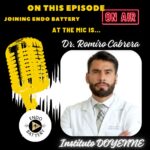
– Dr. Ramiro Cabrera, a specialist from Mexico, shares how his sister’s battle with stage 4 endometriosis inspired his mission to revolutionize care using mapping and excision surgery.
- Why pre-surgical mapping matters:
– Learn how the outdated US staging system falls short and discover the NCM protocol, a groundbreaking technique offering precise pre-surgical visualization.
– Dr. Cabrera highlights **Dr. Luciana Chamie’s** work and the need for OBGYNs to better understand endometriosis.
- Global challenges in care:
– Explore how financial incentives drive ablation procedures, often harming patient outcomes.
– Countries like El Salvador lead with new standards in care, showcasing the importance of proper diagnostics and timely interventions.
- Key Topics:
– Excision surgery, mapping, global care disparities, and the push for improved treatment options.
Website endobattery.com
EndoBattery
Speaker 1
0:03
Welcome to EndoBattery , where I share about my endometriosis and adenomyosis story and continue learning along the way . This podcast is not a substitute for professional medical advice or diagnosis , but a place to equip you with information and a sense of community , ensuring you never have to face this journey alone . Join me as I navigate the ups and downs and share stories of strength , resilience and hope . While navigating the world of endometriosis and adenomyosis , from personal experience to expert insights , I'm your host , alana , and this is EndoBattery charging our lives when endometriosis drains us . Welcome back to EndoBattery , grab your cup of coffee or your cup of tea and join me at the table .
Speaker 1
0:46
Today I'm joined by my guest , dr Romero Cabrera , who is a distinguished endometriosis excision specialist based in Mexico , with extensive expertise in diagnosis and surgical treatment of endometriosis . Dr Ram has earned a reputation for his innovative and patient-centered approach . His commitment to advancing the field of gynecological surgery , combined with his compassionate care , has made him a leading figure in the management of endometriosis . Dr Ram's work not only improves the quality of life for his patients , but also contributes significantly to the global understanding of this challenging condition . Please help me in welcoming Dr Romero Cabrera . Thank you , dr Ram Cabrera , for joining me today . I appreciate you taking the time and the work that you're doing and the impact that you're making for the endometriosis community is it's massive . So thank you so much for joining me and taking the time to share your wisdom and knowledge .
Speaker 2
1:38
Oh my God . Well , the pleasure is mine .
Speaker 1
1:40
Can you explain to us just a glimpse into why endometriosis for you , why you're passionate about it ?
Speaker 2
1:47
I think it's really important for the community of patients with endometriosis to get validated , because that's why I did an expertise in deep endometriosis and this is a really personal thing for me because I don't know if you knew but my sister that obviously I love , my sister had a deep endometriosis , stage four . So , by shame , in our full life my sister went under through five surgeries . Each one of them , as you probably knew , were without the high quality protocol , without mapping of deep endometriosis . They only performed transvaginal ultrasound . They went to the doctor and they told them that it was IBS irritable bowel syndrome . She underwent surgery for the endometrial cyst , so endometrioma . Then she lost one ovary because of a doctor that believed that it was cancer and she continued with chronic pain and , as you can imagine , even underwent through IVF to get my nephews . So I saw in firsthand how harmful the disease can be . I saw in firsthand someone that I love the amount of pain that it can go through . I even sometimes carry my sister , you know , because when she was in his period sometimes she got vagal symptoms . That means that the blood pressure went down and she turned bad and fainted , even in the showers . I have to carry my sister out of the shower . And it was really important for me because I don't know if you knew , but my dad was the president of oncology in the country , so we get access to the best surgeons in the country . And even my sister underwent to the US to the Houston Texas hospital and she went under surgery there with someone that was , or supposed to be , a specialist in endometriosis . And by all these reasons they even they perform ablation . So I asked you can imagine to see someone that you love so deeply with that amount of pain losing partners because by shame she lose even a husband . So imagine that going through many years .
Speaker 2
3:47
And I promised myself that when I did the specialty with Professor Kondo and I tried to , you know , improve when I went one year to Europe to see the best in the world to do this type of surgery , to never let anyone like my sister to go through that pain you get me , or to go through the losses of babies , to go through the losses of IVFs , the amount of money we spend as a family , the amount of gaslighting sometimes that doctors used to say to my sister , even though my father was one of the best doctors in the country . So I started to see how patients were mistreated . I didn't went through validation about the symptoms . They used to think that she was crazy . So she went to the psychiatrist and it wasn't until I came to Mexico and the only thing I did it's not because I'm a genius or something , I just bring the high-quality treatment to Mexico .
Speaker 2
4:39
We start performing mapping , like they do in Italy and Brazil . We start doing excision therapy and I was the one who did the surgery for my sister after she got finally a release of the pain . Obviously it's a process , because not the surgery will never cure , just endometriosis . We have everything for it . We have physiotherapy , we have pain medicine doctors , we have neuropathologists and I see now that my sister , thanks to God , now she is with my nephews and she is without pain and she can even , you know , like , love them and be with them without pain . So that's why I swear to my life and to my soul that I will treat patients like I should treat my sister .
Speaker 1
5:18
Yeah , that's . I feel like that's so refreshing to hear , but I feel like so many of the providers who are pushing the boundaries in care as far as making it better and more accessible and validating the patients come from personal experience . And I know for me personally , doing this podcast is because I've got kids and the chances of them having endometriosis is much higher than you know other people .
Speaker 1
5:43
Yeah , and so you're advocating for not only the people you love , but for future generations , and working for making the system better , and I think one of the ways that you have done that , which you've done a lot of different things that have been amazing to see , and I'm really excited to see what you're doing overall but one of the things that I think is fascinating and we need to look more at is the mapping . Can you explain to us what is mapping ? What do you do for mapping ?
Speaker 2
6:13
Of course it's not something that I create . It's something that we replicate in Mexico and now it's being replicated worldwide . Mapping of the dipendometriosis started in Europe , in France and in Italy . They found out that the radiologists who are used to see deep endometriosis with the special protocols because everyone in the US have an MRI every hospital , every hospital , has the best ultrasound . I can't even assure you they have even better ultrasounds than the rest of the world . But the problem is that the radiologist needs to go to a learning curve to see deep endometriosis . By this we have to remember that endometriosis has to be subdivided in three types . Something is peritoneal , this is superficial . That is the one that is so little that even sometimes the human eye cannot see . Deep endometriosis is the one that infiltrates itself to other organs , and that's the one we can see through special imaging studies . And ovarian endometrioma . That is the one that's super easy to diagnose . With a normal office ultrasound . You can see the chocolate cyst and then we can suspect endometriosis . Now in Europe and France , in Italy , they started seeing that the radiologists to see this every day have better sensibility . That means that the eyes can see better , depending on the diagnosis , than the normal radiology population and they started to see that if they go before the study to do a rectal enema and when they perform MRIs they put a rectal gel , a vaginal gel and some medication for the bowel to not move , then they can see better the disease . You get me . And with this , without going through surgery , they can diagnose if you have endometriosis , deep endometriosis in the bowel , in the bladder , in the diaphragm . So with this the surgeon can individualize the treatment and then get a special team of surgeons . If you have endometriosis in the diaphragm , then we need a cardiothoracic surgeon and so on . If you have endometriosis in the bladder , a urinary surgeon . If you have endometriosis in the colorectal area , we need a colorectal surgeon .
Speaker 2
8:15
So in Italy and France they start doing something that is a high quality treatment . High quality treatment defines itself by doing a mapping of deep endometriosis . The mapping of deep endometriosis is a specialized imaging study in which an expert in radiology that has a super long learning curve at least five to 10 years with a specialized protocol . That means with bowel gel , rectal gel , bowel inhibitory movement medication , with an MRI , or if they are going to do an ultrasound . It's not a normal ultrasound , I will say to you , it's an algorithm in which we have to see the african , we have to see the appendix , the sesum , we have to see the full bowel . That's an abdominal ultrasound with a bowel preparation . And then we go through the transvaginal ultrasound and see not only the uterus and ovaries because , remember , by definition endometriosis is outside the uterus . So we have the bowel , the bladder , the ureters and with this a true expert in imaging can send us a classification , a presurgical classification that is mandatory worldwide . It's called the ANSI classification
Surgery Mapping Importance in Endometriosis
Speaker 2
9:22
.
Speaker 2
9:22
In the US they are still doing something that it's called the ancient classification .
Speaker 2
9:24
In the us they are still doing something that it's a association for reproductive society of medicine , a classification that divides the the disease in stages , stage one to stage four .
Speaker 2
9:34
Right now that classification is really old , is the one that my father used to use , because if they go under surgery and they classify you with stage four , like they did with my sister , my sister sister will tell you oh , thank you very much , but that doesn't mean anything .
Speaker 2
9:50
That means that I have in every place . With the NCM protocol we can do the classification before surgery that's mandatory and with this we can see if the disease is affecting the intestine , the bladder or other organs and not only see if it's affecting , we can also see the size of the nodule , the length , the percentage of bowel affection . So with this we can plan the surgery before going in , because we'll never do again a laparoscopic diagnosis surgery without the mapping If they are going to do a laparoscopic surgery . The human eye cannot see through tissue , so if they enter and see everything attached to itself like a frozen pelvis , no surgeon , no surgeon worldwide , even the best surgeon in the world , even myself , if I go without a mapping , I cannot see the nodule because I can only see the superficial layers of the organs .
Speaker 1
10:43
Yes , I think that's fascinating and also I agree because I would say that prior to my surgery there was not any of that mapping and I question whether they even got full disease because they didn't properly prepare . And I also think that it's almost a disservice to the patients to not do some mapping . It's a disservice because we don't know what we're getting ourselves into . So a lot of patients in the US go in for an excision surgery but come out with a colostomy bag or more of a major surgery than what they had anticipated , and that affects their recovery Right .
Speaker 2
11:21
Of course and that's really important , because it's not the same that the surgeons or the group of surgeons know the size of the nodule , where is it located ? Because the most important part is now worldwide . We will not perform colostomy or ileostomy . We can only perform it if the bowel nerve is something that is in a low resection . That means that it's really close to the anal verge , because the nerves are really really affected , or sometimes the irrigation to the bowel is affected . So in that type of cases , if the nodule is less than five centimeters from the anal verge , sometimes we have to perform a colostomy , but if not , we will always do primary reanastomosis , always Because endometriosis is not cancer .
Speaker 2
12:04
So , as I told you , my father was the president of oncology in my country . In the old days , everything when we cut the intestine it was colostomy or ileostomy just because it was safer for the patient . But because endometriosis is not cancer and the patients are young and also they are healthy , we can perform a primary anastomosis . In over 95% of cases we perform the primary anastomosis without VAC , without ileostomy or colostomy , and that should be . It should be speak to the patient with a mapping . So if you have an anus , if it's really far away from the anal verge . If it's three centimeters long , okay , we have to do a bowel resection , but we are not doing a colostomy , we are doing primary anastomosis . And then the patient understand , they understand how the surgery is going to be , who's going to enter surgery ?
Speaker 2
12:54
Because here in Mexico they used to go on their surgery for deep endometriosis and then , oh , we have to call the colorectal surgeon because everything was attached . And what did they do ? Nothing because the colorectal surgeon , because everything was attached . And what did they do ? Nothing . Because the colorectal surgeon even knew the patient . So they will never go under the risk of cutting that part of the nodule . So all the time , the disease is not recurrency , it's persistence of the disease . They didn't take the nodule away , you get me . So that's why it's mandatory . It's not only my center in Mexico City or Tijuana . They are doing it in Brazil , they are doing it in Italy , they are doing it in France , in Dubai , all the world centers that are certified are doing mapping . That's the end point of it . So if you're a patient with deep endometriosis and they're trying to do a diagnosis laparoscopy , please tell them . No , I don't think it's the best option . You get me .
Speaker 1
13:54
And we hear that a lot and I think a lot of times it comes from most of the general OBGYNs who are going in , who maybe have an understanding somewhat of endometriosis but not the surgical technique to be able to address endometriosis at its full scope . And that's where I feel like we need to be better at communicating why this is so important . It's like walking into a horror show and not knowing what you're getting yourself into . You know and you're thinking it's a musical , it's not going to work out for you . Well , you know , and I think that's why it's so important to have pre-surgical mapping done . And this is fairly new , even in concept , to me , in the last year and a half probably , and I wish I would have known earlier . But here we are and now I'm learning .
Speaker 2
14:34
So and it's important because also in the US it wasn't already protocolized . But thanks to one doctor it's a friend of mine though . It's Luciana Chamier . If you can research her work , she's doing amazing work in radiology . She's a radiologist from Brazil . She has a postdoctorate in radiology , a study of deep endometriosis . So now she went to Harvard and I think that also Stanford and they are doing , thanks to Luciana Chamier , make the first protocol in the US .
Speaker 2
15:04
The Radiology Magazine that is the best magazine for radiologists that now says that it's mandatory to do three levels of ultrasound for deep endometriosis . So now they're putting mapping first , thanks to God . And the US now is advancing and now they have now the bibliography you get me . So now it's in solid stages . No other doctor would say , no , that doesn't exist . Now it exists and it's in the best magazine in the world , thanks to Luciana Chamier .
Speaker 2
15:34
So , as myself , there are many doctors who are trying to work for patients to get validated symptoms , to get you know , to see the disease before surgery and to do a planned surgery . So that's also really important . And something I think that you should also add to this podcast is that the surgery itself should always be done by true experts in the kitchen . Yes , and I will always make it clear , like my grandfather used to tell me , doing surgery is like playing the piano . You can take a 10 year lessons to play the piano , like I did . I used to take piano lessons , but I cannot create Mozart or Vivaldi . I cannot create . I can only play Coldplay . You get me , even if I 10 years , so that's an innate ability . Sometimes doing surgery you have to have obviously classes and life , fellowships and everything . But not every surgeon would get into the point to get to full disease , because sometimes the disease affects the pelvic nerves , sometimes the disease affects the intestine , the bladder , the diaphragm , and if you don't have the skills to do it , even though you can stay 20 years in medical school and residency , some doctors , by shame , will not get into the point . So that's why you have to get certified in surgery , you have to get validated that your surgery is a full , complete excision . You have to know how to not damage the organ that you're treating and leave function , because an oncologist , all oncologists , can take any organ away , like my father , but they always take it away but the function of the organ will be affected because it's cancer and if I leave you with an ileostomy or colostomy or something that you cannot pee for your full life or cannot have orgasms , you will still say thank you doctor , because I'm still alive . It was cancer In endometriosis .
Speaker 2
17:28
It's totally different . Yes , endometriosis is not cancer . So if I do surgery like an oncologist and I cut the nerves , then you will not say thank you doctor . You will say , hey , I entered with pain and now I cannot poo , I cannot pee and I cannot have orgasms . So it was oh , thank you doctor , you get me . Yeah , because it's not cancer . That's the difference between an oncologist , who is one of the best surgeons worldwide and can take any organ away , and the endometriosis surgeon . We took parts of that organ , but will it function ? That's something really important .
Speaker 1
18:03
I think that's key . I would say that it's how , first of all , how we approach our surgeries . Do we want complete surgery or do you just want to survive ? And that is a big difference , I think , for a lot of patients is we do get stuck in this survival mode . I just want the pain to go away .
Speaker 1
18:24
But there is the other side of that coin . If you don't have someone on the team that maybe is a neuropelviologist to look at , you know those nerves and nerve preservation , because those nerves serve a purpose , every organ serves a purpose in your body , and if we don't take care of those organs , there's going to be a repercussion . And I think I didn't really fully understand that and I am still dealing with the repercussions of that . Is my pain better ? Absolutely , my pain's better . Is my quality of life better ? Absolutely , my quality of life is better . But is it complete ? Not necessarily . I'm still fighting , you know , and I think that that is the big picture and something that I admire so much about what you are doing in your clinics is your team is like a stellar team of just ram-packed that's what I'm going to call it ram-packed the specialists , because they're looking at every component , they're not looking at just the front end of the surgery . They're looking at lifelong effects of endometriosis .
Speaker 2
19:32
And now you understand something that we were talking about before . I'm treating my patients like they are my sister . She's not just take away the organ and see you in 20 years and let's see how your life goes . No , the surgery is also a really key point of treatment . But we also have a post-op treatment like physiotherapy , pelvic nerve function .
Speaker 2
19:49
Some patients undergo , by obvious reasons because of surgery , just something we call neuropractic . That means that the nerves is inflamed . If we do not treat that inflamed nerve they will always stay with pain during sex . They can have like a chronic constipation . They can have strange a chronic constipation . They can have strange feelings during urination , even though the quality of life get better . If they do not treat this , then we're not doing full treatment . You get me so , where my sister is not just going to do surgery . It's more . It's most important how you're going to be well with your kids , with your family , how you're going to be with a normal life . You get me after surgery . Obviously it's not Harry Potter , as I told my patients , I'm not Harry Potter , it's not Abracadabra and you're everything fine .
Speaker 2
20:34
It's a process , sometimes even with you will probably talk with Dr Sierra or Passover . That are the ones who are moving their physiology and chronic pain sometimes gets into the brain . That means as centrant , sensibilization , and also peripheral . So that means that the brain , it normalized the pain . It already have normalized pain . So sometimes even the nerves , the only thing that remember that , the feelings , or even the nerves , the pain , is information . So sometimes the nerve is so affected that the only thing that it knows is pain . So even if you just do something that is a touch , the nerve is so used to pain that they change the information to oh , that's also pain . So you have to change the ways of the brain , to change the neurotransmitter , to change everything . It's not just surgery . Right , even you can have surgery in the world , and if they do not have this postoperative care , you will still have pain .
Speaker 1
21:29
Yeah , what do you find the most challenging about doing deep infiltrating mapping ? Because I would assume that it's not all roses all the time and it's not an easy process all the time . What do you feel like is the biggest challenge in doing this mapping ?
Speaker 2
21:45
Well , in the mapping the challenge are obvious by all reasons that the radiologist is an expert . Right now in Mexico we have only for over 20 million women affected . In Mexico we have only three radiologists that are the ones who can perform mapping . So our center we have a waiting list just for mapping . So imagine that Patients , we have 20 million women affected and thanks to the social networks and thanks to you that are letting me you know , process the information and pass by adequate information , many patients it's like , oh , I want to do the mapping , but worldwide there are really a small amount of radiologists that can perform mapping . So that's the most important part .
Improving Endometriosis Treatment Worldwide
Speaker 2
22:27
Also , many radiologists do not validate the symptoms . So they have the same amount of money if they learn mapping of endometriosis like they perform a normal transvaginal ultrasound . That's why the US will take too long to change , because if they I don't know if you knew , but in the US if they perform ablation or excision , the doctor wins the same amount of money . So excision is a super hard skill surgery with higher risk . Ablation is just to enter and burn the tissue . So all the doctors are like , if I'm going to earn the same amount of money , I will do ablation Right and many radiologists are doing the same amount of money . I will do ablation Right and many radiologists are doing the same . If they just do transvaginal ultrasound , that will take 10 minutes and the mapping takes 40 , 50 minutes one hour . They're like no , I prefer to do five in one hour than doing one in one hour . So that's a really big problem worldwide .
Speaker 2
23:23
Many doctors , because of the hard skill and they have to , you know overcompensate the skills . They have to work harder . They sometimes do not believe that it's worth the work . I do it because my sister underwent through this Some surgeries . I don't even earn more money .
Speaker 2
23:40
Many patients in Mexico , as you can imagine , it's a third world country , so they don't have money . I have patients that I even have to pay for my wallet so they can get the surgery , because they have even suicidal attempts and I'm a human being . It's like , hey , you will not kill yourself because of pain . If I have to pay $1,000 , I will pay too because you're a human being . Human beings , there's no money for a human life . So sometimes I even have to pay for my own wallet to get patients better and they pay me back . Sometimes . If they don't pay me back , I don't care for them . And that's something that many doctors in US and Canada , because they earn really good amount of money . They are like no , if I have to do a course and then I have to go to Italy , to Mexico , instead of getting vacations , no , I will stay here , right . And then I have to go to Italy , to Mexico , instead of getting vacations , no , I will stay here .
Speaker 1
24:25
Right , and I do think that that I mean that's a huge issue in the US . I can attest to this because my second surgery was supposed to be a laparoscopic ablation surgery . I didn't know the difference at that point . That was in 2013 , 2012 . And so I didn't know the difference and what ended up happening was I had a laparotomy because I had so much endometriosis on my bowels and let me just tell you , the recovery on that was intense . It was three months of not being able to lay flat . It was three and it didn't solve anything .
Speaker 1
25:03
Course . They put you on the Lupron and they put you on the , the birth control , and you know all of those things . And what that did is when I went to go have my excision surgery , knowing that I had all of this involvement bowel involvement , amongst others it really created a harder time for my surgeon to be able to even do some of the surgery because he had to go through adhesions like crazy , right . And that's why I think that what you're talking about is so important , because getting that mapping , doing it right the first time , will prevent a lot of that long-term effect .
Speaker 2
25:38
Yes , I think that that's the most important part of it and , as you , I'm so sorry because you underwent through the full list of low quality treatment . Sorry about mapping laparotomy that we should never do for deep endometriosis , something that is called the pseudomenopause , or the chemical frustration that we do not use anymore . Oh , I'm so sorry and by shame , I wish that you were aware . You know , like a sporadic case , but I see this every day . I see one of the most harmful cases for me it was a patient that was 11 years old already two surgeries , two laparotomies and they took away the ovary .
Speaker 2
26:19
So imagine an 11-year-old and the antimalarian hormone that is , the Ovarian Reserve , was in 0.7 . That's the same amount like a 45-year-old . So , and she still having the metastasis and like a malformation , and I cannot believe that . That was the first time that I even want to . You know , punch someone like oh my God , that's being harmful . You know that's ignorance . Ignorance , that's being like really bad it's . It was something that hurt me . You know it's like , oh my god , how can we change this and what can you do ? You know , see a patient at 11 year old already with a reproductive life totally lost . It was like oh my god . So imagine that in all over the world and the amount of cases we have we have 200 million it's something that it's really , really , really , really bad , so we have to be really careful about that .
Speaker 1
27:10
Yeah , and that's why I'm pushing this so much . And we talked about I have two girls and with that , higher probability of endometriosis , we have to talk about this for future generations to prevent that . We have to talk about this for future generations to prevent that . And I think something that I've been focused on and something I've been talking about with Nancy Peterson lately actually was the fact that young children are being stripped of the option of future fertility .
Speaker 1
27:36
And it's starting younger and younger and as parents we want to do everything we can for our kids , to make sure that they have a full life and it's not full of pain . But it takes more than just a surgery to do that . It takes getting the right surgeons at the right time .
Speaker 2
27:54
I know and that's really , really important because right now , now you understand a little bit better that even the cause of the disease is not just for drug administration , it's mostigenetic disease and that's why even yes , even my sister and my nephews , they can have a little bit more chances of having the disease . And now we just change the future generation with education and maybe change the inflammatory diet to an anti-inflammatory diet , to get less alcohol consumption , to get less tobacco usage , then sometimes the disease can control itself in early stages . It's not the same the patient that have a four-centimeter nodule that the one that has a millimetric nodule . So we have to change this because there are 200 million women affected and probably more . Now talking about this , it's a little bit really sad that the disease is in patients that are with a uterus , and sometimes even senators or presidents , and all this undervalidate the disease . It's like is it cancer ? No . Does it kill the patient ? No . What does it do ? Chronic pain and infertility . So they don't even believe that the this should be , you know , like taken care of .
Speaker 2
29:07
I think that this is really bad because now in mexico we're trying , we're working with the senate so we can create even laws . I know by heart , shannon , con and also patricio that are the ones who created below the belt and Endowat . I bring them to the Senate , to you know , it was really beautiful to see the senators to see the documentary , but by shame when they understand that they need to put money and it's a disease of women and it's not cancer . Imagine that in Mexico there are children with cancer and they don't even have medication . So imagine endometriosis they don't even take care of it . So I think that in developing countries like ours , we have to change it and that's why , as soon as we are working with Shannon , with Patricia and worldwide with many other advocates , we found that the problem in the US and Canada was that you have around 20 million women affected , 25 million in the US and around 10 million in Canada and right now certified centers are less than 20 . So we're trying to change this , like the Atlanta Center , with doctors in Erbo and JD . There are many others , like Abimawath in Miami and Washington . You have really good surgeons , but the problem is that they are too and they have even a waiting list of two years . Nocelio has a waiting list of two years . That's why many of them we came together to Tijuana .
Speaker 2
30:30
The Tijuana Center was created by Dr Jorge Zavala because he saw how many patients are affected . Even her is affected . So he's a really well-renowned doctor over there and he has a center . So he offered the center for the world top surgeons to go and do surgery there . So the patients from Canada and the US doesn't have to go through the waiting list . And the most important part is that every time we go we go like five or six top of the world doctors and we enter to the surgery . So it's really beautiful because some cases are like really big cases yeah , so it's not the same like one really good surgeon enter that you have a three , three of top of the world . So that type of surgery is less risk . You cannot imagine when you see someone that is top of the world , imagine three at the same time . It's like simbolic , it's amazing .
Speaker 1
31:21
Yeah , well , it's interesting because I actually love that perspective too , because going to the endometriosis summit and they do this panel and they talk about the different approaches that they take surgically and they they kind of test each other back and forth and I think there is so much power in that and there's so much power in surgeons . It's the iron sharpening iron , and I think that can only benefit the patient and the surgeon .
Speaker 2
31:44
Yeah , and that's amazing because we have had in the Tijuana Center like cases with super multi-organic involvement the apharic intestine , bladder and sometimes that type of cases for one surgeon take like six hours . If we enter three , we reduce the risk and we reduce the hours . So , yeah , and the most important beautiful thing is that you see the patient post-op and it's amazing , they go home two , three days after , even with the afragmatic resection , and you're like , oh , this is good work . So that's why we created that center
Global Impact of Endometriosis Care
Speaker 2
32:16
. So right now , even Marcelo Chacaroni from Italy , william Kondo from Brazil , many , many , many surgeons are going to the Tijuana Center to solve the problem of North America , because right now we have patients that have even tried to commit suicide . We have a law in Canada that now with endometriosis you can go with assisted suicide . That's really bad . So imagine that they're changing laws to commit suicide . They're not changing laws to create a good health care system to treat endometriosis . So it's something that is shameful and we have to change it .
Speaker 1
32:51
Yeah , it's amazing . I am really excited to see how this progresses and how this changes the dynamic of endometriosis care going forward . What are you hopeful for moving forward in endometriosis care going forward ? What are you hopeful for moving forward in endometriosis care ?
Speaker 2
33:06
Oh my God . Well , one of my best wishes worldwide . Before , when I was younger , I tried to become one of the best centers worldwide . That was my wish . Now I change it . It changes a lot because I underwent just right now through some personal duel and I went to to Colombia and my patient treat me . I was a little bit sad over there and then she was telling me like , like you , like , oh my god , thank you so much , doctor , for everything you have done . And I told him like , yeah , but the problem is that right now I'm going through a dual and she told me you don't understand the amount of changes that you have done just by education . And the second thing that she told me you don't understand the amount of changes that you have done just by education . And the second thing that she made me understand really beautifully is that now I don't want to be like the best surgeon worldwide or the best center . She told me something really important is that how do surgeons transcend or how do we change the quality of life of women ? Now it's really beautiful for me to change the perspective , change the quality of life of women . Now , it's really beautiful for me to change the perspective . And really , because sometimes we have 10 , 12 surgeries weekly and sometimes we have 20 patients to see in the same day . We're tired , you know . But now she changed my perspective to see that every time I do a good surgery and good post-op and everything , like my sister , my sister go every night and hug her children and she's without pain . And that's how we transcend , because every time I'm tired or I'm sad , because we're human beings , you know , it's worthy the amount of effort that we do . So now I don't want to be the best surgeon or the best center . The only thing that I want is , you know , obviously , to be happy . But the second thing is that my patients can get home and they have a good quality of life and be with their loved ones . And that's the way a surgeon should transcend , because through all that lives that we change and through all that lives that she can get , like my sister , to her family and hug them and be , you know , love them , and without pain . That's how we will transcend forever . Yeah , so that's a good wish that I could change worldwide . If we can only change worldwide how they should treat it , then super easy .
Speaker 2
35:15
I think that the only way to change this because I don't know if you knew , but El Salvador , the country , the one who approached to us was the first lady . So the first lady was saying about endometriosis it was amazing , el Salvador is something out of this world . Even the president is really good and intelligent . So the first lady sent us a letter to the Minister of Health and they invited us to change in one year endometriosis care . So they understand mapping , they understand everything , and it's like I will put all of the doctors of El Salvador to see this and we're going to create one center for full Salvador with mapping , excision , everything . So you can understand how a full country just by one mandate . That was the first lady . They changed one year everything and it was like , oh my God , that's how it's supposed to be done , but that's a presidency . So imagine if the first lady of the US approached us and they can enter with mapping and everything else , the problem is solved . But that's something hard .
Speaker 1
36:22
It is . It's something hard . It is . It's extremely hard , and we have to break generational ties to what used to be , and I think that is probably some of the hardest to do is to break all of this bad knowledge and bring in the new . And that's a really big challenge that we face here in the us specifically , and so I'm hopeful , though I'm really hopeful that we can , here in the US specifically , and so I'm hopeful , though I'm really hopeful , that we can , as a community , come together .
Speaker 1
36:47
And something that you said that is impactful is that you put yourself outside of just your happiness and what you want to do and your goals for the overall goals in life of your patients , and I think that , for me , same thing it drives me to continue going . There's moments I do want to give up , and there's moments that podcasting is not easy , because you know this is a voluntary thing for me , and so to do this , sometimes I want to give up , and it's those patients and those people that reach out to me and say this really impacted me , this really helped me , and that's what keeps me going , that's what keeps that drive alive , and I think that when we continue doing that , we will make a difference as a community and I'm really excited for that .
Speaker 2
37:28
Yeah , I think that the most important part is to change this and , yes , thank you very much for having me . Obviously , whatever we can do to change the quality of life for women , we will do it . I will send you the presentation as well as a mapping study so you can see how we are doing it , and also , you can send this to other patients . They can , you know , ask for this for their doctors . Just by asking . With this , they will change the quality of surgery , they will change the quality of treatment , and that's something that we should change .
Speaker 1
37:57
Yeah , absolutely . Thank you , dr Carpenter , for all your time and for your energy and effort . I appreciate you so much more than you probably realize , so thank you so much .
Speaker 2
38:06
Oh no , it was my pleasure and please , whatever you need Also , I'm there already for you guys .
Speaker 1
38:11
Thank you so much . It was such a pleasure to have you on today . Do you have any questions or comments about this episode or any others ? We'd love to hear from you . While I'm not an expert , I can definitely ask one on your behalf . You can reach out in a couple of ways . Just click on the , send us a text link in the episode description , or email us directly at contact at indobatterycom . I look forward to hearing from you and , until next time , continue advocating for you and for those that you love .