
Send us a text with a question or thought on this episode ( We cannot replay from this link)
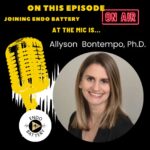
Join us for a powerful episode with Dr. Allison Bontempo, postdoctoral research fellow at Rutgers Robert Wood Johnson Medical School, as we uncover the complexities of endometriosis and the lived experiences of those affected. With a personal connection to the disease, Dr. Bontempo transformed a class project into a groundbreaking global study involving thousands, shedding light on the significant diagnostic delays that patients endure.
In this episode, we explore the critical role of patient-provider communication in shaping both mental and physical health outcomes. Dr. Bontempo shares insights into how the dismissal of patient experiences impacts care and how her research is bridging the gap between clinical practices and patient needs. We dive deep into ethical considerations, balancing personal experiences with professional research, and the power of inclusivity in medical studies.
Discover how social media is amplifying diverse patient voices, and learn about innovative tools, like new measures to assess perceived invalidation in healthcare, that aim to drive meaningful change. Dr. Bontempo also discusses the importance of community and collaboration in advancing the care of chronic illnesses, emphasizing the need for continued education among clinicians.
This episode is a must-listen for anyone invested in improving healthcare outcomes for endometriosis and other chronic conditions. It’s more than just a conversation—it’s a call to action to contribute to research that can change lives and reshape the future of compassionate healthcare.
https://www.allysoncbontempo.com/
@acbontempo
Website endobattery.com
Researching Endometriosis and Patient Experiences
Alanna
0:03
Welcome to EndoBattery , where I share about my endometriosis and adenomyosis story and continue learning along the way . This podcast is not a substitute for professional medical advice or diagnosis , but a place to equip you with information and a sense of community , ensuring you never have to face this journey alone . Join me as I navigate the ups and downs and share stories of strength , resilience and hope . While navigating the world of endometriosis and adenomyosis , from personal experience to expert insights , I'm your host , alana , and this is EndoBattery charging our lives when endometriosis drains us . Welcome back to EndoBattery . Grab your cup of coffee or your cup of tea and join me at the table .
Alanna
0:46
Today . I'm thrilled to be joined by Dr Allison Bontempo , a postdoctoral research fellow in the Department of Pediatrics at Rutgers Robert Wood Johnson Medical School . Dr Bontempo holds a PhD and an MA in health communication from Rutgers University , along with a bachelor's in science and psychology and English writing from Sacred Heart University . Along with a bachelor's in science and psychology and English writing from Sacred Heart University , her research centers on improving the patient experience , with the focus on three key areas diagnostic error , the patient-clinician relationship and patient support networks , including online communities . She's doing incredible work , exploring how relationships between patients and clinicians , as well as broader support networks , shape the patient journey , especially around issues of diagnosis . Please help me in welcoming Dr Allison Bontempo to the table . Thank you , allison , so much for joining me today and I just appreciate you taking the time out of your schedule to sit down with me and kind of discuss your story and what you're doing and everything else that has kind of come to the surface with research . So thank you for joining me , thank you .
Allyson
1:51
Thank you so much for having me , alana . I'm really excited to be here and I enjoy talking about my work , especially in spaces where patients have access , because , you know , I think they're the primary stakeholders of this work and , ultimately , I think they're the primary stakeholders of this work and , ultimately , I think it needs to reach them . So thank you for your , for your podcast and for delivering it to patients .
Alanna
2:12
Oh , absolutely . I love doing this and I hope that it is helpful for many . But you have done amazing work so far and I just want to first of all say thank you for seeing the invisible illness is not invisible and working towards that . What initially drew you to study endometriosis in women's health or chronic illnesses ?
Allyson
2:32
Yeah , so I was part of a master's program at Rutgers University and I had recently had my I think it was my first excision surgery for endometriosis had my I think it was my first excision surgery for endometriosis and I wasn't somebody who had a delayed diagnosis , which is like amazingly rare , but it was a disease that I could connect with . So in one of my classes about computer mediated communication , I decided to apply my health focus so I chose endometriosis and then , in the context of mediated communication , so you know , developing a proposal for examining online community use of individuals with endometriosis . And I hadn't really searched the literature before and you know I had to for this project and I came across this one article I think it's called like the therapeutic affordances of online communities for women with endometriosis or something like that and it was talking about this delay that was nine , 10 years , and I was like that's so kind of bananas again , like I hadn't experienced it , but I didn't realize it was such a problem . And then that led me to another study and to another study and I just kept reading about it . And then I started reading which often happens in the context of diagnostic error is , you know , the communication that takes place between patients and clinicians , and so I was finding , you know , correspondingly during this time , patients were often feeling like their symptoms were dismissed . So I put together a proposal which was the assignment for the class , and the professor , you know , not with a health background , but she was like you can actually like do this . So I designed the study . I did it during my master's and I feel like there's a lot more research out now Patients themselves doing endometriosis research , because I guess nobody else will . But so so I feel like that first study was at a time where there wasn't as much study , because I feel like I see a lot more advertising for studies on social media now .
Allyson
4:34
But this was back in like 2017 .
Allyson
4:38
And I had reached out to a bunch of enemy triosis organizations asking if they could advertise a study .
Allyson
4:44
And you know , I got like a few hundred in the first hour and it was across 40 different countries . I was like praying for like 150 because for certain , like analysis , like you need to have a certain amount to detect if there's a correlation between two things . And then I got like easily 150 in the first hour and I got I think it was like 1700 patients , and then in the comments , like I had a comment section at the end Is there anything else that you want to share about your experiences ? In case I missed something , that was important and not really expecting patients to fill it out , but half the patients , after completing a 20 to 30 minute survey , went on to talk more about their experiences and it just felt like there's such a need for people to do research in this area and I didn't realize how desperately it was needed . But it was almost like that survey was a forum for patients to feel heard where historically they haven't felt heard by the medical community Not that I'm , you know , a medical person myself , but just institutionally I guess .
Alanna
5:46
Yeah .
Allyson
5:47
So you know , when patients thanked me in their comments and I was like , well , that's not how research is supposed to work , I should be thanking you for your time I did a little gift card raffle , but they did this on their own time . Essentially After that , I was like I really want this and I was like , am I going to go for a PhD now ? So I can , you know , continue doing this . But it was really that study and that response to that study that , once I got a taste of it , you know , I just love being able to do this and feel like I'm helping people , even if it's just providing an outlet or a forum for them to feel heard and feel respected and feel like they are important .
Alanna
6:28
Well , and I think that's so important because many of us have had the experience of not feeling important , like what we're going through isn't validated because it's not real , you can't see it and it's really misunderstood . How do you do research for endometriosis when it's widely misunderstood , not only by the providers but the patient ?
Allyson
6:47
You know , that's the thing too , is . You know , in my research I left it open to patient . Yeah , I didn't say , like you have to have this endometriosis diagnosis . So for one thing , I didn't exclude those patients because , again , historically a lot of these patients have felt excluded . I felt dismissed and getting diagnosis for other conditions other than endometriosis , and so I tried to apply that to endometriosis , even though you know I have endometriosis as well , and then I also used the literature to see what was going on , and I learned so much from patients from that first study and every study .
Allyson
7:24
I've learned you know what language to use , how to speak to them really , because many of whom are traumatized , and so it's just like very delicate when you're recruiting for your study , when you're corresponding with patients and participants , so that's something that I do as well . And then also when it came to drafting up my manuscripts for my papers . So my first paper that I published from my first study , I had reached out to the Center for Endometriosis Care . I think it was Heather Guidon who responded and basically I was like hey , I'm writing this paper about patients and misdiagnosis and I'm not an MD . Would you be willing to , or you and one of your clinicians , look over this to make sure I have the science correct and experiences correct ? And so I . That was another technique that I have used A lot of . My work isn't really too technical , but that one was . So it was important that for a misunderstood disease , like you were saying , that I didn't potentially perpetuate any misunderstandings about the disease .
Alanna
8:33
That's important when we were looking at research . And you know I've gotten into looking at more research and trying to understand research better and I think that what is really interesting and something that I commend you for , is reaching out to other people to make sure it is accurate , Because I feel like there's oftentimes in the medical research world where they don't necessarily go for complete accuracy as much as they go for what they want to have as their outcome . Like they test for their outcome . Their hypothesis is this , they're going to test for that , but if they don't have the base of the hypothesis correct , is the research really validated or are they skewing words ? And I think that that's so important .
Alanna
9:12
And obviously I don't look at how everyone does their research , but there are studies and there are researchers out there that take the approach of making sure that they encompass everyone within a certain community or broader , to give a better picture , have better numbers , have better outcomes for their research , and it's actual research and not just looking at you know what they want to achieve . You know , and it sounds like that's kind of how you even started was just by simply asking questions and it kind of blossomed and bloomed into something bigger than what you had anticipated . What are some things that you took away from that initial study that really blew your ?
Allyson
9:49
mind . I think endometriosis organizations realize the value of this work . I mean because these are conversations that have been happening in these communities for so long . I wasn't just trying to bring it into the academic sphere for a different audience , for clinicians who could come across it right who aren't part of these organizations . So I was grateful that they were willing to advertise the study for me because I was like , if I advertise it myself , like what credibility do I have ? Especially because I was a master's student . It was my first ever study that I had conducted , so nobody knew my name .
Allyson
10:24
So their receptiveness was , I would say , a first sign that this was research that was needed . And then , fast forwarding again to what I was saying before , was I like I had to do double take when I saw how many patients were completing the survey and I was like , is this ? Comes some kind of like bot thing happening ? But I was going through the data as it was coming in , especially because so many people wrote responses to the open-ended question . I'm like these are real people and it was very hard for me to do when I first started doing it , especially going through those qualitative open-ended responses , and they actually made me tear up when I was going through them .
Allyson
11:02
One that always sticks out in my mind is I think it was something along the lines of thank you for caring about us . We are a drowning population . No patient should have to feel like that . So just reading like this sense of desperation , even just like please do something or help us . I'm not an MD , you know . That's not my area to improve the diagnosis per se or the treatment of endometriosis .
Alanna
11:28
Did that propel you to continue doing that research ? Is that what was like the catalyst to like ? We've got to research this more and ask the patients Because , sure , the medical side of it and understanding endometriosis from the medical side is important , but if you don't understand the patients , then I feel like you're missing a whole key to complete and comprehensive care for endometriosis .
Allyson
11:48
You know , they just sounded so desperate and just helpless and that just kind of really stuck with me . But my email address was on the advertisement because , you know , per the ethics board , that's something that you have to provide patients for emailing me thanking me for doing this . I'm just like how bad of a spot is endometriosis that we're in this place , and so I just was like somebody has to do it and I'm kind of in a position where I can do it , so like I guess I'll do it . You know I'll take it on . It's been rewarding to feel like I can help patients , you know , especially because prior to being in the master's program and then this PhD program , I was in another PhD program for a year in clinical psychology and I wanted to be a licensed clinical psychologist and I wanted to help people .
Patient-Provider Communication and Medical Ethics
Allyson
12:38
And due to endometriosis slash poor recovery from endometriosis slash other chronic health conditions , I just was not recovering well . I needed to move back to where my support system largely was and that kind of crushed my dreams . And once I did the survey and I saw how appreciated it was , I felt like , okay , maybe I can help people in another way that is just as or maybe even more meaningful than what I had initially set out to do in that other program .
Alanna
13:07
Yeah , you validated something that they hadn't had validated before , that it was completely ignored or invisible .
Alanna
13:14
You know , they say endometriosis is an invisible illness and when you bring it to light it's no longer invisible , right ?
Alanna
13:20
And so when you're bringing some of these things that these patients are experiencing or going through , it's no longer invisible and you feel seen , you feel heard , you feel validated , and that means the world to patients , because we're so used to not having that and not being the center of research and not being the center of what we are going through on a daily basis .
Alanna
13:41
And I think the impact of that is substantial . And I would even say this why I think your work is so important and why I think that we've needed this forever is because there are oftentimes providers aren't necessarily listening to the patient and if there's actual research behind what these patients are saying and it's not just one patient , it's not just the whiny patient or the drug seeking patient is what they're thinking , if they're seeing that this is across the board , will that narrative change in care ? And it's not just one patient , it's not just the whiny patient or the drug seeking patient is what they're thinking . If they're seeing that this is across the board ? Will that narrative change in care ? And that's why I think the research that you're doing is so impressive and so important , because it gives voice to the patients in a way that hasn't been available as much yeah .
Allyson
14:19
I mean to me it's like , okay , this is all like discourse that I've heard from being part of these communities already , but , like you said , it's something that providers probably haven't heard . And I mean , what patient wants to mention that to a doctor that they don't have a good relationship with ? Or they see one time and then they don't see again , so they don't end up learning really what the issue is ? So one area that I'm really interested in although it'll take some training , a lot of resources is I want to demonstrate that communication , the communication that patients and clinicians have with each other , have perhaps direct but even indirect effects on patients , certainly mental health , but also their physical health . You know there are some studies showing that patient-centered communication is associated with reduced blood pressure not necessarily in endometriosis .
Allyson
15:12
but you know in patients generally that hurtful communication not in the patient-clinician relationship but in like in romantic partners , hurtful communication is associated with some inflammatory markers and endometriosis is inflammatory .
Allyson
15:30
A clinicians should care about this anyway , but if they don't , if we can speak their language and say , hey , you're actually doing harm to patients by doing this I'm hoping that more of them will be persuaded to care about this issue how they relate to patients . So , yeah , again , not to invalidate how it makes patients feel isn't important enough . I'm also trained in persuasive communication , so that's that part of my brain that's saying like , how do we get this target audience to care about something ? Because a lot of times they'll say , oh well , like mental health is not my thing , or like psychology is not , like that's for psychologists . But if we say , well , physical health is your realm , isn't it ? You know , and if we could show this , then it would be , I think , super great to be able to show that . So I'm early in my career , but at some point down the line , that's something that I would like to do .
Alanna
16:25
I feel like there's a huge correlation in that . Though I think if you talk to endometriosis patients and you know I talk to quite a few and almost all of them they're like I'm in a flare . If you ask what's going on in your life , most of the time there is a heightened state of stress or concern or something's going on and it causes this flare to just spike . I believe there's a huge correlation in that , and I think if you talk to a lot of providers who deal with this day in and day out , they would say the same thing is that the words that are said , the things that people say in , like you said , in relationships but not only patient provider relationships , but within the household make huge difference on overall health outcomes . That would be a fascinating study . I think that would be . I'll be here for that . You can ask me any of those questions you want .
Allyson
17:14
Allison . But yeah , I mean , the hope is always that you want clinicians to care anyway about how you're feeling and a lot of times I think patients can become jaded because that's just not their experience . Or you grow up until you , you know , going in for an ear infection or strep throat or you know , for something acute like that . It's a lot more cut and dry , but with chronic diseases , especially invisible illnesses's a lot more cut and dry , but with chronic diseases , especially invisible illnesses , it's less cut and dry . So just really being able to communicate with them in a way that gets them to care about this issue .
Alanna
17:53
Although you're doing like the more patient , how that correlates with their health and their experiences . We also know that medical research is what perpetuates some of the care that these patients get . Do you think that there's ethical concerns with that , especially with endometriosis ? Have you seen the result of that ?
Allyson
18:10
Well , I will say the number one reason for medical malpractice claims are patients' relationships with clinicians . Claims are patients' relationships with clinicians ? No , absolutely . There's ethical . I mean , you know the oath do no harm is just not being upheld . And you know , patients reasonably become disillusioned with the healthcare system and don't want to engage with the healthcare system because it triggers anxiety and trauma and shame and embarrassment . That's something that I'm working on right now is a review of 155 studies or something like that , not just of endometriosis but endometriosis included , but looking at the psychological and healthcare related harm of what I call symptom and ventilation , which is , I guess , a form of medical gaslighting that you know , I know a lot of patients use . But yeah , I mean , if patients are too scared to go to the doctor , even for issues that aren't related to endometriosis , how is that providing them with optimal care or even standard care ?
Alanna
19:12
Right , I feel that way . I mean , I look at and hear some of the things that have been said to patients and I think to myself are you really caring about your patient ? Are you just caring about the bottom line ? Are you seeing in your research that people are feeling the effects of the bottom line , like the providers being driven more by money than care ? Is that something that you have looked at in your research or have seen maybe the effects of because of the research that you're doing ?
Allyson
19:39
It's something that I definitely wonder myself , specifically from my own personal experiences , but also from the research that I've done , I feel like clinicians , doctors , these days , they lack interest and curiosity with patients and it's like , well , how can that be ? Because they're doctors , they're like problem solvers you think of House MD , like you know the show , but that's often not what patients get , you know , it's almost seems like they don't want to have to engage with something that's not algorithmic , right ? Because that's what they're being told is . You know , do you have this symptom ? Yes or no ? Yes , okay , go to this next set of questions . And that leaves things very black and white and , you know , if it doesn't fit within that box , it's not validated by clinicians . So we're the doctors who are genuinely interested in care about , curious about what's going on with patients and just from what's reported , they don't seem to be yeah . And again , like you cited some reasons of why that might be , you know , like concern for maybe , financial outcomes more than patient
Navigating Personal and Professional Balance
Allyson
20:43
care .
Alanna
20:43
How do you balance doing the research that you do and your own story ? Because I'm sure at some I mean it would for me , and there are times , even doing the podcast that when people tell me their stories or when I'm looking at certain stories it can almost like trigger me back to a place that I have been in the past . How do you prevent that from happening ? Or do you just let it happen and kind of work through that , being a patient yourself and then seeing what other patients are going through ? Balancing that professional and the personal , yeah , for me it's always been difficult .
Allyson
21:15
So here , in kind of a less academic space , I'm a lot more open and like I will disclose it . But in my research typically I don't you know . For example , I did an interview study . I introduced who I was , this and that I didn't say I have endometriosis . And that's always something that I struggle with , because I want them to know that I understand a lot of what they're experiencing but at the same time I don't want them to feel like I'm doing this because I'm doing me search is what we call it in PhD programs . I don't want them to feel like I don't care about them , that this is just a means to an end to understanding something that happened to me , because that's not the case . But if a patient will say , well , like , oh , just curious , what got you interested in this research , you know I'll disclose it but it is a difficult thing and you know you don't want to be judged .
Allyson
22:02
I want patients to entrust me with their stories . But I use a lot of reflective listening and comprehension checks and words of empathy , empathy tokens , not even for research . But even if I'm just writing an email with a patient about something you know I'll be like that sounds really difficult or you know , and that can be really frustrating when X , y , z happens . So I kind of fill in what they might be experiencing , because I know what it feels like and I want them to feel like they're understood and they're probably like where is she coming from , you know , if it's something that I hadn't disclosed to them . So it's something that I'm still working on finding a balance of right now . But again , like I'm open on Instagram , I'm open on Twitter , I'm not , again just because of the types of followers that I have . So , yeah , it's a difficult thing to navigate for me , to be honest .
Alanna
22:53
So do you see a disparity amongst different nationalities , ethnicities , races ? Are you seeing that in your research as well , or is that something that you haven't quite gotten into as much ?
Allyson
23:06
Yeah , admittedly it's not something I've gotten as much into . It's something that I plan to look at in future work . I am collaborating with some folks from Baylor College of Medicine and right now we're interviewing patients about their diagnostic journeys , essentially with endometriosis and lupus , who are specifically racial , ethnic minorities , and also looking at gender minorities , so non-binary folks , I mean , it could just be , you know , cisgender females as well but looking at their experiences , but I know that it takes longer to get diagnosed as a racial minority patient , at least for Black or African American patients . If you think about the diagnostic delay , what it is now the average diagnostic delay I like to emphasize the average because it's just like no , this isn't like the upper limit , this is like the average , right . If we think about that , we think about the fact that blacks and other racial minorities have largely been excluded , right ?
Allyson
24:04
So my studies a lot of time have like 85% of the sample is non-Hispanic , white and so like . If we're calculating a diagnostic delay of eight point something years with a largely well-educated white sample , what are we going to get ? When we look at minority patients with regard to socioeconomic status , regard to race , regard to gender identity , what does that look like and the research just hasn't been done yet . So , while things are hopefully improving for your diagnosis right now and more awareness and everything , the more we include those patients , I feel like that number might stay stagnant because , while the numbers might be reduced from the awareness and maybe more training and what have you , as we're also including more Blacks , racial minority patients , we're probably also seeing you know what I mean .
Allyson
24:59
So , like that's research that needs to be done . And I know I did see on Instagram , like two months ago I think it was , there was I forget what university , but they paired with EndoBlack the organization and I know that they were recruiting for a study . So I'm interested in you know , obviously it's going to take a long time for something to come out and be published , but I'd like to see what they got in the results . But we are doing myself with some colleagues at Baylor , are doing that with patients as well with endometriosis . So more needs to be done .
Alanna
25:32
For sure . I feel like that's a population that gets missed in research , or is that a very low number ? It's not equally quantifiable , if you will . It's very lopsided in research , for not only on the medical end of things but on the patient care end of things , I think we miss that whole population or don't make it accessible to them to be able to do these research studies . I think that's another element of that is it sounds like you were able to reach out outside of just the network you had and reached out to other networks to kind of provide you with those participants . But I don't think that's very common . In my understanding of it , it's not super common to reach out to those organizations . It's more like they gather these participants through usually one pathway , not multiple pathways .
Allyson
26:18
Yeah , you know what the thing with social media is then like , when it's posted on an open account , you know it can be shared , and then it just kind of snowballs from there . So then again , when we're thinking about racial minority patients who have less access to technology , we're missing probably those who are on the lower end of you know , the socioeconomic status , Something that I've thought about doing . I haven't done any studies in a while I'm designing two right now but one thing that I thought of is because I'm in New Brunswick , New Jersey , and even Rutgers itself is one of the most diverse campuses in the nation and I was like maybe , like I can recruit online , but then also I can go and I encourage listeners who do research to you know , do this too , especially if they live in diverse areas Post ads with like a QR code or something in nail salons and hair salons , where they're women-centric places in towns and cities where we know there's these racial minority patients , so we can better reach them .
Alanna
27:21
Oh , that's such a great idea . Meeting people where they're at is where we're going to get the best research . How can researchers and clinicians collaborate more effectively to translate the scientific findings into patient care , in your opinion ?
Allyson
27:36
I think patients need to be included in research , in the research process , which is something that I've started to do From my field , you know , health communication . There are health communication scholars who do research on undergraduate student samples at large universities , because that's what's convenient and I'm like , well , if you're studying , like health processes , you really need to be studying patients . So I think it's important . That's part of why I want to end up in an academic medical center or someplace where I have access to clinics and clinicians and patients . So I think that's important . But and then , in terms of translating this , I think there's like some crazy number of how long it takes for something to be realized and researched , to be implemented . I think it's like 11 or 12 years or something like that . I mean there's communication skills training for clinicians , and that's something that you know I've thought about down the line for myself , like once I figure out what can we do to address this .
Allyson
28:35
But we also have to think about clinicians' preexisting attitudes and beliefs regarding endometriosis , and that's a study that I'm starting to develop right now , because even if they have the knowledge , if they have these biases or if they have misconceptions about women , so like there's a study that talked about clinicians who withhold an endometriosis diagnosis from patients because they don't want them to be worried or they feel like they need to protect them because of concerns about fertility .
Allyson
29:04
Well , first of all , that is medical malpractice . So if you ever find out that happens to you , you can file a lawsuit because the National Academy of Medicine , its definition of diagnosis in there , includes the communication of the diagnosis to the patient . So if you're withholding diagnosis , we need to know these things to better understand , you know , even if they suspect endometriosis , we kind of need to know that like and how many clinicians have that ? So understanding , I think , and maybe even intervening on gender biases , racial biases that clinicians have , even if they do have medical knowledge for diagnosing endometriosis . So those are things that I've thought about . I mean I've thought about a lot of stuff .
Alanna
29:50
I can't do it all .
Allyson
29:50
But for other researchers too . You know , just promising lines of research , I think that to help make change and move things forward for patients with endometriosis .
Alanna
30:03
Yeah , and talking about your research , we didn't really touch on the kinds of research you have done so far . What are the names of some of your studies and your approach to those studies as ?
Allyson
30:12
I mentioned the study that we talked about before . I actually conducted that in my master's program and that was a mixed methods online survey . So that had open and closed-ended questions . It was anonymous , it was online . So that had open and closed ended questions . It was anonymous , it was online . So it was a super convenient study
Future Research Directions and Collaboration
Allyson
30:29
. And then I did another study the same type of study online , anonymous , mixed method .
Allyson
30:35
I wasn't really ready to do that , but I was taking a class where we were going to develop research questions to be administered to undergraduate students , as I was saying , a lot of places do because it's convenient . And I was like , hey , can I actually just collect data from patients ? Because I knew from that first study that I would be able to probably get a lot of responses within the course of a semester . So I wasn't quite ready to do that yet because I just got so much data from participants . But that was the second study I did . And then Heather Goodone told me about how the Endometriosis Research Center was putting out a call for a small research grant and she said you should apply . So you know , I talked to my PhD advisor about it and I was like it would be good to have the money , but I said doing what we do now like we don't really need the money . So we developed a study , an interview study that we could use the money for compensating patients for . It was an interview based study , basically about how to improve how clinicians can best support patients during diagnosis and treatment , and it talked about things like do they want them to communicate their uncertainty to them ? Do they want clinicians to acknowledge and apologize for missing their diagnosis ? I was also trying to kind of get at the fact that not all treatment options are presented to patients . But , yeah , so I did that study . So , like I still am , like I want to publish this . This is from this first study . That's from 2017 .
Allyson
32:05
And then , after a while , your data gets old . You know there's just so much and I want to do more to find other people who are doing this kind of research , because it's just too much for me to do on my own . There's so much to be said . There's so much data that I'm just sitting on . That is just like you know . You're one person . How much can you accomplish ?
Allyson
32:24
Basically , a majority of my work has focused on patient provider communication , a little bit of online community use and how that is influenced by the patient's relationship with clinicians or the care that they are or aren't getting . And I did one study that looked at how patients who felt that their symptoms were invalidated especially when they felt like they were being invalidated versus just their symptoms that was associated with reduced self-esteem , and then reduced self-esteem was associated with increased depression . So that was just kind of validating basically what we already know from what's being discussed in these online communities and in advocacy worlds and also in a lot of the qualitative interviews , study-based work , but I just wanted to confirm it using quantitative methods .
Alanna
33:14
That's interesting . What are you looking forward to as you progress within your career ? What are some more pressing research studies that you are looking to do that people can maybe look forward to you doing ? If you can share those , I think people would be interested to understand just kind of the direction you're going and if they can be part of something , because there's so many patients that want to be part of something and they want their voice to be heard but don't know how this may be a really great avenue for them to connect with you .
Allyson
33:43
I appreciate that for the plug by the way yes .
Allyson
33:47
So two projects , I have three in mind . I'll go . I'll try to go pretty fast
Advocating for Patients and Providers
Allyson
33:52
. So the first one , which I already kind of started , but I'm trying to develop a self-report , patient-reported measure of perceived invalidation in the healthcare encounter . And I want to develop this because I want to show that , hey , when this invalidation in the healthcare encounter and I want to develop this because I want to show that , hey , when this invalidation is higher , patient's depression is higher , which is kind of what I already looked at but I didn't .
Allyson
34:15
There's a whole process of validating , a scale which you know I won't get into . So , basically , just being able to quantitatively , not that qualitative and when I say qualitative I mean like interviews and focus groups , not that that's not important but again , thinking about where we ultimately want to see the change , which is in clinicians . I personally believe they put more merit in quantitative studies . Hey , if invalidation is statistically associated with increased depression , increased healthcare related anxiety and trauma , not reporting their symptoms to other people for fear of what they're going to say , if we can show that . And then ultimately , what is their quality of life like ? What are their pain levels like in the past seven days or past month ? What's their fatigue , like how many days in the past 30 days have they missed work or school from this . Now , if we can show that they have worse outcomes again , I'm hoping to persuade providers that this is something that they need to care about . So that's one thing .
Allyson
35:17
The next thing is part of that , basically , is just fleshing out what are all these negative outcomes of invalidation . So I'm doing a systematic review right now , but it's only been like two or three that have actually looked at the negative psychological harm on patients of invalidation . So that's something that I want to specifically ask patients about . And something that's really disconcerting is that suicidal ideation has been mentioned and no patient should be in that position . And the that's really disconcerting is that suicidal ideation has been mentioned and no patient should be in that position .
Allyson
35:47
And the other one is a little bit different , but as I was I think I touched on it before so I won't go into great detail but surveying clinicians , so primarily like pediatricians , internal medicine providers , family medicine providers , obgyns and possibly emergency department physicians on , again , their knowledge of endometriosis , their attitudes , beliefs , as I was mentioning before , because A I want to show that regular OBGYNs who don't have specialized training , I believe that their knowledge is going to be comparable to general practitioners , and that speaks to the lack of training and I want to be able to demonstrate that . But then also again , even if you have the knowledge , you know , biases , misconceptions , beliefs also impact . So looking at those as well .
Alanna
36:41
Oh , those are going to be good . I can't wait to see what you come up with .
Alanna
36:45
I feel like that's so true . I mean , gosh , I was talking to a friend of mine who went to just her normal primary care and she was saying that he had more knowledge than most any other doctor or specialist that she had seen , because he was looking at a more complete picture and not just like a specialized area , and so he was able to put pieces together for her or bring up potential pieces prior to her even having to say anything , even though she had her knowledge of what was going on . He brought it up and was like have you ever considered ? Have you ever ? So I think that's going to be a really fascinating study . I think that would be really interesting to see .
Allyson
37:22
Yeah , so I've been emailing some folks who might be able to help out and that's what I want to do as part of the project that I'm doing for my fellowship right now . But you know I also want to . I was like can I do two projects ? And he said yes . He said yes , but just like , again , there's so much work that needs to be done , it's just like impossible to choose .
Alanna
37:43
Yeah , it's so cool to see just that you're taking this on and I'm hopeful that other people can see the value in doing research like this and the impacts that it can make and young fellowship people coming up and seeing this and wanting to do more research . I think it's going to take more people doing it , but it's the initial step and the initial people stepping in to say I'm going to fill this space with validation and we're going to look at different components of this disease or this chronic illness that is going to change the narrative of care for those chronic illnesses . So I applaud you for doing that .
Allyson
38:15
Thank you , thank you , and if anyone's listening wants to , is a researcher who wants to collaborate , I am more than willing . As a researcher who wants to collaborate , I am more than willing because I think that's how we're going to make progress is if we all stick together and work together on these projects . I think that's how we're really going to move this forward .
Alanna
38:34
Absolutely . I would agree with that . Community is key , right , and whether it's a patient community or a professional community or a chronic illness community , all coming together , that's what makes the movement happen . So I'm excited to see what that brings in your future . For that , thank you , alison , so much for joining me and communicating that and for your passion and just thinking outside of the typical box of research . I appreciate that . Thank you so much .
Allyson
38:59
Oh , thanks so much for having me and thanks for your service with your podcast .
Alanna
39:03
Absolutely , it's my pleasure . Well , until next time , everyone , continue advocating for you and for those that you love .