

Send us a text with a question or thought on this episode ( We cannot replay from this link)
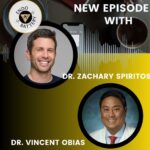
What if your “IBS” isn’t just a gut problem—but part of a larger endometriosis story that involves nerves, immune triggers, and the way your body processes pain? We sit down with a neurogastroenterologist, Dr. Zachary Spiritos and colorectal surgeon, Dr. Vincent Obias, to connect the dots between bowel endometriosis, mast cell activation, dysautonomia, and the stubborn symptoms that linger after surgery. No platitudes here—just clear explanations, candid timelines, and practical strategies that help you make sense of complex, overlapping conditions.
We explore how deep infiltrating endometriosis can change rectal compliance and bowel habits, why post-op bloating and urgency often follow colorectal procedures, and when those symptoms should improve. From the GI side, we challenge the “IBS” catch-all by listening for patterns—cyclical pain, flushing, migraines, brain fog, POTS—that point to mast cell activation or brain–gut dysregulation. You’ll hear how perioperative planning for MCAS (H1/H2 blockers, steroid rescue, anesthesia choices, fluids for POTS) reduces flares, and why excision by experienced teams beats ablation for long-term outcomes.
We also get real about the gray areas: normal tests with abnormal lives, “invisible” inflammation, and how hypermobility can complicate recovery. Expect concrete ideas—targeted imaging and ultrasound for bowel nodules, timelines for healing, SIBO and adhesions as culprits, pelvic floor retraining, sleep as a pain modulator, and GI-focused CBT or hypnosis to calm anticipatory anxiety. The big takeaway: better results come from better teams. When surgery, neuro-GI care, anesthesia planning, and pelvic rehab align, the gut, the nerves, and the person finally get on the same page.
If this conversation helped you see your symptoms in a new light, follow the show, share with a friend who needs answers, and leave a review with your top question for a future episode. Your story might guide our next deep dive.
Website endobattery.com
Endo Beyond the Pelvis
Alanna
0:00
What happens when endometriosis doesn't just affect the pelvis, but the gut, the nerves, and the very way the body communicates with itself?
Two Specialists, One Complex Problem
Alanna
0:08
Today's episode brings together two specialties who don't often sit at the same table, a neurogastroenterologist and a colorectal surgeon to unravel why so many patients fall through the cracks, from bowel endometriosis to mast cell activation, from lingering post-op symptoms to the role of multidisciplinary care. This conversation
Why Answers Aren’t Straightforward
Alanna
0:29
gets real about the complexity of endo and why answers aren't always straightforward. If
When Surgery Doesn’t End Symptoms
Alanna
0:35
you've ever wondered why symptoms persist even after surgery, or why your GI and pelvic pain seem inseparable, you're gonna want to lean in for this one.
Welcome And Host’s Mission
Alanna
0:46
Let's get started.
Community, Not Medical Advice
Alanna
0:50
Welcome to Endo Battery, where I share my journey with endometriosis and chronic illness while learning and growing along the way. This podcast is not a substitute for medical advice, but a supportive space to provide community and valuable information so you never have to face this journey
Many Views, One Table
Alanna
1:05
alone. We embrace a range of perspectives that may not always align with our own, believing that open dialogue helps us grow and gain new tools. Join
Stories And Expert Insights
Alanna
1:13
me as I share stories of strength, resilience, and hope, from personal experiences to expert insights.
Meet The Host And Show
Alanna
1:20
I'm your host, Alana, and this is Indobattery, charging our lives when Endometriosis drains us.
Coffee, Table, And Guests
Alanna
1:27
Welcome back to Indobattery. Grab your cup of coffee or your cup of tea and join me at the table.
Introducing The Physicians
Alanna
1:33
Today I'm honored to welcome two incredible physicians to the table, both whom bring unique expertise and deep commitment to caring for patients with complex conditions.
Dr. Spiritos’ Background
Alanna
1:43
First, we have Dr. Zach Spiritos, a neurogastroenterologist and internist whose journey took him from Philadelphia to North Carolina, where he's now rooted with his family. Dr. Spiritos trained at UNC School of Medicine, completed his residency at internal medicine at Emory University, and went on to a fellowship in gastroenterology at
His Focus And Approach
Alanna
2:04
Duke. He specializes in a wide range of gastrointestinal and liver disorders with particular interest in irritable bowel syndrome, functional abdominal pain, motility disorders, and dysautonomia, including conditions like POTS and mast cell activation syndrome. He also has expertise in GI complications connected to hypermobility syndromes like Eler Stanlose.
Hypermobility And GI Links
Alanna
2:27
What sets Dr. Spiritos apart is his holistic approach weaving together nutrition, lifestyle, and gut brain therapies to empower his patients. Also joining us today is Dr. Vincent Obius, a professor of surgery and chief of the Division of Colorectal Surgery for the National Capital Region. Dr. Obius trained at the Medical
Holistic Gut-Brain Care
Alanna
2:47
College of Virginia, Eastern Virginia Medical School, and Cleveland Clinic with additional advanced training and laparoscopic colorectal
Dr. Obias’ Surgical Profile
Alanna
2:55
surgery at University Hospital's Case Medical Center. He is double board certified in general and colorectal surgery, and his specialties include robotic minimally invasive techniques as well as surgery for deep infiltrating endometriosis.
Training And Specialties
Alanna
3:10
Beginning October 2025, Dr. OBS will be joining Dr. Melissa McHale and Vicky Vargas as a partner at Washington Endometriosis and Complex Surgery Group. His research and clinical work have made a lasting impact, particularly in robotic surgery outcomes and complex endometriosis care. Together, these two
Robotic And DIE Expertise
Alanna
3:30
doctors bring insights from both the gastrointestinal and surgical perspectives, making today's conversation one that promises to be both informative and empowering for patients and providers alike. Please help me in welcoming Dr. Zach Spiritos and Dr. Vincent Obius to the table. Thank you both so much for joining me today,
Upcoming Practice Move
Alanna
3:50
sitting down at the table for this conversation that's a little nuanced in direction, as that you guys don't typically work hand in hand together, but often symptoms go hand in hand somehow. Indopatients are working through the neurogastroenterology as well as colorectal side, trying to figure out the different pieces. So
Why This Duo Matters
Alanna
4:08
thank you both so much for sitting down and doing this with me.
Dr. Zac Spiritos
4:10
Well, yeah. Thanks for having us. Thank you very much.
Alanna
4:13
Can you give us each a background? And we'll start with you, Vince, a little background on what you do and kind of what you specialize in so that we have a good place to start.
Dr. Vince Obias
4:22
Sure. I'm a colorectal surgeon, board certified, about 20 years of practice. Um, I take care of deep infiltrating endometriosis, colon cancer, rectal cancer, reticulitis, inflammatory bowel disease. I've been doing um endometriosis
Setting The Conversation
Dr. Vince Obias
4:36
surgery with my minimally invasive gynecology colleagues, both at GW and Hopkins, and it's uh it's a passion of mine. There's a lot of surgeons who take care of cancer, me being one of them, but there are
Bowel Endo: Team Approach
Dr. Vince Obias
4:48
very few that uh take care of endometriosis, and I'm starting to specialize in it, and it's incredible. Some of the most challenging cases are of women with endometriosis, and certainly, you know, it's a population that uh can really um you know benefit from someone who has a lot of experience in pelvic surgery. So I'm very, very excited about it.
Alanna
5:06
Yeah. Zach, you we've had you on before, but you're back again.
Dr. Zac Spiritos
5:09
I'm a neurogastroenterologist. So I trained a Duke, and then I was at UNC and then branched out to do my own practice. I uh work
Symptoms And Broad Workups
Dr. Zac Spiritos
5:17
with folks that not only have issues with the tube itself of the GI tract, uh the namely the esophagus to the rectum, but also the wiring between the tube and the central nervous system, specifically how the tube is perceived and felt, and also how it moves and propagates kind of food, debris towards our rectum. Uh, and yeah, and try to help people work through this space as well.
Alanna
5:38
Yeah. And I think I didn't put these pieces together very well prior to us kind of talking about this, but there were so many questions last time that Zach and I did a podcast together that I felt like I couldn't answer these questions
How Endo Alters Mechanics
Alanna
5:51
and they were pretty prevalent. Like a lot of people were were asking these questions. And so just jumping into this, I really want to get a better idea of how it all functions in your own specialties, if you will. Can you describe the role of bowel endometriosis care? Like when you see Vince, when you see bowel endometriosis, what is the approach to that pre-surgical approach of mapping that out?
Dr. Vince Obias
6:17
So I always do this with gynecology. Um I don't feel that endometriosis is purely a colorectal issue. Um, the gynecologists and my colleagues, like Dr.
IBS Labels And Missed Clues
Dr. Vince Obias
6:27
Var Vicky Vargas and Melissa McHale, this is what they specialize in. So I usually get them involved. Even when some patients come in with pelvic pain and a CT showing a mass as endo, I still get them involved, a gynecologist involved. Generally, women present with pelvic pain, rectal bleeding at times, and that leads to that can be a very broad area when dealing with these symptoms. And so the workup is very broad. You know, uh sometimes the pain and bleeding that they're having is not endometriosis. So when I see them, we talk about you
Pain, Periods, And Pattern
Dr. Vince Obias
7:00
know the workup for this, which can be a variety of things, including laonoscopies, erectile exams, of course, a complete history and physical. But what I see them and they're involved, they're generally about 30 to 40 percent of women with endometriosis, it will involve the rectum or the bowel of some type. So it's it's important to have uh you know bowel surgeons like myself involved at the start.
Alanna
7:21
Yeah. How does it affect the gut mechanically, though?
Dr. Vince Obias
7:27
So um obviously if it gets large enough, you can have obstructive type symptoms. You can also, if it's deep infiltrating and eating through the wall of
Mast Cells, POTS, Hypermobility
Dr. Vince Obias
7:36
full thickness, you could see bleeding and you'll see bleeding per rectum during your menses. It can also, you know, the the rectum is sort of uh it's a capacity. Its job is to sort of stretch and maintain stools. So when you go to the bathroom, you can you can make it. And if you have endo there that kind of restricts it from inflammation, these patients tend to have a bit more urgency. Well, like they'll go to the bathroom and they don't see much. So they'll have some interesting symptoms like that. Some of these patients will be, because of what I've discussed, will have chronic constipation. And that workup, you know, which can be pretty advanced and and broad. But but endo, endo is
Post-Op Symptoms Explained
Dr. Vince Obias
8:15
it's almost one of those disease processes that we're taught in school that it's almost like a you do a full workup, and if you don't find anything, then it could be endometriosis. And it it's it's terrible that we have much better ways of finding these nodules now than we had in the past. But that that's only been in the last 10 years that I've seen. But yeah.
Alanna
8:35
Zach, on your side of it, how does the gut neurologically work typically with endometriosis patients that you see and the difference between that, what Vince is saying, and what you see?
Dr. Zac Spiritos
8:47
I think it varies. Uh, you know, it's definitely pain predominant. And so,
Nerves, Adhesions, Expectations
Dr. Zac Spiritos
8:51
you know, these patients are labeled with IBS, whatever that means, where they have a lot of pain and alterations in their bowel habits with a diagnostic workup that is fairly unrevealing. So that's what's really important to talk to these people. And, you know, because if you stay in your siloed world of GI and you say, oh, you know, what's your Bristol stool scale? Like how many times do you go in? Do you have urgency? Like, you're also like, do you have your period? Is it heavy? Is it painful? Do you have pelvic discomfort? Right. And if you expand the conversation to a true review of systems, which sometimes because of the limited time that you have in clinic or you're just kind of so focused on the GI world that you sometimes miss that. But endometriosis, you know, can certainly cause, you know, I typically just think pain, pain, pain, pain. Can it certainly cause diarrhea? Sure. Or alterations in bowel uh movements, as Vincent said, you know, if
Does The Story Fit The Surgery?
Dr. Zac Spiritos
9:39
you have this huge kind of endometrioma, you can have obstructive symptoms. I don't, I personally haven't seen that a ton, but he obviously in the surgical side sees that a lot more than I do. Alterations in bowel habits, pain, but so many things can do that, right? So many things can do that. And so I think it just behooves you to just kind of talk to the person and just make sure there's if there's any kind of gynecologic symptoms as well that would kind of lead you towards endometriosis. And my teaching is, you know, if you have painful periods, it's endometriosis until proven otherwise. Like it's your job to prove that it's not that.
Alanna
10:07
Yeah. I love that approach because I think that should be taught in school across the board because it affects so many different systems that until proven otherwise, especially if it's cyclical, should be thought of as endometriosis. Now, I think what's interesting, Zach,
When It’s Not Endo—It’s MCAS
Alanna
10:23
you talked about your mass, and this was earlier, your mass cell activation patients, all of them have endometriosis.
Dr. Zac Spiritos
10:29
All of them. I mean, not all of them. A lot of them do. It's still just really high rate. Yeah. So I see a lot of patients who have hypermobility and some have POTS or dysautonomia, and they a lot of these times have mast cell activation syndrome. And so when we talk about everything that's going on, and everybody, you know, when in a typical visit, and someone who doesn't have mast cell, they go to their PCP and they're like, is anything going on today? And mast cell, it's like, what are the five top things that bother you today? Right. And because they have so much going on. They have endless amounts of symptoms,
Surgeon Skill And Residual Disease
Dr. Zac Spiritos
11:00
and that's why these visits are required to be really, really low. And when you talk, when you start kind of going down the review of systems, like do you have painful heavy periods, the answer is often yes. And so the you will often see heavy periods, you know, mast cells secrete a lot of different chemical mediators. Heparin is actually one of them. You actually m see elevated heparin levels in their blood. And so they tend to have heavier periods, and that's fine. You can live in you can certainly ascribe a lot of things to mast cell activation syndrome, but the rate of which we see endometriosis is so high that I just have a low I have a low threshold to to involve gynecology or, you know, colorectal surgery to evaluate these patients right off the bat.
Alanna
11:36
Yeah. And part of the challenge there too for a lot of us is figuring out okay, is it is it endometriosis or is it these
Pre/Post-Op MCAS Protocols
Alanna
11:44
other things like mast cell or, you know, pots playing a part into this? One of the things that I think a lot of people struggle with is they have lingering symptoms post-operatively. So they've had excision surgery and they have lingering symptoms, whether that's constipation, whether that's food sensitivity, it might be, who knows? Like there's just a lot of bloating is another one of those things. Vince, when you're doing surgery and the outcome of that, and they're still having this bloating, they're still having, you know, all of those things,
Anesthesia, Narcotics, Flares
Alanna
12:15
is it concern for you if there's nerve involvement that is causing this? And this kind of plays hand in hand probably with what you do, Zach, as far as like the nerve involvement as well.
Dr. Vince Obias
12:25
Yeah. So I will say that those symptoms are common after bowel surgery. So when you're when let's say we someone has diverticulitis or colon cancer or rectal cancer, whenever
Multidisciplinary Care Wins
Dr. Vince Obias
12:36
we cut the bowel and put the two ends back together, bloating, discomfort, constipation, diarrhea, those are common symptoms to have after surgery for about two to three months, up to six months. Now, I will say after six months after a collectomy, the symptoms that you have are sort of your new pattern. So I tell patients all the time, I'm like, not sure you're gonna have a bowel movement like you had in your 20s, but after six months, you'll be predictable. And those conversations are really important to have. And since I'm a colorectal
Early Mobility, Simple Hacks
Dr. Vince Obias
13:06
surgeon to do bowel surgery, I do have that for patients. So their expectations are like, yeah, Doc, I'm bloated, or a little bit of gas, or I have urgency and nothing much is coming out, or I have like five or six VMs a day, but they're not upset because they knew about it coming in. Meanwhile, honestly, like gynecologists, they don't do a lot of bowel surgery. But if you're shaving or doing anything on the bowel or pelvic surgery, you could still have these same post-op symptoms. So that kind of education is important to
Rewiring The Brain-Gut Loop
Dr. Vince Obias
13:34
have up front so that they understand that's part of the healing process. Now, certainly, can endo come back quickly? Certainly. I think you know that's one of the things we worry about. But when we do excisional, they don't usually come back that quickly. But you are dealing with the post-surgical in terms of scar tissue, in terms of inflammation from the surgery. Like I said, that if you're doing pelvic surgery and you're mobilizing everything down there, even if you don't cut the rectum or bowel, the scar tissue and inflammation will change your bowel habits afterwards. And so when you go in with bloating and discomfort and you leave with bloating, you're feeling, oh, nothing was done. But that's part of the process. Give it time, three to six months later. That should be improved and certainly more predictable. In terms of nerves, so the nerves I deal with, especially in cancer, which we don't really run to when I we run into an
Therapy, Sleep, And Habits
Dr. Vince Obias
14:23
endometriosis, is sort of near the it's associated with like sexual function, uh, and men erection, obviously, clip clitoral erection, it can be associated with, and bladder function. It but they're more posterior to the rectum and maybe not necessarily intrinsic to the bowel, but if that's normally the nerves that we would deal with, and that's more of a you know, removing the rectum uh for cancer.
Alanna
14:46
Yeah. Zach, do you see after surgeries if people come to you, they're still having issues with GI, it could be related to that mast cell activation post-surgical that's ramped up even more because of surgery, you think?
Dr. Zac Spiritos
14:59
It depends. Like Vince's end, like, you know, you don't want to pathologize everything postoperatively, right? Like
The 21-Year-Old Case Puzzle
Dr. Zac Spiritos
15:04
sometimes it's just a healing process. The question is like, does it make sense, right? Like, do they remove the TI, the terminal ileum, and acid mal diarrhea? Like that makes sense to me, right? If you have a colectomy and you have diarrhea, like, all right, like you lost your rectum. If there's rectal sparing surgeries and whatnot, but does the surgery and what happened pair with what you're experiencing, right? You know, you can develop certainly like SIBO postoperatively, right? Is it adhesions? Is it is it the narcotics to take post-operatively? You know, is it um so there's things that exist certainly outside of mast cell activation syndrome. So you take the person, the surgical intervention, and
Narrative Over Normal Tests
Dr. Zac Spiritos
15:35
what their symptoms are, and you try to combine all three. I have had patients with mast cell whose symptoms were attributed to endometriosis, they had endometriosis, surgery was like was performed and they felt no better because it was just mast cell, right? But you have to do that. You are required to look for those things because endometriosis can affect so many things. Fertility, right? Like and so you want to do your due diligence when there's something you can intervene and and fix. Um and you can easily fall into a trap where you blame everything on mast cell activation syndrome, which you don't want to do. You want to, you know, fortunately when people come to me, they've had all the testing. So I don't really have a lot of run left, but you still want to keep a wide
Surgery Isn’t A Magic Blade
Dr. Zac Spiritos
16:10
kind of lens, don't be myopic and keep everything in perspective. And so yeah, does it does the does do the symptoms fit what happened? And can you can you kind of create a nice story with what's happening if you can't, and you know, there's like food intolerances and brain fog after surgery, like that's not related to the surgery, right? That's something different. And so you just have to understand the surgery, understand what the symptoms are, and how to kind of connect the dots.
Alanna
16:35
Yeah. And I
Imaging And Limits Of Scopes
Alanna
16:36
can tell you, having a good surgery with a qualified expert in this will make a difference in the outcomes. I mean, if you're having a general G Y N, and I'm not bashing on them, but if you have a general GYN doing your surgery, chances are there's disease left behind. And that because they're not trained to excise the disease. They're trained oftentimes to do ablation, which can cause more scarring and stuff like that. Vince, have you experienced that you've done you've done resections and you've been in surgeries where they've had multiple surgeries,
Inflammation Or Nerve—Or Both?
Alanna
17:10
they continue having these symptoms. Is it typically disease state that you're seeing again, or is it, you know, something that you something else completely?
Dr. Vince Obias
17:21
Yeah, I I will say that um every time I'm in a case, um, especially now working with Dr Vargas and Dr. Mikhail, you know, their success rates in finding nodules and of involvement of the bowel is like 100%. So whenever and and like it we had mentioned and discussed earlier, sadly, most of the surgeries I've involved,
The MCAS Knowledge Gap
Dr. Vince Obias
17:40
there's been previous surgery, which is it's just sad to see. So honestly, um, the gynecologist did the right thing. Rather than tackle this complex nodule on the rectum and have a complication that's just terrible, don't do anything, document it, get it to an expert. But yeah, I mean, when they're having post-surgical and there's usually because of endometriosis that's been left behind, sometimes inadvertently and regrown, or and sometimes they knew it and are like, look, I'm not gonna not gonna risk it. And it's the smart thing to do, understanding that you know they're a little bit out of their element. The patient is not aware a big surgery can happen.
Hypermobility And Vascular Overlap
Dr. Vince Obias
18:15
Um, and it's better to just, you know, get out, let them recover quickly. But it's very frustrating, honestly, for the patients who are like, they came in, they're hoping to have one procedure, they're hoping to have this done, taken care of, and they've been told not only that, you know, we're we're we're doing this, but there's gonna be, you know, we couldn't do it all, but there's also a worse situation, and you may need even more advanced extensive stuff. So um, so yes, I absolutely have seen that. And the majority of the time it's because
Environment, Food, And Triggers
Dr. Vince Obias
18:43
of this end of endometriosis getting there.
Alanna
18:45
Okay. Yeah. I would I think that's probably pretty common with people that I hear, in including my own story of that, of disease being left. But it, you know, that goes to say that that's why this education is so important, right? We have to keep educating about this. Zach, is there a ideal pre and post-operative routine or things that we can do to help support us pre and post-operatively when it comes to GI-related things?
Dr. Zac Spiritos
19:14
It's a really good question. I would probably, you know, I don't know if I'm the right person to answer that question necessarily. You know, I think you just want to do your due
Old Theories, New Evidence
Dr. Zac Spiritos
19:22
diligence and make sure that no other pathologies at play. But I don't know if there's anything from a GI perspective specifically that you would dial up to ensure better outcomes. Like I think I'd probably reserve, I'd leave that to the surgeons and the gynecologist to make sure the patient's like the right candidate and a good surgical candidate, and that's it's probably not my job to decide. You know, certainly things we can do to optimize people from a mast cell perspective.
Alanna
19:46
That's what, yeah, that from the mast cell part of it, because I know a lot of people, including myself coming out of it, things flare really bad. How do we help alleviate a little bit of that pre and post-operatively?
Dr. Zac Spiritos
19:59
Yes. We
Many Diagnoses, One Patient
Dr. Zac Spiritos
20:00
want to make sure their mast cell is under as best control as possible pre-operatively. There's always, I tend to reach out to the surgeon to discuss the case and just say, hey, this is kind of this is how I would think about this specific patient, you know, whether they're hypermobile and they need a neck brace during the surgery because they have a lot of craniocervical instability. Do they have HOTs and just need very like do they really need to be fluid resuscitated before the case and really just make sure that they're adequately hydrated?
Where To Find The Guests
Dr. Zac Spiritos
20:30
If they have mast cell activation syndrome, there's certain anesthetics that tend to flare mast cells and postoperative narcotics like morphine that tend to be more aggravating for mast cells. And there's also a dialogue like what happens if they have a huge flare and go on anaphylactic shock? Like, we should probably have like steroids and you know, H1 and H2 blockers ready to go in case that happens. And so I have a protocol that, you know, I've I've written with other, I haven't written, but I've adopted from other um mast cell clinicians. And I often will reach out to the surgical team and say, this is kind of what I would do uh and how I would approach this patient kind of perioperatively and intraoperatively
Closing And Advocacy
Dr. Zac Spiritos
21:07
just to get the best outcomes. Yeah. Yeah.
Dr. Vince Obias
21:09
Honestly, like the way Zach pointed out, it it's important to emphasize that when you're dealing with something like endometriosis that can affect so many different areas colon, rectum, diaphragm, bowel, bladder, it's multidisciplinary. Just like when I deal with rectal cancer, we talk, we have radio radi radiologists, oncologists, radiation oncologists. We we have a variety of people on the team to discuss it. And so it endometriosis, especially complex stuff, is is starting to lean that way where you have multidisciplinary teams talking about it so that we don't miss things.
Alanna
21:46
Yeah, for sure. And I think too, it's important that we recognize that it takes multiple people outside of just one specialty, meaning just endometriosis. It's like pelvic floor, acupuncture. There's different ways that we can support our bodies walking through this. And if we all talk together and have that true team, outcomes are so much better. And it and that's proven. Like that is a proven thing where if you have a good team, solid team going into surgery, more prepared, outcomes tend to be a little bit better for you. So that was one of the things I learned the hard way as well.
Dr. Zac Spiritos
22:20
Exactly. Yeah. Um how relaxed most operatively.
Alanna
22:24
You what? You relax?
Dr. Zac Spiritos
22:26
Most operatively. Gotta keep the bowels, gotta keep the bowels moving.
Alanna
22:30
Yep. Relax, yeah. I love that stuff too. Chewing gum?
Dr. Vince Obias
22:33
Yeah, so so chewing gum is used for uh return of bowel function right after surgery. Yeah. So you can chew gum, and so you end up swallowing a bunch of air. So there's been studies on that. But uh does it yeah, yeah. But that's right after surgery. I mean, I don't recommend chewing gum for the next six months, but uh, if you want to, that's fine. I'll make it bloated all right.
Dr. Zac Spiritos
22:50
Do you have you randomized people to different like bubble yum versus like big chew?
Dr. Vince Obias
22:54
Well, when I was a resident, I actually um I put I gave everybody a pedometer and I had them walk around over at Case Western, and I was able to demonstrate the more steps you did, the faster you had phallatus and were at home. So, you know, I I have looked at some of that stuff, and steps is one of them for sure. That's very clear.
Alanna
23:12
For sure. Zach, is there a way to retain um bowel and brain communication after a major bowel surgery? I think this is something that many of us struggle with, is that we get in patterns and that it becomes this challenge of like, this is what my body's always done. And now I'm still in this battle of is it really going on still, or is this just the way my body is trained? That it's I hate the word psychosomatic, but a lot of times that's what they refer to it. As is there ways that we can retrain our brains and our bowels to work better after.
Dr. Zac Spiritos
23:49
It's a really good question. You know, I think it's, you know, you have to take everything, it's such a bailout answer, but you gotta take everything on a case-by-case basis. So if someone has been like, what are they experiencing post-operatively? Is it the same diarrhea they've always been that's kept them locked up in the house? And is that stress about having diarrhea making the diarrhea worse to where you're anticipating, like, oh my gosh, like if I go out, I just know I'm gonna have diarrhea as soon as af after the appetizers? And like that, you like speak, you think it into existence, right? And so you kind of have to untangle, like, okay, so like what has your history been? What are you currently worried about? What is actually happening? And what are kind of how can we intervene and help things out? Like, are you are you ragingly constipated? Like, why are you constipated? Is it a pelvic floor issue, right? Is it because there's not enough fiber? Is it because you're in fight or flight mode and you're really stressed? Is it because you have a disaanoma and you have pots and it's because your colon doesn't move in? And then it's like, okay, well, let's do what we can from a dietary perspective and a pharmacotherapy perspective to maybe help alleviate the bowels to some degree. But there's always a chance that the brain will override everything we do and be like, mm-mm, like we're gonna back things up or we're gonna get things going, right? And so how do we address that as well? So if we unentangle things and we say, okay, well, there's a really disruptive thought pattern that is making your bowels really bad, right? So that anticipatory anxiety, or man, if I don't poop like at by 8 a.m. this morning, the rest of my day is ruined. Because I'm gonna get bloated, it's gonna be uncomfortable, and everybody's gonna notice and it's gonna be terrible. And that just makes the symptoms that much worse. And if we realize that thought pattern is happening, which in turn will make the bowels worse, then maybe we talk about like, what is maybe talking to a therapist, like a GI therapist, like is a hypnosis something that we can utilize? Is cognitive behavioral therapy something that we can use? So it really is like take it on a case-by-case basis, but what buttons can you press? Medications, diet, exercise, sleep is a humongous one. Lack of sleep definitely predicts next day GI pain. And so it's just you gotta just kind of look at everything and see how they play off each other and just listen to the patient, right? Just listen to them and see like where can we where can we meet in the middle here and find solutions to what may be going on.
Alanna
25:56
Yeah. I'm gonna do something that is a little probably a little unorthodox. And I'm I got so many messages, like I said before, which is why we're coming together for this. So I want to read you guys something and I want to get both of your perspectives on this because I think this will help clarify maybe some of the questions that I got previously and put it in in a way that is maybe helpful. And and this is not case specific, it is not a medical advice. This is just insight into this. So, sample message: I'm a mom of a 21-year-old daughter who has non-cyclical GI symptoms since she was 13. Two years ago, she was diagnosed with endometriosis after excision surgery with removal. She didn't have improvement after surgery, and two years later, she still struggles with ongoing nausea and frequent diarrhea each day. She takes SSRI and was on oral contraceptives, but isn't any longer. She has been treated for SIBO, received pelvic floor PT and functional medicine protocol, tried low FODMAP and elimination diets. She had two unremarkable colonoscopies and endoscopy. Zach, you can fill that in. Endoscopies. And yet the GI symptoms are still there. She has also had a motility study that was also within normal limits. Any ideas that you would have for helping with symptoms or overall treatment?
Dr. Zac Spiritos
27:20
Just kidding. GI doctoral psychic things. Have you tried? Um, I don't know. That's really complex. You know, so when I see a patient, right, I have 200 pages of the records. They've been everywhere. They've had all the testing. And I say, I don't care what their tests say. Like, sure. There are some tests that are helpful. I want to hear your story and how you got here. What makes it better? What makes it worse? What medications worse? What make it what medications have helped so you can understand like the mechanism of action of that? Um and so, yeah, I mean, there's so many different like what's does she have brain fog, fatigue, migraines, flushing, allergies that would make you think this is mast salt? Does she have some form of dysautonomia? Does she have visceral hypersensitivity? This is all this all happen after like a huge GI bug. So I think you just have to listen to the person. There's not a one size-fit-all approach. There's not a one medication. Like, I don't have a box back here of like, oh, I have this golden pill that she's never tried before. Like maybe we we bust that out. Like you just you really just have to listen to someone and see how they got here. So I always tell everybody, tell me how you got here. When's the last time you felt great? And what's happened since then? And what has worked and what hasn't worked. And if there was like a uh, you know, if there was a test that was positive that showed why everything was wrong, like you wouldn't be here, right? And so you can run all the tests. We have so many amazing tests, okay? The thing is that we have blunt-edged tools for these for very elegant pathophysiology. And so when you have like, okay, you have this motility, your bowels. Well, there's like three things we can do for that. Like we don't have a lot of medications for that. So you just have to kind of listen to somebody, get a sense of what's going on. Is it stress-induced? Is it more pain? Is it nausea? Nausea, we scope nausea all the time. It drives me nuts. Nausea comes from the brain, okay? Like if you have postpranbial nausea, but around the clock nausea is a brain process, okay? And so why is that there? Is it stress? Is it mast cell? Is it a medication? Is it an infection? You just have to kind of go through everything, deconstruct everything, and then build it back up to where you can convince like a narrative has to fit, right? You don't take any symptom in a vacuum, be like, oh, nausea. Like, why is that there? But like, how do they get there? Did it happen post-operatively? Did it happen after a breakup? Like, what's happening here? And so you can't take a symptom and be like, how do you treat this? It's like, well, it's in the context of who that person is. You don't treat nausea, you treat Bill's nausea or Susan's nausea. And there's a story there that you have to entangle. And then once you get there, you can push the right buttons. Right, right.
Alanna
29:37
That's my I love it. Vince, on you when you hear something like this, what is your automatic response to that? What are you hearing this that you would look at maybe from a different lens?
Dr. Vince Obias
29:48
Well, I mean, as a surgical side, I would probably say surgery may not be the answer. I mean, this is such a broad situation that it's not going to be like a magic pill. Zach mentioned, well, I don't have a Magic blade to say, let me just cut out this section of the bowel. Let me cut a couple stitches here. You can certainly try to rule out endometriosis, you know, MRIs of the pelvis are being done now. Uh, you can do MRNography to take a look at her GI tract, which we definitely use inflammatory bowel disease, but we can certainly use for her if she has GI symptoms and you're looking to see if there's any kind of inflammation of the bowel or small bowels abnormal. One of the newer techniques that uh Vicky Vargas and Melissa McHale have sort of pioneered is you know transvaginal ultrasound to look at pelvic nodules and look at you know nodules in the rectum to see if there's anything there. But you know, the symptoms that are being described is it's very broad and non-specific. And um, and you have to be really careful before say, let's get the surgeon involved, because I mean, sad to say, you know, we we're like a hammer. Our answer is gonna be sometimes surgery, which I don't think in her case it makes a lot of sense. You gotta sort of think outside the box as individualize the situation, make sure that you know what's being done for her is gonna be something that will be definitive rather than something frustrated. It may come down to something like a laparoscopy to look internally to make sure we're not missing something. But boy, I you I think you have there's a lot of things that we can done beforehand before it got gets to that step.
Alanna
31:15
Yeah. How much pain, how much of this is neuropathic and how much is it inflammatory? Because I think that also could be, I mean, maybe they go, maybe they coincide. I don't know, but I think there's probably some play in there for both of those.
Dr. Vince Obias
31:30
Certainly, you can definitely get studies to look for inflammation that would be anatomically and physiologically an issue, like say like an MRI nonography or MRIs or scans and whatnot. And and certainly in someone in her age, you would definitely lean towards MRIs to so it's you know, the accumulative effects of radiation and CT scans is not great. But and you can find those. And certainly there are blood tests that we can do to look at uh inflammatory factors. But if there's subtle inflammation, sometimes you have to do endoscopy and colonoscopy, take a look at the mucosa directly to see. It it's a frustrating scenario, and it may be more as meant, as Akin mentioned, it may be more not associated necessarily with something physical. It could be something else associated with her symptoms that that you know, a multimodal team or a therapist or whatnot or figure out if is if it's stress-induced or environmental in some way. Um because I think you're gonna have to think out of the box because she's had so much medical stuff thrown at her already and surgical stuff that doesn't seem to be addressing it.
Dr. Zac Spiritos
32:28
There's no test that's gonna pick up what's going on.
Alanna
32:30
Yeah.
Dr. Zac Spiritos
32:31
I was waiting for you to say that's gonna pick this up and to tease out neuropathic versus inflammatory pain. Are we sure not that's not one and the same?
Alanna
32:38
Right.
Dr. Zac Spiritos
32:39
Right? Like I mean, the the immune system and the neurologic system and the hormonal system are intimately linked, right? So I don't think you can tease one out and be like, oh, it's neuropathic, put it on gabapan. Like that's not gonna work. Right. Yeah. I think you have to understand why, why this is like why isn't the test picking up on it? Like, why is this a lit like, you know, we have very elegant tests. Is it a brain gut communication issue? Is it a central process? Or is it something climatic like mast cell activation syndrome where it's just there are very pervasive symptoms, but we just there's shortcomings in the testing that we can use to pick it up.
Alanna
33:09
Yeah. Well, and I think that not very many people are gonna think mast cell activation. In fact, I've had doctors roll their eyes at me for people don't think it exists, for sure.
Dr. Zac Spiritos
33:18
Yeah, yeah. I will say that I have hundreds of people in clinic that all have mast cell activation that would disagree. And we didn't learn anything about it. Like I was at Duke not too long ago. I didn't hear a darn thing about it until a couple years ago. And I had about 40 people in my clinic that I had no idea what to do with. They had all these bowel symptoms, but they also had migraines and endometriosis and allergies and flushing and tachycardia. And they were 24 and had seven subspecialists, and they're being treated for migraines, inappropriate sinus tachycardia, endometriosis, IBS. And you're like, there's gotta be something here, right, guys? Like, what's the statistical likelihood that they have independently all of these symptoms? It's not. They have mast cell activation. And you did a little digging, and it's like, and they actually you put them on. I remember my first patient that they thought had Crohn's disease. They put her empirically on uh sky Rizzy for small bowel Crohn's disease because they thought they saw a wisp of some inflammation on a video capsule study. And she had bloating and fatigue and migraines and heavy painful periods, and we put her on pepsid and zertec and almost all of her symptoms went away. It doesn't always go like that. It doesn't for the most part, but you put someone on some histamine blockers and they feel phenomenal. And I would say that nine out of ten of my patients don't respond that way to that. But I remember seeing that I was like, oh, there's a lot about this world of medicine that I don't get. And I spent a ton of time in the hospital and reading, and there's just the more I I read and learn more, the more I I don't understand. I think there's just there's, you know, we reduce people's symptoms down to MRIs and CT scans and x-rays and blood work. Like, look, there's a world beyond us that we don't understand to properly categorize pain and inflammation and brain gut communication and mast cell activation. And we're, you know, I just it's it's really tough. And these patients get minimized and gaslit a lot because we didn't we didn't learn about any of this stuff.
Alanna
35:01
Right. Well, and there's also that link too with Mae Thurner Nutcracker syndrome. Like these all play a part in that as well. And that's a whole nother topic with someone like Dr. Brooke Spencer. But it is there's similar symptoms for a lot of these people as well.
Dr. Zac Spiritos
35:15
So that's what there's downloads is the connectivity. So you know, mast cell activation primarily happens to bendy people. And they also, their collagen doesn't work, their connective tissue doesn't work very well, everything sags, they get pelvic venous congestion, and they get median arguably ligament syndrome, which I thought never, ever, ever happened. I see it once a week now. Okay, I see SMA syndrome every two weeks. I see nutcracker and pelvic venous congestion on a weekly basis. That's because I only see, I really see a ton of people with hypermobility. And these this patient population doesn't play by any rules that we have. You can write a whole different medical textbook on these people. And you just, when they go to the traditional uh hospitals and clinics, they just don't know what to do with them because they don't fit in any box. So they say maybe it's anxiety, maybe it's stress, and it's really frustrating. And when I get on the phone and call the inpatient hospital team, like, hey, this is what's going on, I get looked at like I'm a nut. And I was like, well, tell me what's going on then. Like, do you have another explanation of what's happening? And so it's just, I do think that mast cell is on the rise in prevalence. And I think COVID is unleashing a lot of this. Like, we haven't had anything new in medicine since HIV, right? And mastell is just this new thing. The thing is, mast cell is invisible. Like HIV and AIDS, you can follow CD4 counts, like something real was happening. There is like this boom of these patients. They're everywhere. And if you just it's like the one in medical practice, Vince, if you saw like, oh, that person is allergic to 35 medications, they must be off the rocker. It's like, no. Their mast cells hate every medication. They're exquisitely sensitive to all these medications. And we see them all the time, we just don't know what to do with them. And I really think that COVID really increased the prevalence of mast cell. And it's, I think in 10 years, we're really gonna we're gonna start to appreciate and understand this a lot more than we do now. Because we have a very kind of very faulty understanding of what's going on.
Alanna
36:59
Well, and if you want to know my theory on this too, and you guys can sound off before before we wrap up, but one of my theories is because when you have a hypermobile person and that connective tissue is so much looser, you I don't know about you, but for me, my thought process is like if that's looser, you're giving way for a lot more things to happen within that tissue as it stands. Like there's with the endometriosis specifically, with you know, cells implanting, when you have a connective tissue that's already loose, it's giving room for that to implant more. I don't know. I'm not the scientist.
Dr. Zac Spiritos
37:31
I have like seven different theories, right? So mast cells live in your cellular space. So they're meant to look for threats. Like evolutionarily, that's what mast cells are meant to do. So when things are overly bendy, are they like, wow, this is a really messed up environment. Like it's it shouldn't bend this way, and they get constitutively activated, or is it there's a leak, there's an increased intestinal permeability because the collagen isn't that isn't that the t it just is not that the tight junctions are loose, right? So you get a lot more gut permeability and leaky gut and uh more kind of immune activation, and that's how mastell happens. There's this have you heard of tilt before? Toxin-induced loss of tolerance. Yeah. So it's it's sort of dates back to like the industrial times where we started a coal mine, and women that lived close to coal mines used to develop all these wacky symptoms. And of course, like older white guys like me would say, Oh, it's hysteria, right? And they would and the the thought is like maybe they were just living next to the coal mines and there's all these toxins that were pissing off their mast cells, that the mast cells are now recognizing these things that shouldn't really be around and causing them to be overly active. And you know, is mast cell a product of our environment? That all these, you know, people with mast cell tend to smell chemicals and they get migraines and headaches. They just really sensitive smells. Like so they walk by like the Hollister store at the mall and they almost have a seizure. And so, like, is it that this environment that we've bred that is very synthetic and full of chemicals and pesticides? People with mast cell feel so much better in Europe when they eat the food. And I mean the regular the regulation around food here, the pesticide use is crazy. And so I've had patients move to France because their mast cell is too bad here, right? And so there's something about the environment in conjunction with someone being bendy and hypermobile that makes this happen. I can't figure it out. But you're onto something as well. Like this is it's all theory, but they coexist all like at the same time.
Alanna
39:14
Yeah, which I also think because of the laxicity, maybe even in the bowel and like the rectum and things like that, that you see a lot more. In fact, you'll see more endometriosis, typically peritoneum, but bowel, rectum, bladder, things like that, even more than your ovaries, uterus, things like like the reproductive organs are not nearly as involved as those other structures that they're those other organs are. And so I think that's interesting to think about as well how much uh it plays a role in endometriosis is yeah, it's insight.
Dr. Vince Obias
39:49
It's so digital there. It's really fascinating. Uh, as he's acting, we have not heard about mast cell activation, obviously in med school and residency, and there's so much stuff coming out. I mean, you touched upon a variety of things that are that are associated with, you know, we just kind of throw up our hands and say, oh, well, we're not sure. Let's do some more tests. So, you know, any kind of like research or view or different thoughts on these is is important because we still don't have an answer of like, well, inflammatory bowel disease. What's the cause of Crohn's? What's the oscillophyllitis? We we know what we see and we can treat it with anti-inflammatories, but we're not 100% like I know how colon cancer starts, I know how rectal cancer starts, you know. We think we know how endometriosis starts, but some of these things like you hit upon, absolutely true. There's something environmental we're running into.
Dr. Zac Spiritos
40:36
The reverse isn't the endometriosis, and like I am way outside my bounds here, but like isn't the endometriosis theory like the reverse menstruation?
Alanna
40:43
That's old and it has not been proven.
Dr. Zac Spiritos
40:46
Okay. And I don't I don't I don't know. And is it a mass up? I don't just for everybody.
Alanna
40:57
Dr. David Redwine did a whole presentation, which you can find on the YouTube channel that I have, and it was prior to his passing, it was right before his passing, actually, where he goes through the um genomic aspect of endometriosis and how he sees endometriosis and has been proven to some extent, evolving in the body. It's very fascinating, and I encourage everyone to go back and listen to it because I think it'll spark a conversation. Why ACOG, why all these other associations aren't looking at what's being proven. Like if it were retrograde menstruation by now, I would think that they would probably have cameras, enough cameras to be able to prove it, but they cannot prove it. There's no actual evidence of it. But they have seen it in fetuses, which don't menstruate yet. They see it, they've seen it in very minute population of men. Men don't menstruate. So I think that we have to, I think that all of these kind of go hand in hand. And one Wendy Bingham out of extrapelvic not rare touched on the gestational yolk sack. And again, I'm out of my scope on this as well. But essentially, they did this study where they noticed that when they broke off, like the role of the yolk sac in gestation, when that broke off, what they were seeing is that a lot of these cells for these diseases were all together in this. I'm breaking, I, you know, whatever it is. I'm not doing this justice. I'm just saying that right now. But essentially, like they actually saw it in in very young cellular phase of life. So I think it's it's an interesting thing to talk about. It's an interesting thing to consider, especially for those that have, for some reason, multiple diagnoses, right? Like it's not one. I don't know an endometriosis patient with one diagnosis. Or I just don't. I have never met one person who can have excision surgery and be done. There's usually other things that they're dealing with. So I think there's something to it.
Dr. Zac Spiritos
42:53
Right. There's so much to learn.
Alanna
42:54
So much to where can people find you guys to learn more? I know you're doing a lot of work, Zach, who has you have amazing content out on Instagram specifically. Where can people find you to learn more about mast cell, hypermobility, all the things that we've talked about today?
Dr. Zac Spiritos
43:11
Thank you. That's that's very kind. So my Instagram is Dr. Zach Spiritos, and we I have a clinic called Ever Better Medicine where we focus on complex GI conditions, POS, mast cell activation. We see a lot of hypermobile folks as well. Um we are hiring more people and we're expanding our staff because um unfortunately we don't have any um clinic openings anytime soon. So we're excited to kind of expand our breadth um and see people who uh who hopefully or who need some help.
Alanna
43:38
Yeah, I love it. Vince, where can we find you?
Dr. Vince Obias
43:41
Just uh look up Vincent Obius in Washington, DC area and endometriosis, and my website will pop up.
Alanna
43:47
Thank you both so much for doing this kind of odd little black swan podcast interview where we don't normally get together. I appreciate you taking the time. I know you're both incredibly busy, but I just feel like this is gonna help so many people maybe understand these little nuances of endometriosis, mast cell, stomach, all the things. So thank you both so much for sitting down with me.
Dr. Vince Obias
44:11
Yeah, thanks for having me. I appreciate it. Thank you very much.
Alanna
44:14
Yeah, thank you. Until next time, everyone, continue advocating for you and for others.