
Send us a text with a question or thought on this episode ( We cannot replay from this link)
A deep dive into the tangled web of GI symptoms and how they connect to endometriosis, EDS, POTS, and Mast Cell Activation Syndrome. Dr. Zac Spiritos, a neuro-gastroenterologist, shares insights on differentiating between these conditions and finding effective treatment approaches.
• IBS is a “software not hardware problem” involving miscommunication between gut and brain nerves
• Endometriosis can sensitize nerves in the pelvis, leading to IBS-like symptoms even after excision
• POTS affects the autonomic nervous system, causing standing tachycardia and various GI symptoms
• Mast Cell Activation Syndrome manifests through skin issues and unusual GI symptoms like early-onset heartburn
• EDS affects connective tissue throughout the body, potentially causing problems in every part of the GI tract
• Salt intake helps POTS patients by increasing blood volume, though this approach isn’t sustainable for everyone
• Finding a doctor who remains curious about complex conditions is crucial for proper diagnosis and treatment
• Patient education is essential for informed decision-making and long-term management of chronic conditions
Follow Dr. Zac Spiritos on Instagram @drzacspiritos
Website endobattery.com
Is It Endo or Something Else?
Speaker 1
0:00
Is it your gut or is it endo ? Or is it POTS ? Or maybe it's the mast cell activation throwing a party that you didn't invite them to ? This episode dives deep into the tangled webs of the GI system and how it connects or collides with endometriosis , eds , pots and mast cell activation , and more . If you've ever wondered why your stomach has a personality all its own , this one's for you . We're sitting down with Dr Zach Spears , host , just to learn a little bit more about this .
Speaker 1
0:31
Stick around , welcome to EndoBattery , where I share my journey with endometriosis and chronic illness , while learning and growing along the way . This podcast is not a substitute for medical advice , but a supportive space to provide community and valuable information , so you never have to face this journey alone . We embrace a range of perspectives that may not always align with our own , believing that open dialogue helps us grow and gain new tools . Join me as I share stories of strength , resilience and hope , from personal experiences to expert insights . I'm your host , alana . This is EndoBattery charging our lives when endometriosis drains us . Welcome back to EndoBattery . Grab your cup of coffee or your cup of tea and join me
Meeting Dr. Zach Spiritos
Speaker 1
1:19
at the table .
Speaker 1
1:19
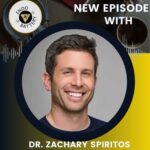
Today . I'm joined by my guest , dr Zachary Spiritos , a board-certified neuro-gastroenterologist with a passion for treating irritable bowel syndrome , functional abdominal pain and mobility disorders . A Philadelphia native , dr Spiritos graduated from Davidson College and earned his MD and MPH from the University of North Carolina at Chapel Hill . He completed his internal medicine residency at Emory and went on to complete his gastroenterology fellowship at Duke . With a strong background in teaching , research and patient-centered care , he brings a wealth of knowledge and compassion to the table . Please help me in welcoming Dr Zach Spiritos to the table .
Speaker 1
1:59
Thank you , zach . So much for sitting down with me today . I'm really excited about this conversation for a couple reasons . So much for sitting down with me today . I'm really excited about this conversation for a couple reasons . First reason being is that I've never had a GI doctor on before , so you're the first that has raced this podcast . And then , second , because you have a way of looking at not only the whole body but the GI system and how it all correlates , and this is something that many of us face , so I'm excited to just jump in . Thank you for taking the time to do that .
Speaker 2
2:32
This is some big shoes to fill , but I am so excited to get into this . I certainly have a lot of patients with comorbid endometriosis and GI conditions . Yeah , let's mix it up
Understanding IBS & Neurogastroenterology
Speaker 2
2:47
and GI conditions .
Speaker 1
2:47
Yeah , let's mix it up . Yeah , I'm excited for this , because one of the things that you talk about a lot is POTS , hypermobile EDS . What else do you talk about ?
Speaker 1
2:54
You talk about a lot on that front , and what we were talking about a little bit ago is that there is a correlation between those and endometriosis . For some reason , there's a lot of crossover between patients who have endometriosis and have all of these other things that they're challenged with , and one of the things that I find most patients struggle with is their GI system , and there's a lot of question behind why . Why are we seeing such a strong correlation between all of these symptoms and all of these disorders and diseases to the GI system ? Can you break that down just a little bit for us in what you're doing and how we can look at our GI system with all of these ?
Speaker 2
3:40
That is a loaded question , goodness , okay . So let's start with irritable bowel syndrome , okay , because I see it a lot . Comorbid endometriosis and IBS . So let's talk about what IBS is . Okay , perfect . So this is more of a software than a hardware problem .
Speaker 2
4:02
So anybody who struggled with IBS like I can't make it through dinner without running to the bathroom , or , goodness , I have to wait like six hours in the morning to get my business done before I can start my day knows how frustrating IBS is . And what's even more frustrating is that when they have endoscopies , imaging tests , blood work , everything is completely normal . And the doc's like , hey , great news , you don't have Crohn's disease , it's completely normal . And the doc's like , hey , great news , you don't have Crohn's disease , you don't have cancer . Really , this is probably just IBS , like just IBS . What are you nuts Like ? This is horrible , and not having any diagnostic tests to substantiate your symptoms is really frustrating , okay . So , again , it is a software problem , not a hardware problem .
Speaker 2
4:40
And if we were to identify one specific part of the body that is quote , unquote off an IBS , it is the nerves . Okay , so the nerves that are delivering signals between the brain and the gut . So it's where ? So in this kind of misfiring crosstalk . The gut is sending pain signals to the brain Because IBS one of the cardinal features is pain and that causes stress and anxiety on the brain . And if we were to kind of give this a more scientific , pathophysiologic name , it'd be an overactive sympathetic system , which is your fight or flight system , which is contrasted by the parasympathetic system , which is your rest and digest system , which , if you want to be pooping better , rest and digest is kind of where we want to live . And IBS folks tend to live in the sympathetic overdrive so that those pain signals get sent to the brain . And then the brain , believe it or not , has a big role in how our GI system moves and coordinates . And when the brain is then shifted into the sympathetic overdrive it can lead misspeaking . Just be like that's so wrong , just stop right there .
Speaker 2
6:08
But you know , these endo implants by nature cause local inflammation in the pelvis . Okay , and what does local inflammation do ? It causes substantial hypersensitivity of these nerves . That is the link between endometriosis and IBS is really sensitizing these nerves of the gut and the pelvis and which then lead to more stress on the brain , a highly active sympathetic system which in turn can lead to diarrhea , constipation and all the really intrusive , challenging symptoms of the illness . I think that's a good place to start .
Speaker 2
6:44
But that's why we see a lot of IBS in folks who have endometriosis . And even when you treat the end of disease , sometimes they have persistent IBS afterwards because all of that chronic inflammation really leads to a lot of pain over time in the brain . We know that if someone has chronic pain from a certain part of their body and the brain continues to receive these signals of pain , eventually that pain signal starts coming from the brain itself as opposed to the organ anymore . So if you were to take out so say , for example , that pain is coming from your pelvis , right From endometriosis , and then you take those implants out or you put some on a contraceptive and now I'm kind of speaking out of pocket because I do not know how to treat endometriosis . But if that pain fires over and over and over again and then you remove the inciting issue , if that pain happened for such a long period of time , the brain will start creating those pain signals by itself .
Speaker 1
7:41
Right .
Speaker 2
7:42
And that's where it's just chronic pain , nerve sensitization , bowel dysfunction , and that's how it's all kind of linked together .
Speaker 1
7:51
The POTS EDS conversation is different altogether and we can certainly jump into that too , which is where I kind of want to jump into , because this is kind of where you have identified a lot of chronic pain issues with the GI and how it's all connected , and I think something that many of us struggle with is the fact that we don't have just endometriosis , we have all of these other things , myself included , that we find a challenge with sifting through the symptoms and the diagnosis and everything else and how they all correlate and how they correspond together . How is it for you Because you do a lot of the POTS and EDS and stuff like that Beyond the endometriosis , a lot of us have good excision . We don't have the pain from the endometriosis anymore , and you kind of alluded to the fact that you know there's still some of that inflammation . However
POTS, EDS & Mast Cell Activation
Speaker 1
8:43
, I'm going to caveat this by saying is it that or is it some of these other coinciding conditions , and how do you differentiate that ?
Speaker 2
8:51
That's a really good question . So you know , the patient narrative obviously informs a lot of this . What's really challenging in these chronic invisible conditions is that testing just doesn't do service to what's going on . And so you know , if someone said , you know I've been dealing with endometriosis , you know since forever pelvic pain , you know dysmenorrhea , you know dyspareunia and and part of our job as a physician is to take a complete review of systems like head to toe . So how are your bowel movements ? Do you have constipation , do you have diarrhea , do you have bloating ? And then the chronology is a big part of this . So it's like what started first ? And then you can start building the narrative Did endometriosis lead to IBS , or perhaps is it just endometriosis ?
Speaker 2
9:43
So I'm kind of painting this with a broad brush . But if someone says , hey , my IBS symptoms really rev up during my cycle , then I'm like perhaps this is all endometriosis . But if someone's like I have endometriosis but then I have IBS just going on a day-to-day basis , then perhaps it's endometriosis leading to IBS . And then on top of that there's like the anxiety and stress component of things which make everything worse . And no , anxiety and stress are do not cause IBS . They make it worse , certainly , but one can imagine like who's not stressed out or incredibly anxious if they can't figure out , like they can't go to the dinner without running to the bathroom or identifying you know where all the restrooms are , like it's incredibly anxiety provoking and so it behooves us to kind of touch on that as well . So I guess it's a long way of saying .
Speaker 2
10:33
You kind of have to listen to the story and see what started first , Right . So if someone said I've had end of disease for a while and then all of a sudden , goodness , like my heart races when I get up , tell me more about that , right . But unfortunately , you know , in today's healthcare we kind of have docs , have like a finite period of time with patients . Right , they have 30 minutes . It's very important to shoot . Okay , if diarrhea boom , like what kind of diarrhea ? Later you kind of put you on , kind of run a few tests , but , truth be told , there's crosstalk between your GI system and , like any OBGYN issues going on , your on any psychiatric kind of disease in the background , insomnia , and so it's all kind of plays off each other . And so what I do is I kind of what's the biggest symptom that bothers you today and let's really drill into it and get to when it started , how it started and what are precipitating things stress , anxiety , food to really get it to why it's there to begin with .
Speaker 1
11:24
Talk to us a little bit about what you see in symptoms with your hypermobile EDS people and your POTS people , and are you seeing like the MCAS people Because that's a big part of a lot of our history as well , amongst a slew of other things , of course but what are the things that you see most in those patients ? Because I bet you , if we could sit down and identify , okay , these are some of our symptoms too . Here's maybe some ways we can address that . What do you typically see in those three subsets of patients ?
Speaker 2
12:00
Yeah , so they land in my lap . So I'm a neurogastroenterologist , so I stole this from this amazingly smart doctor , dr Brandler , who's a neurogastroenterologist up in Seattle , and it's , we are electricians , not plumbers , okay . And so when patients come to me they have GI symptoms , but then they start talking about other things that don't necessarily fit into IBS . So I initially , when I first graduated and I was in practice , I took on a lot of IBS patients . I just happened to love taking care of that patient .
Speaker 2
12:31
But then someone would say you don't have IBS . But all of a sudden when I get up , my heart just races . Like that's not IBS . I think an antiquated view of that is like , oh , you're stressed and stress causes anxiety and stress causes palpitations . But this is different .
Speaker 2
12:46
So in POTS the hallmark feature is standing up and just feeling like your heart is racing . Okay , and with that I would say that brain fog is a really big symptom there . And then kind of secondarily , you know , some people get a lot of blood pooling in their feet , like their feet get swollen . But yeah , certainly the standing tachycardia , or the heart racing from going or sitting to a standing position , is the hallmark features of postural orthostatic tachycardia syndrome . But they also may have a lot of GI symptoms getting full , early , tons of bloating , loose stools , conversely constipation . So the POTS GI system doesn't really follow any specific rulebook .
Speaker 2
13:25
Yeah , okay , so mast cell activation syndrome is and of course this can be linked with POTS too . So when I'm talking to one of these patients I'm asking all these questions , I'm screening for every one of these things to see if we can kind of piece this together . But the hallmark feature of mast cell activation syndrome is probably skin manifestations , so itching , rashes , secondarily kind of ears , nose and throat issues , rhinorrhea , eyes watering for like no good reason . And then GI symptoms are kind of probably coming third there , and that's bloating , diarrhea , lots of heartburn and someone who like shouldn't get heartburn . You know , heartburn traditionally affects people who are , you know , a little bit , a little bit older , have their BMIs , are probably closer to 30 .
Speaker 2
14:11
We see these young women who are 22 , 23 , with rip-roaring heartburn . I'm like that ain't good , it just doesn't make any sense . And that's MCAS . So that's where . So just one of the , without getting too into the nittyitty gritty of the pathophysiology of MCAS . But these mast cells are just very twitchy . They're intended to be selectively defensive against certain pathogens that our body doesn't like . You know mold if anybody's in North Carolina like me . Just the pollen is insane , so mast cells are supposed to be acting up now is insane , so muscles are supposed to be acting up now , but these muscles become twitchy and react to virtually everything , from temperature changes to emotional changes , to poor sleep , to medications . It's really wild .
Speaker 2
14:52
And one of the chemicals that it releases and it releases hundreds of chemicals- is histamine , and histamine plays a big role in creating acid secretion from the stomach which could lead to heartburn symptoms . But for all intents and purposes , patients don't behave like traditional gastroesophageal reflux patients . They don't respond to proton pump inhibitors and they have no darn reason to have reflux to begin with , right , they don't have a big hiatal hernia , which is a traditional risk factor for heart reflux , or they're not overweight , and so that's where you have to start . This doesn't quite make sense , okay , and you said EDS .
Speaker 1
15:27
EDS , this is a big one for us , okay , I ?
Speaker 2
15:29
have a lot of questions for this one . So again , I'm a GI doctor , so I deal with a lot of the GI manifestations .
Speaker 1
15:36
Right .
Speaker 2
15:36
But they certainly screen for all of you know , all my patients who I you know , who have MCAS , who have POTS , for EDS-specific symptoms .
Speaker 2
15:44
And the Bait and Score is really nice , testing certain joint mobile hyperflexibility , being able to put both palms on the floor with extended knees , or able to bend your pinky back beyond a certain angle . You'd be able to bend your thumb beyond a certain angle , and you can look up the Bait and Score and kind of assess for yourself . But did you have kind of weird random joint subluxations as a kid ? Did your knee just pop out of joint , like that's not supposed to happen , and they're like oh yeah , we put a brace on it and kind of said that was fine . I was like that's not fine , reasonable , but just like , yeah , I was playing kickball and my knee just popped out of place , like that's not a thing , right . So , in a nutshell , like a very condensed , oversimplified way of kind of , I think , compartmentalizing those conditions . So it's really important , you know , to really do a thorough review of systems and ask all the questions so you can really understand why something .
Speaker 1
16:44
And so and I yeah , and it's so true because I think you know we had kind of talked previously to this about providers being curious , right , like we . We need to be able to seek a provider who is curious if we have all of these symptoms , because I feel like a lot of us , especially for endometriosis patients , we go in primarily with IBS . We get diagnosed with that time and time again . It's not IBS . A lot of times it tends to go away after excision surgery or it lessens at least where we can eat things again .
Speaker 1
17:21
Food sensitivity is a huge thing for endometriosis patients and histamine response to all of these things .
Speaker 1
17:30
You know we're seeing such a correlation between all of this stuff , and a lot of it again is because there can be lesions on your bowel and that's something that happens quite often .
Speaker 1
17:42
And you know our pelvis is you think about it and we're just all this collective little unit of organs right , and they're all in there together in this inflammatory state . And so once we get that taken care of , a lot of times it becomes tricky because most of us don't realize we're living with these other signs and symptoms of these other conditions until we get proper excision and we're not having the pain from endometriosis anymore , and so to me hearing you talk about all of this , interestingly enough , they all constipation , diarrhea , bloating , brain fog , fatigue , similar to endometriosis and this is something that I didn't identify until after my excision as well is that I had all these other things going on . It wasn't just one or the other , but something that a lot of patients have learned , and that , something that I'm learning , is that within the EDS space , the laxity in tissues creates a lot of issues with vascular issues and otherwise . How does that correlate into the GI field ?
Speaker 2
18:48
Yeah , that's a really good question . So EDS is a nuisance Goodness . So unfortunately it is a condition sometimes inherited , sometimes not that affects the connective tissue and connective tissue is ubiquitous , it's everywhere , it affects every part of the GI tract , unfortunately , and it doesn't play by any specific rule . So somebody may have upper gi symptoms because they developed a hiatal hernia at a very early age . The diaphragm is intended to hold down our lower esophageal sphincter to prevent gastric contents from coming up into our esophagus . But the ligament that holds the diaphragm to lower esophageal sphincter can become a little bit loose and lax in the context of an eds and then they can develop a little hernia there which leads to a rip-roaring gastroesophageal reflex disease . The connective tissue in our esophagus can be affected , leading to dysphagia or difficulty swallowing and then working all the way down . Perhaps it affects your small bowel . To where your small bowel doesn't empty very well , you develop small intestinal bacterial overgrowth and then your colon right you can develop constipation , because it's just your constipation isn't as moving as well . And then there is something called visceroptosis which is challenging . But our organs are supposed to be supported by connective tissue but it's not working . It sags and our intestines , our small bowel can sag into our pelvis and lead to obstructive symptoms in our colon , and so it can be .
Speaker 2
20:16
You just have to keep an open mind to someone with EDS , because they can develop everything . And so the traditional thinking in medicine is when you have this differential diagnosis of what you think may be going on , based on a patient's presentation . But , quite frankly , they can have like everything . You just have to keep an open mind and you try one thing . And I always tell patients like , look , this is super complex , this is not like a pneumonia . I give you amoxicillin . 10 days later you're able to , like you know , walk up the stairs again and you'll be a hundred percent better .
Speaker 2
20:44
We're looking for incremental changes because these are really tough . And so I , in my practice , we will try something . Get In my practice , we will try something , get some diagnostic information and I'll say , look , I'm looking for 30% improvement by next year . And if we misfire , then I looked in the wrong place and that's on me and I'm sorry , but this is tough right . And so we get more data and try to figure it out . But you just have to keep such an open mind and understand how EDS can affect people . And , quite frankly , it could be like anything and then forget , like you know , the vascular compression symptoms like immediate arcoteligament syndrome or SMA syndrome , which are incredibly unique in the general population . But if you have EDS and this is why you have to screen people for joint laxity in clinic , because it expands the differential to all this weird stuff that , truth be told , you never see unless you look for it , and so it can get quite challenging .
Speaker 1
21:36
Yes , I mean this is a lot of us struggle with this . Now we're seeing May-Thurner and Nutcracker syndrome being all in correlation with it . It's a lot , right , indo patients . We're professional patients , unfortunately , and that's it's . We're professional patients , unfortunately , and that's
EDS Impact on the GI System
Speaker 1
21:57
that's hard for a lot of us , right , cause we give so much to our care and trying to find a solution to a problem , and when it's not a an easy solution , it gets hard and and so I love that you have you don't put everything on the patient , that the patient . We are all research projects , essentially , and we should be . And I say that because if you were to put us all in a box , you would miss a lot of diagnoses , you would miss half of our care if you put everyone in the same box , right . So I love that you don't do that , because we are all so unique in our symptoms . But how do you address these symptoms ? How do you address the EDS patients who are struggling ? How do you address those who have MCAS or POTS when it comes to the GI stuff ?
Speaker 2
22:50
Yeah , so it starts with certainly an interview to understand what's the biggest thing that bothers you . Okay , so if it's harper and they are happen to be a 22 year old , like otherwise healthy person , I would no reason to have harper . I'm like , all right , well , let's , if we treat the mcas , the harper , and we'll get better and you can treat them with like Pepsid , over-the-counter H1 blockers . But it sounds like I'm really bloated like all the time . Okay , well , and you're thinking about , if someone has endometriosis or EDS and POTS , then you got to start thinking about is this gastroparesis ? Is this small intestinal bacterial overgrowth ? So , truthfully , the presenting symptom and you don't want to discard the ancillary symptoms I can't sleep the brain fog but the presenting symptoms like what is the biggest thing that bothers you today Should drive the discussion and where you go . So is it I get full right after eating , or , goodness , I have just horrible heartburn that keeps me up all night , or I haven't pooped in like 13 days , or , conversely , I can't stay off the toilet . So that informs kind of where we start the investigation . Because , as you mentioned , so in POTS , right , the underlying issue to POTS . So POTS is a syndrome . Right , it's just a constellation of symptoms , but the issue underlying it is dysautonomia . So dysautonomia is the nervous system that does everything in our body right . It affects our cardiovascular system , how fast our heart should beat or shouldn't beat . It helps with vasoconstriction to kind of help get blood back to our brain and our heart Also , unfortunately , is really important in digestion . It helps things move and coordinate and squeeze , but it doesn't affect the same .
Speaker 2
24:32
If you have two patients with POTS , it can be so completely different one person versus the other , and so as a provider , you have to be aware of all the sequelae of POTS in patients from a GI perspective to know where to target your efforts . And it's really important to be informed as a patient too , and hopefully you have a provider that will listen to you . If you say , hey , you know I have POTS , goodness , and I know that in POTS patients they can develop these GI symptoms and I have bloating , like could it be one of these ? And if you don't know , can you send me to someone who does ? And if you say it's anxiety in my head , I'm going to give you a horrible Yelp review and I'll leave here immediately . Don't do that .
Speaker 2
25:12
I mean , I do think , generally speaking , doctors are really trying to do . I give doctors the benefit of the doubt and I know people have had horrible experiences . I can't endorse everything people have said or done , because there have been some things out there that are certainly uncalled for , unreasonable , but there are . As someone who is in the system right now , you don't have a lot of time with patients , yeah , and it's someone who's medically very complex . You're just . You know , if you have , you've been treating one thing the same way your whole life , and then someone comes in with something you just don't know how to address . You don't as the expert . You don't want to say you don't know .
Speaker 1
25:48
Right , Like I get that .
Speaker 2
25:49
Is it okay to say it's all in your head ? It is not . But a lot of doctors have a tough time saying I don't know , and perhaps let me do some research to figure out what this is . A lot of people are kind of anchored to what they've always known and always believed , and that's where the disconnect happens . And so , as we talked about before , patients are incredibly curious , but doctors need to be incredibly curious . Like things change , things don't fit in the box all the time , and if it doesn't fit in the box , it's not okay to say it's in someone's head . It's not okay to dismiss anybody , but perhaps try to do some research .
Speaker 1
26:21
Right With pots alone . They always say high intake of salt is what's ideal , and I can tell you , as someone who has pots salt can be great , but I also have a kidney disorder , so I always feel like this catch-22 , right , let's just pile on my little onion , you know . And so is that a long-term solution for POTS , though , or are there other ways to manage symptoms from , specifically , probably more the GI for what you're used to ? But are there ways to manage those symptoms other than atrocious amount of salt and sodium ?
Speaker 2
26:56
Can I throw something back at you ?
Speaker 1
26:58
Please do .
Speaker 2
26:59
Why were you told to eat a lot of salt ?
Speaker 1
27:02
That's a really good question . I don't know .
Speaker 2
27:05
Right , and so this is why , when I talk about recommendations to patients , I'm like you're going to do this . But this is why you need to do this and this is what it's going to work for , because if it's not working , let's counter that with something else . So the salt intake doesn't necessarily improve a whole lot of GI related conditions , but the reason why ? So not all pots is created equal . But generally speaking , you know , when you stand up , there's a tremendous shift in blood . So when you're sitting down , blood pools in your feet .
Speaker 2
27:38
Okay , when you stand up , there's a lot of things that have to work perfectly in concert to get that blood back to your heart and back to your brain so you don't hit the floor and so your heart doesn't race because it receives adequate blood volume . So in dysautonomia and POTS , blood takes quite a while to get back to your heart . So your heart's like
Managing POTS & Achieving Long-term Relief
Speaker 2
27:50
, oh , my goodness , I'm standing up . I got to make sure the brain is okay . So it starts really , really beating quite a bit to really increase that stroke volume and get the blood to your brain . So we know that patients with POTS have a difficult time shifting that blood up to their brain , but we also know that patients with POTS have less blood volume than the average person . Their kidneys just dump volume unnecessarily , and that's kind of a different conversation in and of itself . So you're playing from behind from two perspectives . There's a discoordination in the veins and the arteries veins primarily , but there's also a massive . You have less blood circulating , and so what salt does is it retains blood within your vasculature . Okay , and so by increasing your blood volume , you're getting more blood back to your heart . So you're not really dealing with the tachycardia because it's seeing more volume .
Speaker 2
28:38
So , yes , eating six to eight grams of salt today is really challenging , and patients like this sounds impossible like this . This is ridiculous . I can't lick a salt block all day right , so that's not working . You know , and I always work on the lifestyle pieces first . So compression stockings , preferably up to the waist , if you can tolerate that , right , drinking two to three liters of water a day and a lot of that , you know if you can , half of that being electrolyte drinks , gatorade Powerade . There's a quite a bit of sugar content in there , and there are great recipes online for making your own kind of super high sodium electrolyte drink that are laden with glucose . And then sometimes , if we need to , we use medications .
Speaker 2
29:17
Okay so there are medications to help the veins squeeze there's something called Midodrine , and there's also medications to increase your blood volume , called Florina for flugacortisone . Both of those have potential side effects , so you're always weighing the risks and the benefits , but everybody's case is completely different . So some people are eating a bunch of salt , drinking a bunch of water , and they feel fantastic , and some people are like this is just not cutting it , like my heart is beating out of my freaking chest . This is brutal , and you're like oh well , maybe it's time to talk about medications . And so everybody's approach is a bit different .
Speaker 1
29:47
Yeah , I just feel like it's like is this sustainable to feel like you're constantly with salt ? I'm like this can't be healthy , but then it's a catch-22 , right , because you have something that benefits from doing it , but you're also it is a catch-22 , I think , for a lot of people who are feeling like do I have to do this my entire life ?
Speaker 2
30:07
Right , right , but I think if you know why you're doing it no-transcript of counters it goes back to just good communication between the care team and the patient .
Speaker 1
30:45
Yeah , well , and I think too . I mean , we've talked a lot about the care and the patient , but then let's also say patients do need to be held accountable to follow practices which we're not always good at . I'm an ADHDer over here . I can do things for about 0.2 seconds before I get a little bored and I don't want to do it anymore . So we have to . How do we accommodate those patients a little bit better ? The reality is , is that if we are living with these conditions long-term our whole life , we have to learn how to live with it . Well , right , what are some approaches that you take with patients to help that maybe psychosomatic aspect of it , which I hate that word psychosomatic why do we call it ?
Speaker 2
31:32
It's so pejorative , so pejorative . Yeah , I emphasize education a lot , so I'm always I'm recommending books to patients so they can understand why POTS happens , because when you're doing something , I want you to know exactly why you're doing that , because this is a team effort . This ain't on me , this ain't on you , this is us working together to figure this out . So I don't put it's not my job to fix you . I'm your guide , it's kind of your job , but I'm here to like , I'm here to help , but you can't do your job in getting better , like you shouldn't rely on doctors . You shouldn't , because this is your life Like , and doctors are just people Like we just read a bunch , bunch , that's all we did and took some tests , that's it . And so I really try to educate people a ton so they know exactly why they're doing this . And I recommend books for patients with IBS , for POTS patients .
Speaker 2
32:21
I have a different set of books For EDS , different set of books , mcas different set of books so you can understand not only the pathophysiology of what's going on . I'm like , look , you don't need to read , you know Grey's Anatomy or something like wildly boring . Patient experience books are pretty awesome because they can tell you what they did . Maybe , again , they didn't . What they did isn't going to work for you , but there are stories of hope that someone who came from really they came from behind and really have figured this thing out and their , their journey is not going to be the same as yours , but it gives you a basis for understanding why the disease processes , how other people got better . The fact that you can get better is a reality . That is out there . Yeah , I think it's a long way to say it's like . I really try to educate people and I give them a lot of materials to go home and some people throw it in the trash . I get that . I get it and I don't give people quizzes when they come back in .
Speaker 2
33:09
Although maybe they should you failed , see you later . No , I mean , it's a team effort , man . It's a team effort and we work on it together , and that's my . I've always thought of it as that way . It's a partnership about informed consent .
Speaker 1
33:32
You can't make an informed decision if you don't have all the education behind it , and that is something that I think a lot of us lack in our decision making is that informed consent . The provider shouldn't be making that decision , but they can give you the information to make the best decision for your care . And so I think there's that aspect of taking responsibility for those decisions too and owning them and doing your education , of taking responsibility for those decisions too and owning them and doing your education . Even when you're exhausted Like I get that 100% . When you have brain fog , fatigue , you don't feel good , you're barely getting out of bed in the morning . I get that aspect of it for sure . But you can't
Education as Part of Patient Care
Speaker 1
34:06
make an informed decision if you don't learn the education and put the work in , and that's hard , it's very hard to do as a patient , especially when it comes to owls , because no one really wants to talk about that other than you . Clearly you want to talk about that .
Speaker 2
34:23
If you show me a picture of poop , I will look at it .
Speaker 1
34:25
Yeah , and I'm not going to be bummed out by it .
Speaker 2
34:27
It's not weird , it's just pulling a job , it's , it's education .
Speaker 1
34:29
It's dinner conversation at this point . My son is five .
Speaker 2
34:35
I told him the other day and I probably shouldn't have told him this , but I was like you know what your dad does for a living ? He goes . What I said I look at butts all day , he goes . Excuse me , it's the same thing as telling a five-year-old boy that I'm Michael Jordan . My wife was like why did you say it like that ? That's not a good idea . But yeah , so poop , you know it is . I mean , we all poop . It's really important and when we don't poop , well , it causes a lot of stress and anxiety . So it's important to hash that out . Can I ask you , as someone with endometriosis , what are some of the common bowel issues that people like I see people in clinic but what is like , what are some of the day-to-day concerns that have come up in your life that you'd , you know , that think you think people would really want to hear about in terms of just making sense , heads and tails of why things are the way they are ?
Speaker 1
35:22
That's a wrap of part one of our two part series , and if this episode had you nodding along , taking notes or just feeling seen , you're not going to want to miss the next one . In part two , we're diving into some seriously important and often overlooked territory like painful bowel movements , the gut microbiome and how all of that ties into chronic illness . Dr Zach even flips the script a bit , asking his own questions , so you get to learn right alongside him . It's real , it's raw and it's packed with insight . So make sure you're following and share this episode with someone who needs it , and get ready because part two is coming in hot . Until next time , continue advocating for you and for others .