
Send us a text with a question or thought on this episode ( We cannot replay from this link)
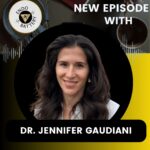
Food isn’t the villain—pain is. When eating reliably triggers symptoms, the body learns to avoid. We sat down with Dr. Jennifer Gaudiani—internal medicine physician, eating disorder expert, and author of Sick Enough—to map how chronic illness, neurodiversity, and medical bias shape the modern food struggle. Forget stereotypes: most eating disorders aren’t visible, and many people who restrict are doing so to dodge real discomfort, not to chase a number on a scale.
We walk through the biology of undernutrition at any size: slowed digestion, early fullness, gastroparesis, SIBO, and that constant chill from an energy-conserving body. Then we connect the dots with endometriosis, MCAS, POTS, EDS, and IBS, showing how flares after meals condition avoidance and fuel shame. Dr. G shares a compassion-first playbook: patient-led goals, gentle nutrition steps, pro-motility options, mast cell stabilization, and realistic pacing that reduces symptom spikes. The aim isn’t perfect variety; it’s adequate energy without punishment.
Neurodivergent listeners will feel seen. ADHD and autistic traits can blunt hunger cues, amplify sensory aversions, and make meal planning feel impossible. We talk about how restriction can temporarily quiet a loud brain—and why treating the neurobiology (including ADHD meds when appropriate) can unlock genuine recovery. ARFID gets a clear, non-judgmental breakdown: not thinking to eat, texture disgust, or fear after choking, vomiting, or pain are common threads, not personal failures.
We close with what real recovery can look like for complex illness: being believed, easing suffering with targeted tools, and defining progress on your terms. Loved ones get specific guidance too—validate without fixing, and let the care team coach so relationships stay kind and steady. Want more from Dr. G? Visit gaudianiclinic.com and keep an eye out for the new edition of Sick Enough. If this conversation helped you feel understood, subscribe, share with a friend, and leave a review to help others find their way back to gentle nourishment.
Website endobattery.com
Welcome, Framing The Conversation
SPEAKER_00
0:00
Eating disorders don't always look the way we think they do. For people living with chronic illness who are neurodivergent, the relationship with food, body image, and even hunger cues can be completely different and often overlooked by doctors. Today on Indobattery, I'm joined by Dr. Jennifer Gardiani, one of the leading experts in the world on eating disorders and the author of Sick Enough. We're exploring how disordered eating can hide behind medical conditions, why neurodivergence changes the picture, and what recovery can realistically look like when illness is a part of your story. This conversation is filled with science, compassion, and hope. And I promise you don't want to miss it. So stick around. Welcome to Indobattery, where I share my journey with endometriosis and chronic illness while learning and growing along the way. This podcast is not a substitute for medical advice, but a supportive space to provide community and valuable information so you never have to face this journey alone. We embrace a range of perspectives that may not always align with our own, believing that open dialogue helps us grow and gain new tools. Join me as I share stories of strength, resilience, and hope, from personal experiences to expert insights. I'm your host, Alana, and this is Indobattery, charging our lives when Indometriosis trains us. Welcome back to Indobattery. Grab your cup of coffee or your cup of tea and join me at the table. Today I am honored to welcome Dr. Jennifer Gadiani to the podcast. Dr. G is an international medicine physician and one of the world's leading experts on eating disorders. She's the founder of the Gadiani Clinic in Denver, where she and her team provide compassionate, comprehensive care to people struggling with eating disorders and their medical complications. She's a certified eating disorder specialist, a fellow of the Academy for Eating Disorders, and the author of Sick and Death, a Guide to Medical Complications of Eating Disorders, a groundbreaking book that changed how patients, families, and even other doctors understand this illness. What makes Dr. G's work especially powerful is her focus on populations often overlooked, people living with chronic illness, neurodivergence, and complex medical needs. She brings not only world-class expertise, but also deep compassion, and I couldn't think of anyone better to help us explore today's conversation. Please help me in welcoming Dr. Jennifer Gattiani to the table. Thank you, Dr. G, so much for sitting down with me today. I have been looking forward to this conversation just
Dr. G’s Background And Care Philosophy
SPEAKER_00
2:46
to spend time with you. So thank you for taking the time.
SPEAKER_01
2:49
I've been so excited to hang out with you as well. Ever since we were connected, I was like, I need to learn more about this world. And this is the woman to teach me.
SPEAKER_00
2:56
Oh, I don't know. Well, I'll do my best. I can teach you from a patient perspective, but man, and that's sometimes valuable when you're a provider. So I appreciate you just taking the time and being vulnerable with our family here for Indobattery. But I also want to just put this out there that if you struggle with disordered eating and that's a trigger for you, this may be a trigger. So this may be a time to reach out to a mental health provider or your physician if you're struggling in one way or the other. So I just want to put that little bit out there. We are going to talk about something that many of us don't think of as something that we deal with, but probably should talk more about. And that is disordered eating, any form of eating challenges when it comes to not only the body, but the brain and how they intersect. And you are the expert at this. So I'm thrilled that I get to sit down and talk to you about this. This is something that I've questions for for a long time. So thank you.
SPEAKER_01
3:54
Well, I hope I can answer them. And as your listeners decide if this is the right episode for them to spend their time and their precious energy on, I want to name that I really do this work from a lens that is autonomy forward, profoundly compassionate and patient-centered, absolutely not only weight-inclusive, but fat positive, and from a completely non-diet perspective. So my hope is, if anything, your beloved listeners who do struggle with these will find this to be a warm and gentle and welcoming experience rather than being scary.
SPEAKER_00
4:37
That's my hope. And I think you will accomplish that because you're so good at communicating such a sensitive topic for so many of us. One of the things that I want to highlight before we get started is your book and what you do and what drew you to write this book. And it kind of probably encompasses quite a bit of what we're going to talk about. Can you give us a background on what you do, your book, why you wrote it, all of the things? I would love to.
SPEAKER_01
5:06
Thank you so much. So I'm an internal medicine physician who has specialized in eating disorders and medical malnutrition for the past 17 plus years. The first many years of that were in an inpatient medical setting. And for the past 10 years, I have my own outpatient medical clinic, private practice, based in Denver, Colorado, but my wonderful three other doctors and I collectively are licensed in around 45 states. And so we see folks of all ages, genders, sizes, shapes, medical conditions from all around the US when medical stuff is getting in the way, either of formal eating disorder recovery, or if it's preventing them from nourishing their bodies in ways that matter to them, even if there's not an eating disorder or sort of body dysmorphia element to it present. And so I love this work so much. I love my patients so much. I am constantly in a state of learning, unlearning, relearning because my patients
Myths, Weight Stigma, And Medical Gaslighting
SPEAKER_01
6:20
bring to me all of the ways in which they've experienced gaslighting in the Western medical setting, of which I am, you know, a student and I'm licensed within that entire setting. The ways in which they've been gaslit, experienced medical trauma, been misled, ignored, invisibilized, and silenced. And each time I hear of examples when surely perfectly well-meaning medical providers have ultimately harmed them, it's an opportunity for me to reflect how can I do better? How can this clinic do better? How can we listen so lovingly to our patients and reassure them that they are the expert in their bodies? Yes. We're just the expert in a certain set of subject matter. And expert does not mean no at all. It means you've done a lot of reps and you're really keenly interested in continuing to do and learn more, but really to say to my patient, you are the expert in you, even if I can't measure what you say is happening in your body, we're just gonna go from the place of that's true and real, and I wonder how I might be able to help. So that's the framework from which we operate. And my book is called Sick Enough: A Guide to the Medical Complications of Eating Disorders. I'm so delighted that the second edition is gonna be coming out December 8th. And the first edition was like seven years ago. I've learned so much in the last seven years. And I really wrote this updated edition for patients, their loved ones, and clinicians who really want to understand what happens in a body when it doesn't get enough to eat for any reason. So as my practice has gone on, and I've realized how many folks come to me with mast cell activation syndrome and postural orthostatic tachycardia syndrome and super complicated digestive syndromes, I am realizing more than ever that there are a lot of reasons why someone might end up in a tricky relationship with food and their body.
SPEAKER_00
8:33
Yeah. When you think about your patients and you think about what they've heard or the things that you even hear other providers say, what's one of the biggest misconceptions about eating disorders that you wish people could unlearn like right away?
SPEAKER_01
8:51
Magic wand, number one, would be if you're not underweight, you can't have an eating disorder. The truth is that the very vast majority, probably 90 plus percent, of people with formal DSM V eating disorders are not visibly emaciated and may indeed be in larger bodies. But so often, when that wonderful human walks through the doors of a medical clinic, the first thing that they experience is weight stigma.
unknown
9:25
Yeah.
SPEAKER_01
9:26
And indeed, they may receive, again, well-intentioned, but quite harmful and very useless recommendations from their medical provider that are basically like prescribing eating disorder behaviors. Measure your food, restrict your food, restrict what you eat, all the things, focus on your weight. All of those things turn out to be biologically useless and futile for the vast majority of people because of the way we evolved during evolution to survive starvation. And additionally, really psychologically harmful. And I would say if I had a magic wand for a second wish, it would be that medical providers would have the time and the curiosity to appreciate that a huge amount of what humans experience in their symptoms doesn't come with a medical measurement. And the problem is in our current system, as so many of your listeners will probably have experienced, doctors are really quick to say, therefore it doesn't exist. Or therefore I can't say for sure this is the problem, and I'm uncomfortable suggesting solutions for it because I don't know that it exists in the first place. Right. I would say that that is so, so painful for my patients for a million reasons. But if we're looking just at their relationship with food, so much of what we do in our clinic boils down to every time I eat in a way that seems like it would be balanced, sufficient, and regular according to sort of the best sources in my life who are not giving me diet culture, I hurt. And so when you hurt after you nourish, that's negative conditioning. I mean, we know from time immemorial that if something hurts, you're gonna avoid it. So so many of my patients come to this uncomfortable relationship to food because every time they eat, their tummy hurts or some other bad symptoms happen. And so they end up backing off and backing off because they're just mammals who don't want to hurt.
unknown
11:41
Right.
SPEAKER_01
11:42
And they can end up in this whole other world of malnutrition with or without underweight, where they go down a whole new rabbit hole where again, Western medicine doesn't have a lot to offer usually.
SPEAKER_00
11:55
Yeah. I find that this is especially true with those of us who have chronic illness. And I think a lot of us deal with these
Pain After Eating And Malnutrition Loops
SPEAKER_00
12:05
compounding factors, right? Because we not only don't feel good when we eat certain foods, but then on top of that, we don't like the way our body looks or feels. And sometimes that we don't like the way it looks because of the way it feels, right? So we have these like compounding things that tend to just creep up on us before we even recognize what's going on in our bodies. And that's why, you know, I really wanted to talk about this because I think some of us think, well, I don't have any complications with food other than it doesn't agree with me. I think it goes much, much deeper than that on a much deeper scale of things. And so that's why I think someone with endometriosis, chronic pain, all of these factors, we have to start paying attention to is this becoming more than what I can handle on my own? And what how do you approach your patients that come in that maybe have lived through this experience? So many of them have.
unknown
13:05
Yeah.
SPEAKER_01
13:06
For a variety of reasons. And you're right, bodies can also look really different, not just the sort of the experience of pain or inflammation, but when you see your tummy super, super bloated after eating what you intellectually know is a completely reasonable meal. You know, maybe everyone's clothes, but particularly women's clothes, are not designed to fit comfortably through a range of tummy experiences. I mean, this is one of the ways that the industry sort of keeps us feeling like crap about our bodies, is, you know, when our when our tummy really, really puffs out after we eat something that we just have a sensitivity to, and your pants are tight and you can barely breathe, you don't feel good and you want to avoid that feeling in the future. So, you know, what we try to do first in our clinic is start from a perspective of patient goals and values. Really have them be the captain of the ship so that we can be the wind in their sails. And try, although we certainly fail at this, and then we apologize and we move forward, try not to have the opinion, we know everything, we'll take care of you, we know what health is for everybody. Nonsense. Health and the experience of a daily life lived is so unique. And what someone wants and and can reasonably hope for from their body is going to be completely individual. So what we might say is tell me the whole story of your body and food. And then we just shut up and listen. I want to know everything that goes on in your body, from your brain fog to your bloating, to your pelvic pain, to your constipation, to your diarrhea, everything that happens that seems to relate to what you take in. And then we can start to really thoughtfully listen for pattern recognition that we've come to appreciate over time to try to figure out is this person's symptoms coming from, for instance, the very knowable ways that bodies that haven't gotten enough nutrition in a long time react. Again, when I say malnutrition here, everyone can just assume that I mean in any body size. So, for instance, if someone hasn't been eating enough for a long time, they may get really slowed digestion. They may get something called gastroparesis, where their stomach doesn't empty out swiftly enough. They may get bloating and constipation as their guts slow their wriggle. And that's because the body is doing what it's been doing for millennia to protect us from malnutrition. It's just slowing down caloric burn. But just from the malnutrition itself, that can cause fullness, nausea, vomiting, poor hunger cues, that distention that keeps you from eating. So we think first, is this related to malnutrition? And we've got a bunch of little ways that we can help people gently boost their nutrition in ways that honor what they can eat or not, as well as sometimes use medicines to help work on that. Another sort of classic malnutrition associated finding here would be, for instance, small intestinal bacterial overgrowth or SIBO, where when you don't eat enough and your gut's slow, the bacteria from your colon crawl into your small intestine where they shouldn't be, set up shop, start to ferment your food too early, and can cause a huge amount of inflammation, pain, and bloating through your whole body. So those are malnutrition ones. Then we think about a category of what are the Venn diagrams that typically can overlap what this individual knows about themselves already? So we might have somebody come to us and say, I know I have really complex digestive issues and I have POTS, postural orthostatic tachycardia syndrome. And then we might say, okay, having listened to everything you just talked about, I think you might also have undiagnosed mast cell activation syndrome or MCAS. And when that gets opened up, we talk through what that means and how that might impact things. And if it seems like they have it, we get to start treating it. So again, food becomes less of an enemy and more again of a friend or at least a neutral party.
SPEAKER_00
17:23
What would you
Patient-Led Goals And Pattern Recognition
SPEAKER_00
17:25
quantify as an eating disordered or disordered eating? Because I think that maybe we hear these things and we think, oh, maybe it's just a challenging relationship with food. But there, there is some intersection there. Can you kind of explain that to us and break it down a little bit so we can understand it a little better?
SPEAKER_01
17:43
Absolutely. I will try because there, well, there are formal criteria for eating disorders, of course. The notion of disordered eating is very nebulous. And we have to contextualize it in the society we live in, which is so diet culture focused.
SPEAKER_00
18:00
Yes.
SPEAKER_01
18:00
You know, I mean, everyone is talking about what they're no longer eating, not because it doesn't, you know, sit well with their tummy or their body, but because, you know, they think it's the right thing to do to avoid inflammation. I'm not eating this, I'm not eating that, I'm eating less of this, I'm only eating at these times a day. I mean, this is so normalized and typical in our society that even though I, as a very health-privileged physician who specializes in eating disorders, would be like, no, no, no, all of that is disordered eating. It's so broadly found that people might be like, hey, are you just trying to pathologize me by telling me I've got a problem? And the answer is I want to be far gentler than that, but also kind of come back to really good science about what truly healthy eating is. And I use that H-word roll-roll carefully, um, because boy, is that a tricky word. What I would say is that if there aren't physical impediments to nourishing, which of course many people have, and many of your listeners have, I would say that normal eating means that you spend relatively little brain energy on what did I just eat and what I'm about to eat, and what did I eat yesterday and what will I eat tomorrow. You pretty comfortably can listen to hunger and fullness cues, and you can nourish yourself with satisfying, tasty foods in a mindful way, reasonably consistently throughout the day, without much chatter or shame or fear that revolves around these topics, and that you can fuel yourself to do what your unique body wants to do that day. I would say that is sort of broadly speaking normal eating. And therefore, theoretically, I would say that anything outside of that could be disordered. That doesn't mean judgment. That doesn't mean someone with severe IBS, irritable bowel syndrome, who has to avoid a bunch of foods is like, oh, you have disordered eating and I'm judging you. It says, gosh, you must have to spend a lot more time and energy on how to fuel yourself. And you must suffer a lot more than other people when they can just bolt down a sandwich and go back to work, and you're trying to figure out how your tummy's gonna do that day. Eating disorders, of course, have really formal criteria in the diagnostic and statistical manual five that follow certain criteria. But I think the focus of this talk is about folks who have gotten into a relationship with food in their bodies, whether or not, again, there's body image stuff involved, which let's face it, if you were human on the planet, probably there's some body image stuff involved because thin privilege is so powerful in our culture. But what I'd like to talk to is just the breadth of conditions that might lead somebody to have to spend so much time on how to feed themselves and how to deal with their body's reaction, and that they're not alone, they're not a mystery, and they can feel better.
SPEAKER_00
21:16
Yeah. And you know, another added component to this, which I want to talk about because a lot of us with endometriosis, mast cell, EDS, all of these other things also are neurodivergent, which plays a huge role. And the way that we eat, the way that we process what we should eat, the way that we listen to our hunger cues. I mean, I'm speaking from experience here when I tell you my husband has had to make me lunch because I will not eat. Not because I I'm like being thoughtful, like I don't want to eat. It's because I literally get in a zone and I don't eat. I don't even think about it. I don't hear my body. I was telling my trainer the other day when we were talking about it, I was like, I don't actually know
SIBO, Gastroparesis, And MCAS Links
SPEAKER_00
22:00
sometimes even when my body is in pain until it gets to a breaking point. And that's that like neurodivergent aspect of how our brains are wired. It's like you really have to feel the burn before you know it's burning, you know? And so the same as for when I'm eating, I often don't hear my body talking to me and telling me, you're hungry, you need to stop, you need to eat. And sometimes when I eat, it's like a bite or two and I'm good. But that's also not great, right? So we have we have to figure out. I'm a lazy eater, is what I always say. I'm a lazy eater. I do it out of necessity a lot of times. I'd rather not take the time to do it because I have other things I'd like to focus on. So I think a lot of us find ourselves in this position. When you have patients that come in with that as well, how do you walk them through this? And what are some signs that doctors and family members and ourselves can pay attention to as this being some sort of disordered eating, or maybe we should seek help for that?
SPEAKER_01
23:01
I love this question so much. I think the last couple of years have really humbled me as I have learned the importance of neurodiversity and relationship with food. It's a topic I just adore because a lot of the time it has been ignored or it has been under-addressed. And as a result, folks feel like they're failures of the system when in fact the system has been failing them. The system is normed around neurotypicality. And the truth is, so many people who have struggles with food do have some form of neurodiversity. It could be at the formal ADHD or autism level, and it could also be at a sort of subclinical, but still very much important relationship with food textures, tastes, scents, colors, the feeling of fullness in one's body. The people, you know, for me, when I in my health privilege, when I'm satisfiedly full after a meal, I feel good. Other people who have absolutely no, you know, overwhelming pathologic drive for body change feel terrible when they're full. Not because they have sort of an eating disorder necessarily, but because their sensory input is you've just done something yucky and dangerous. And, you know, guess what? That can certainly end up leading to a formal eating disorder. So there's a bunch of things that I love to do now when it comes to patients who either arrive to us with a diagnosis in the neurodiversity realm or who have been undiagnosed their whole life. And I really love to ask questions about all of the stuff you just talked about. How do you feel it is to arrange meal planning? How do you do planning a grocery list? What is it like for you to come to a meal time and you're focused on a task? How do you do when you're multitasking? There's so many questions one can ask. I've learned that there's this fascinating sort of general narrative that affects or applies to a lot of my patients with neurodiversity. In this case, as I speak it, I'm going to use ADHD, but you could just as easily sub autism or other
Defining Disordered Eating Versus Diagnosis
SPEAKER_01
25:28
subclinical neurodiversity here. So I'm going to also use it, use a girl model because I think that they are the ones who are the most missed in this. So let's say that there's a little girl and she knows that she's pretty bright. She might be unusual bright, not necessarily school bright, but she knows she's bright. And yet what she finds in school in academic settings is that something keeps her from being able to be her whole self. Maybe it's restlessness, maybe it's distraction, maybe it's her mind going all sorts of sparkling places at once. And in that gap between knowing she's bright and yet not being able to do the things asked of her in a neurotypical system, shame starts to form. And as this shame forms and influences her sense of self-esteem, she might turn to other things where she's particularly good. Maybe that's athletics. Because maybe on the PE field, she's just as good, if not better, than her peers. And she's like, okay, okay, this is a place that I feel like I'm doing things that that feel good. But at some point, she may accidentally learn that if she eats less, her brain is more focused. The truth is that restriction does make people less creative, joyful, and energetic. And as such, the brain noise can quiet down. And when that brain noise quiet down, they might find they're better at school. And when they eat more, when everyone's like, oh, you'll feel so much better when you eat more, they feel worse because their thoughts and emotions feel so big. And of course, feeling big in your thoughts and emotions can easily translate into feeling big in your body in our society. And so they're sort of the more the seeds of the more classic eating disorder can be sown. But what you find is that this person can end up getting labeled as having an eating disorder. When sure, there are behaviors and there's malnutrition that looks like that, but we're failing to address the actual underlying situation. So when you just have a young person like that, a young person could be, of course, any age here, but usually the first relationship with some kind of treatment is in adolescents or one's 20s. And you immediately feel like a failure in recovery because everyone says you're going to feel better and you feel worse. So then you have that shame piece, that self-esteem piece where you're like, apparently the only thing I'm good at is like restricting. I don't know. This is not really working that well for me. And when we finally say, now hold on a second, let's talk about how you feel worse. You just told me you feel worse at the end of each day. You might be able to kind of hang in there, but at the end of the day, you are doing behaviors that you know are incongruent with what you want for yourself, but you feel totally out of control to manage them. And you feel so distanced from yourself, but you feel profoundly exhausted and overwhelmed, but everyone's asking you to just do things on a certain schedule. And you say, you know, this might be autism, this might be ADHD. What if we treated these? For ADHD, I use medications, if the person, of course, consents and wishes to. And some are like, wait a minute, in someone with a restrictive eating disorder, you would use stimulants that affect the appetite? You say, Yeah. In whose world is anorexia or atypical anorexia an appetite problem?
SPEAKER_00
29:00
Right.
SPEAKER_01
29:01
It isn't. This is a complex biopsychosocial disorder. And when you do find the right medicine combo when it comes to ADHD, for instance, oh my gosh, people are like, wait a minute, I can meal plan, I can focus on things in a way that feels gentle and authentic. I can interact with people more comfortably, and I don't need to use food restriction or caffeine to self-medicate here. And then on the other side, when you say behaviorally, what if we were to be way more thoughtful about the holistic picture here? For instance, to soothe your nervous system, do you have a bouncy ball or a rocker or a glider or a swing? Because those repetitive movements can be so settling for that different neurosystem. And if you could do that for half an hour, a couple of times a day, would you find yourself Feeling less burned out, less overwhelmed. It's this slow, holistic process. And people feel seen because they're finally like, thank you. I'm not built like everybody else. I don't want a plan that works for everybody else. Meet me where I am.
SPEAKER_00
30:17
Thank you very much. Yeah. You know,
Neurodiversity, ADHD, And Food
SPEAKER_00
30:20
and I I feel this like I feel like you're explaining my whole childhood in a nutshell, you know, and I've worked a lot through that. And I think a lot of it came, we look at, you know, familial tendencies as well, the way they speak into that, the way you see your parents. And this is something I'm very careful about with my kids is like, how do I present myself? Do I present myself as something's flawed within me, or do I present myself as I'm doing the best for my body and for my health? Because that is something that as a kid, you when you hear that something's wrong with your parents and they are on a diet or they're, you know, doing all this or all that, it changes the way you see yourself. When you're already neurodivergent, that like exponentially increases that, you know, so things start being a little bit more challenging to walk through the day-to-day. And so that's something that I've always been very cognizant of as a parent, as saying, I you know, not one size all fits all for all of us, but let's fuel when we can, how we can, what suits us in a good way, you know, and and being kind to ourselves. So I always tell my girls, Are you being kind to your body? Oh, because is that kind, you know, because sometimes they'll say something about themselves because they hear it from other kids a lot of times. And I was like, Was that kind to your body? Oh no, because I don't want them to have that negative association, not only with their body, but with food. And that's we, you know, that's one of the things that I've worked really, really hard on with them. But is this does this correlate at all with things like RFID, things that I mean, I that's what I think of because you get the textural things, you get the fear, all of those things. Is there a correlation with that? Yeah.
SPEAKER_01
32:07
Huge. There's a huge correlation. So RFID is avoidant restrictive food intake disorder. It's one of the formal eating disorder diagnoses, and it comes in roughly three flavors, but really the three different versions of it do overlap a lot. You can have people who just don't think to eat. You can have people who are disgusted by textures or um or tastes, and you can have people who've had a very fearsome reaction. That could be a choking episode and now they're afraid to swallow because they don't want to choke again, or they've had a vomiting episode and they're afraid to eat because they're afraid of vomiting, or it could be people whose tummies hurt or whose bodies hurt, or who get brain fog every time they eat, or rashes every time they eat, or joint pains every time they eat. And so all three of those can end up in a gamesh where somebody basically doesn't nourish enough, regardless of what their body shape and size is, and they have medical malnutrition, essentially, that doesn't emerge primarily from an I want to change my body perspective, but from this negative conditioning relationship with food. And the rates of ADHD and autism in those with RFID are sky high.
SPEAKER_00
33:24
I believe it. 100% believe that.
SPEAKER_01
33:27
And this can be helped. You know, we don't want to quote unquote fix the, as some call it, neurospiciness of our wonderful patients. We want to help them live in the world in ways that feel like it honors exactly who they are. But what we can fix is the ability to fuel themselves adequately.
unknown
33:46
Yeah.
SPEAKER_01
33:46
The eating disorder field is just starting to recognize that we haven't been welcoming in those who are neurodiverse for a really long time. Because historically, dietitians, for instance, were taught, oh, when someone's really recovered, they can eat a wide variety of foods at any hour of the day in any quantity necessary. And so they push people, okay, time to increase food diversity. But the truth is that if someone is neurodiverse and they say, Yeah, if you had a magic wand, I'd be certainly very happy to be able to eat anything at any time and have no problem with it. If the patient says, I am content being able to eat these six to 10 foods, not really changing brands that much, but I know I'm getting in the essential nutrition that I need, I'm meeting my energy needs, I feel better than I have in years. Then what I say is, there is no reason to push you beyond that unless you tell me that you would like to. So it's just it's a much more flexible and responsive way of thinking about eating disorder recovery.
unknown
34:56
Yeah.
SPEAKER_01
34:56
So we're not trying to change the underlying beautiful differences of the human, but we do want to help them nourish their bodies for what they want to do in the world and for their wellness. And that's, I think, when it is really reasonable to start reaching out for more help. That could be a local dietitian or therapist who has ARPID experience.
SPEAKER_02
35:18
Yeah.
SPEAKER_01
35:19
I often will suggest that people look at the lovely combination of Googling, you know, dietitian, neurodiversity, RFID, or neurodiversity, irritable bowel syndrome, eating disorder, and see who comes up because the folks who do this work love it, like my partners and I do. And that's where you want yourself or your loved one is for someone to be like, oh, I simply adore working with people like you. Not like, oh no, not another one of these.
SPEAKER_00
35:49
Exactly. And that's one of the things, you know, I always tell people is like, find a really good care team that really truly cares about you. It's a multidisciplinary approach. And we we say this all the time, not just for endometriosis, but everything. Like, if you have a good, solid care team that will work together, your outcomes are going to be so much better in general. Like, life would be a little bit easier, maybe, you know, and and you're not adding trauma to that. What are some risks for people that
ARFID Explained And Supportive Care
SPEAKER_00
36:20
have, you know, RFIT or are neurodivergent or have a complication or a complicated relationship with food? What are some medical risks associated with those undiagnosed or noticed people? Because I know a lot of people in the endometriosis community, we have a lot of these challenges, and then we go to have surgery or, you know, a slew of other things. But what are some of the biggest risks in not assessing these things?
SPEAKER_01
36:52
Yeah, that's such a good question. One of the interesting tricky pieces to this in a medical system so focused on what you can measure is that a lot of these folks, even if they go to a really nice medical practitioner, will still fly under the radar because their weight is not notably one direction or another. Their blood tests are totally normal, their vitals look good, and they sort of leave with this sense of, well, I'm I'm glad those are good. I'm I'm happy about that, but I sort of don't feel like I've been seen. I sort of feel like something's been left on the table here. And the truth is, that's why, you know, when you have the opportunity to talk at greater length with someone and really tell the story of your body, that's when things start to emerge. So bodies respond in knowable ways to undernutrition. And as I said earlier, that's because humans evolved to spare ourselves from death by starvation. And during the millennia in which we were creating all of our best physiologic pathways, most of our ancestors were experiencing want, not plenty. So when someone is inadequately nourished, and this doesn't mean that they're in a dangerous state yet necessarily, but it does mean that they can be like, they might notice certain things, like their hands and feet are always cold, or they themselves are always chilly. Now, they could have a family history of Ray nodes and their fingers turn bright white in the cold. That's a different process. But when people aren't nourished enough over time, their body actually decreases blood flow to their arms and legs and hands and feet so that it just doesn't lose heat because it's trying to spare calories. Similarly, they may always feel chilly and be wanting to put on layers and hold hot mugs of tea. And this is our very clever, what I call cave person brains, way of saying, I'm not gonna burn calories to keep you warm. We don't have enough. You go find some warm things to put on. And so that creates that sense of chilliness. They may find that they get full early. That's that gastroparesis, that slowed digestive tract due to undernutrition. They might find that their periods get unusual. They might go away, they might happen only every so often. And I know that in the endo world, well, I don't know enough about it. I know that periods are a hot, hot, hot topic. Yeah. And so it's actually possible that if someone is malnourished to the point where they're not menstruating, that really feels like a relief for their endo. And they do not want that period to come back. So it might be motivation to stay a little malnourished because, again, we're self-medicating something else. And so, like, the provider has to be really respectful of that. They can't be like, oh, great news. When you nourish again, your period will come back. Everyone's gonna be so psyched. And they're like, I am never gonna see you again.
SPEAKER_02
39:48
Right.
SPEAKER_01
39:49
Because you have missed the point so thoroughly. So you've got to be really sensitive to like what it means to restore quote unquote normal function and how somebody might engage with that. But also one's brain function changes when you're undernourished. Undernourished brains are less creative, less joyful, less playful. They get very focused, they tend to think about food a lot, they are not flexible. They may find that it's really scary to do something spontaneous. Because our ancestors and also just mammals in general, when they are starved, they're not looking to be relational or playful or tumble around. They're just like food, food, food, food, food. And so people might say, you know, I'm more isolated. I'm having a harder time being in connection with my family, my loved ones, my kids, my partner, my parents. They may find it's harder to concentrate. You have to read the same thing five times just to slurp it into your brain when you're used to learning things faster. So there's a lot of little tells. Obviously, when malnutrition becomes more advanced, there's a lot of dangerous medical stuff that can happen. But on the whole, we're talking about the huge number of humans who live
Subtle Signs Of Undernutrition
SPEAKER_01
41:10
a little malnourished all the time and just don't have quite the spark of life that they otherwise could if someone could properly support them and be able to nourish in a way that doesn't hurt them.
SPEAKER_00
41:25
Yeah. That's key right there. Not hurt them. Nourishing. I feel like this is not just food. This is mental, emotional, like it all ties in together. Like it's all one big picture. It's not as it's not linear either. I feel like that is one thing that I have learned just living with chronic illness and exploring it more, talking to others who live with it. It's not linear. It's it's very up and down, very circular. It's very, you know, it it ties into grief. It ties into all of these other things that we process and go through. But what does recovery look like for these types of people who have chronic illness that isn't going away? How do you define healing in that context for these people? I love that.
SPEAKER_01
42:17
So we see all sorts of folks in our clinic, and we have a large population of those with complex chronic illness, which requires its very own loving, compassionate take because oh my gosh, so much effort goes into just getting up and living life on a daily basis in a way that those who don't experience it can't begin to understand. So I would say that first, recovery looks like what the patient says it looks like. What would it look like for you? What would progress look like and feel like to you? Because I'm gonna try not to impose my vision of it. I would rather hear from them first, because then we can go in that particular direction. If they're like, I literally have no idea, I'm so exhausted and overwhelmed and completely battered down that I can't even begin to express that. What do you think? I'm like, okay, well, maybe it would mean feeling like less of a mystery. Anyone who's had complex chronic illness knows that being a mystery in the medical system is dangerous. Yeah. You're gonna get tests that you didn't need that may cause harm. You're gonna get diagnoses that aren't right, you're gonna get medications that were sort of borderline-ish and and were not helpful or or were harmful. And so it's scary to be a mystery.
SPEAKER_00
43:39
Yeah.
SPEAKER_01
43:39
It also just feels scary when nothing seems to make sense. You know, a lot of people have incredible inner strength when they're like, I know what to expect and I know how to bear it. But when something comes out of seemingly nowhere and just clobbers you, that is terrifying. And it telescopes your life back down into this little tiny thing where you're just kind of waiting for the next bad thing to hit you.
SPEAKER_00
44:04
Yes.
SPEAKER_01
44:05
So what I like to tell my patients is, and goodness knows, not always, but a lot of the time when they tell us their full story, and I was an English major, so I really like a full story. We can tell them authentically, you make sense to me. And just like hearing that from a medical provider, instead of having that sort of like, I have no idea, this makes no sense, and now I'm about to reject you in some form, which like perpetuates the medical trauma, just to be like, yeah, you make sense to me. This, this, and this make a lot of sense to me. Oftentimes, mast cell activation syndrome is one of those sense-making diagnoses. But then when you say you make sense to me, you might say, okay, this is gonna be a long-term load, we're gonna walk together. But I have some ideas about how to ease the suffering. So, first, you make sense to me. Second, can we ease the suffering? Can we do that behaviorally, nutritionally, with medications, with other alternative therapies? And so the second thing is easing the suffering. The third thing is knowing that you have someone who is going to loyally walk next to you unconditionally.
SPEAKER_00
45:21
Yeah.
SPEAKER_01
45:22
And I'll often say to my patients, you know, whom even whom I've known for a decade, let's just go through everything you're feeling right now because you might not feel comfortable doing that with your family because you know on some level it pains them to hear that you're like suffering in all of these detailed ways. And of course they love you and they want to hear it, but you don't maybe necessarily want to tell them every single week. But it's lonely to sit with those symptoms. But, you know, in this really healthy context, I can be like, I care tremendously about you, and it will not wound me to hear of your suffering. So let me have it. Tell me all of the shit that's going awry
Redefining Recovery With Chronic Illness
SPEAKER_01
46:02
for you this week. And just having a space where you can name what's going on in your body is its own therapeutic positive.
SPEAKER_00
46:11
I love that so much. I love that for the simple fact that it's not only validating, but it's giving room and giving space for healing. Like that is huge for so many people, especially medically complex people who are struggling day in and day out for people just to believe them and to not feel like they are being a burden to someone. Yes. That's huge. Yeah.
SPEAKER_01
46:41
So I think that's sort of what healing looks like. And alongside it, usually with our patients, we're working on nutritional strategies as well to help nourish the body tenderly with what it needs so that it can keep getting up and fighting these complex fights on a daily basis.
SPEAKER_00
46:58
What can those who love us, who want to support us, what can they do to help us? Because this is, again, we don't want to feel like a burden and we and it, we know it's hard on them, but what can they do to support us through this process?
SPEAKER_01
47:13
The best first thing that I always think of is ask. So if it's my daughter, what would be the most helpful thing for me to do in this circumstance? And, you know, just just to ask, just to give her that autonomy, to give her that voice, I think is a good first step. And again, many people may be so overwhelmed that they're like, I have literally no idea. I don't know. Um but probably it comes down to don't feel you need to fix your loved one because you won't be able to. If love could make this complex medical stuff go away, they never would have been sick in the first place. And and as long as you, as long as let's just say this is a parent role with a child or any loved one, as long as you take yourself off the hook for thinking you're responsible for fixing them. And that includes, by the way, not haranguing them about behaviors the parent thinks the kid could do to make them feel better. Well, if you hadn't stayed up so late the other night, you would have gotten the good night's sleep that you know makes your tummy feel better. Nope. Nope, respectfully, nope, nope, nope. Do not sort of say the old, I told you so. Why didn't you do this better? I think the best thing you can say is, I'm listening.
unknown
48:24
Yeah.
SPEAKER_01
48:24
This sounds so hard. I love you so much, and I'm here to support you however I can. I think the reiteration of that again and again makes the relational bond strong and glowing, and maybe a great reassurance for someone to hear that you can suffer as much as you suffer, and I'm gonna be here to love you. But that is one of the other reasons why, when geography and resources, all of which are complicated, allow for a good multidisciplinary team. That in particular allows a parent to say, instead of, oh, you ate that birthday cake yesterday, of course your tummy hurts today, you know. I mean, I'm sorry you hurt, but you could have done it better. Instead, they can be like, I love you so, so much. And like, let's, you know, do you want to cuddle? Do you want to talk about it? Sounds like it's gonna be great stuff to talk about in detail with your dietitian tomorrow. You know, and just allow the sort of advice piece to be elsewhere and just allow the unconditional love, support, and positive regard to exist in that love relationship.
SPEAKER_00
49:33
Yeah, it's like you're still the parent, but you don't have to solve all the problems of the day. You get to be the parent, you get to love, you get to nurture without creating a barrier to that.
SPEAKER_01
49:45
And the parents, to be clear, don't think that they're being houndy or or they're just they want their loved one to feel better. And when they see, this is especially true perhaps with teenagers and young adults who have complex chronic illness, and they just may not have all of the functions ready to perfectly care for themselves on a daily basis. You know, that is life, but it actually diffuses the parents' belief that they've got to rein in their kids' perfect behavior, which is a whole complexity in and of itself, and instead can just stick with validation, sympathy, support. And that way the kid can work with somebody who's a professional on, oh gosh, you know what? It turns out that when I drink caffeine, my mast cell really does flare and my tummy feels awful. So even if I'm exhausted, I'm gonna use some other techniques that might make me feel better. But it's not gonna come from the parent from whom it may be hard to hear that. And the parent gets to do what they know how to do best, which is to offer love.
SPEAKER_00
50:44
Yeah, I love that. I could we could go on and on and on for probably hours, but for the last minute or so, these are this has all been so good and educational. And I probably will have so many more questions moving forward, and maybe sometime we can do another episode. But what I would like to do this last minute or so is get to give you the opportunity as a provider who doesn't work necessarily specifically in
How Loved Ones Can Truly Help
SPEAKER_00
51:10
the endometriosis space to ask me as a patient advocate some burning questions that you might have, which could help others along the way. So I'm gonna open this up to you. And if I don't know the answer, I will say that. Again, I'm not an expert. I am an expert patient. That's probably the best that I can do. But do you have any burning questions that you would love to ask me? My gosh, this is such an opportunity.
SPEAKER_01
51:36
Yes, please. Okay. First one I have is what would have been the most helpful questions a doctor could have asked you early on? And what would have been, as you now know your body so much better, some of the most helpful answers someone could have given you earlier?
SPEAKER_00
51:56
I love that. I wish they would have honestly just asked me from head to toe what I was going through. Because I think that one of the things that many of us experience is we come in with a symptom, but that symptom doesn't necessarily point to actually what's going on. It's actually whole body. So it started maybe, you know, with hip pain and then back pain, and then it just got a little bit worse during our cycle. So now we have, you know, the period poops is, you know, the best way I can explain that. And but we also had these migraines. So just I wish someone would have said, walk me through your body. Because I do think there's a roadmap. And if we sit back and listen, and it and it doesn't have to be in-depth sometimes, it can be just the detailed overview for a doctor to say, you know, you said something about your GI system. Can you go into that just a little bit more so I can understand what the feeling is? Because I do think that they don't have to be experts in every field, but to get a good picture of how your body's functioning as one would have been really, really, really helpful. Instead of hearing, well, I don't know anything about that, but I think it's this, you know, diagnosing me without knowing the whole picture was not necessarily ideal. And then for any provider, any provider, if you don't know simple things saying, you know, I don't know what's going on with you. I believe you, and I believe there is something going on. I am just not sure what it is, but let's figure this out together. You're not alone. That is powerful because what you did in that frame is saying, someone's on my side. You're validating that you're in pain, even though it may be invisible to most, but then you're also validating that they're not alone. I think that's huge, but that is very rarely ever spoken to patients in that so beautiful and so reinforcing.
SPEAKER_01
54:00
Thank you so much. Is there an alternative non-medical intervention or or behavior that you have found was most valuable for your complex illness?
SPEAKER_00
54:16
I think there's a lot of ways that we can help support our bodies. And I think everyone is going to be very different. Acupuncture and massage are super helpful. And then also, really, you know, the more I'm learning about the vagal nerve stimulation and knowing how to get yourself out of that fight or flight into rest and digest, I think has been more helpful for me in navigating not necessarily the endometriosis, but mast cell or my EDS symptoms, or you know, becoming less stressed and holding on to all of those things has really been key for me being able to move forward in a healthy manner. But then also I will say LDN has been a game changer for me. I love, love, love LDN. It's not for everyone, but for me, in a pretty harmless way, it's been a huge help. So that's like pharmaceutical-wise, that's been super helpful. And then having a very, very strong support system of people who know what you are walking through to walk with you. So, you know, we have the nonprofit, we have monthly support gatherings, and it's so powerful to sit in the same room with other people who are going through similar experiences to be able to understand. I just did not feel good today, you guys. I'm so sorry. It's okay. So that has been so helpful for symptom management as well, oddly enough, because you feel validated. Absolutely.
SPEAKER_01
55:52
I think loneliness and rejection worsen every possible body symptom you can have. And that's such a helpful answer for me to hear. Thank you so much for the generosity of your wisdom on those.
SPEAKER_00
56:03
Oh my gosh. I'm anytime I'm I really appreciate your wisdom and your guidance on something that can be so taboo for so many and so challenging to hear, and for your empathy that goes into that and just the way that you
Lightning Round: Patient Advocate Insights
SPEAKER_00
56:20
it's like a warm hug when you talk about this, which is so different than what we feel most times.
SPEAKER_01
56:27
Oh my gosh, that means the world to me. Thank you so much. And I'm just so grateful for the work that you're doing and the messages that you're putting out there so that you do create this community so that people can feel better, feel seen, feel held, and so that they're not mysteries.
SPEAKER_00
56:43
Yeah. Yeah. We are all beautifully created humans that just need the support. That's what we need. And I'm thankful to have you in our corner for that and to be that charger for us to give us some life that we that we need. So I appreciate everything that you're doing. Again, you can check out Dr. G. What's a good place for people to seek you out and learn more from you?
SPEAKER_01
57:11
Yeah, thanks, absolutely. So online we're www.gaudianiclinic.com. That's G-A-U-D-I-A-N-I Clinic dot com. And we're on the socials as well. We try to really bring forth content that is always weight-inclusive, fat positive, that talks about mast cell and hypermobility and pots and the ways that they intersect with our relationship with nutrition. And we've got blogs and and all of those fun resources as well on the website.
SPEAKER_00
57:42
You could you do such a great work with educating. And then Sick Enough, your book, they can find anywhere. Yeah, that's right.
SPEAKER_01
57:50
And um, I recommend they wait for the second edition, which is coming out in December of 2025, because um I really feel excited about what it's offering folks.
SPEAKER_00
58:00
I'm excited to read it. So thank you so much again, and thank you all for sitting with us today at the table and being part of this conversation. And until next time, continue advocating for you and for others.