
Send us a text with a question or thought on this episode ( We cannot replay from this link)
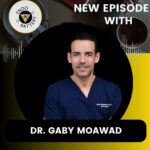
AI might finally shrink the brutal seven-to-eleven-year journey to endometriosis diagnosis—but only if we pair smarter tools with real clinical judgment. We sit down with Professor Gaby Moawad, a global leader in robotic surgery and endometriosis management, to unpack where technology genuinely helps and where hype can harm. From machine learning that flags lesions on imaging to microRNA biomarkers that stratify risk, we chart what’s promising, what’s premature, and how to avoid black-box mistakes.
We take you inside the OR to explore 3D modeling that transforms standard MRIs into color-coded maps of the pelvis in minutes, then overlays them in surgery for more complete, nerve-sparing excision. Precision is powerful, but ethics matter: surgeons must remain the final guardrail when algorithms error. Beyond the tech, we face the tough questions—why one-third of patients still have pain after surgery, how musculoskeletal drivers and pelvic floor dysfunction are missed, and why 30–50% of endometriosis surgeries may be unnecessary without comprehensive evaluation and aftercare.
We also probe hot topics: the seductive idea of “reprogramming” lesions through immune or epigenetic pathways, the complex links between COVID, vaccination, and inflammatory flares, and the huge research gaps that keep care one-size-fits-all. Subtyping, patient-reported outcomes like fatigue and bloating, and microbiome-informed strategies could reshape treatment, but only with rigorous studies and honest communication. The path forward is center-based, team-driven care anchored by informed consent that puts full information—and real choices—in your hands.
If this conversation sparks questions or clarity, help us reach more people navigating endometriosis: subscribe, share this episode with someone who needs it, and leave a quick review telling us what resonated most. Your engagement helps build better care, faster.
Website endobattery.com
Welcome And Guest Introduction
SPEAKER_00
0:02
Welcome to Indobattery, where I share my journey with endometriosis and chronic illness while learning and growing along the way. This podcast is not a substitute for medical advice, but a supportive space to provide community and valuable information so you never have to face this journey alone. We embrace a range of perspectives that may not always align with our own, believing that open dialogue helps us grow and gain new tools. Join me as I share stories of strength, resilience, and hope, from personal experiences to expert insights. I'm your host, Alana, and this is Indobattery, charging our lives when endometriosis drains us. Welcome back to Indobattery. Grab your cup of coffee or your cup of tea and join me at the table. Today's guest is someone who's truly changing the landscape of endometriosis care. Professor Gabby Mawad is a globally recognized leader in robotic surgery and endometriosis management. He's a board-certified gynecologic surgeon and the founder of the Center for Endometriosis and Advanced Pelvic Surgery in Washington, D.C. Dr. Mawad has dedicated his career to advancing minimally invasive and robotic techniques, combining surgical innovation with deep, compassionate, patient-centered care. As director of robotic gynecologic surgery and associate professor at George Washington University, he's trained surgeons worldwide and helped redefine how we approach complex pelvic disease. He's been named Top Doctor in Washington, D.C. for nearly a decade and has authored over 125 peer-reviewed publications leading global conversations on endometriosis and surgical innovation. It's an honor to sit down and welcome a true pioneer and advocate for better outcomes for women everywhere. Please help me in welcoming Dr. Gabby Moad. Thank you, Gabby, for sitting down with me today and coming all the way to spend time with us.
SPEAKER_01
2:02
I want to thank you and thank you for all the work you do. It's great that we have advocacy groups like you being able to change the paradigm in
AI’s Early Promise In Diagnosis
SPEAKER_01
2:11
patients understanding and patient education.
SPEAKER_00
2:13
We're going to look ahead at technology because this is something that you've explored significantly. The tools and how they've changed and plans for surgery and how diagnosis is going to change. So, AI and diagnosing, this has been a hot topic.
SPEAKER_01
2:28
No, no, I think we're at the infancy of AI impact on our daily life, even though it's making a tremendous progress. In endometriosis specifically, there are a few alleys that were exploited by AI. The first one that I can talk about is the imaging. The identification of the endometriosis lesions through machine learning can help diagnosing endometriosis. And then there are some studies that showed the accuracy is as much as expert. The other area where it's been worked upon is the biomarkers. The biomarkers, either through genetic or epigenetic or even products of the disease, are helping us to try to understand new ways of diagnosing non-invasive endometriosis. For example, there is a couple of tests that have been developed. They work on microRNA, which is a portion of the expression of the gene. And then they use artificial intelligence to try to stratify the severity of endometriosis and the phenotype. And this has been done through blood, through menstrual fluid, through saliva recently. So again, this is another thing. A lot of algorithms have been developed by combining patient symptoms, patient history, some of the imaging and lab results to create a stratification of the risk, and then that will make patients be referred earlier to a specialist and try to shorten the diagnosis length. Now it's all great, and I think the future will be going through that direction, but at this point, most of the studies they've been done, they've been done on you know homogeneous populations. So it's it's extremely hard to generalize it. And they've been done on different complexity of a disease. So again, we still need longer, more longitudinal studies to understand the impact and the accuracy of those studies. In addition to that, like machine learning behaves through neural networks. So whatever information you feed them, they will come up with the value or result. If you feed them bad information, they're gonna come up with a bad result. So bad data in, bad data out, there's no magic. The other concerning thing in most of the um the machine learning experiences, there is something what we call black box in machine learning. So you give them the information, but you don't understand how they came up with the result. And the result through those neural networks, they function, or mathematical algorithm, we arrive to a result that would be extremely difficult to explain it clinically. So we still need a lot to further our understanding in machine learning and artificial intelligence. But I think the this field is moving way faster, and we can tell in our real life, nobody googles anymore, everybody chat GPT,
Black Boxes, Bias, And Caution
SPEAKER_01
5:40
anything they want. So we should look at it considering we are the first protector of patients, right? As doctors or surgeons. We need to analyze carefully the innovation and its impact on our patients, uh, and it's our ethical obligation to do that. So we don't want to jump into technology very quickly, yet we don't want to miss the value of technologies to help us better the care for our patients.
SPEAKER_00
6:09
How do you think this is gonna change the learning for doctors? How do you think this is gonna change how they identify, treat, acknowledge endometriosis? Because I think, you know, the old method of you go to medical school, you learn out of a book. I do think that new doctors coming up are more curious. They're hearing more, they're more is accessible to them. But how do you think this is gonna change that for them and potentially the future outcome for endometriosis patients?
SPEAKER_01
6:40
I think now we struggle with the uh delayed diagnosis in an endometriosis patient. That's gonna help shortening the time from diagnosis to intervention. And this is an extremely valuable way because during that longer period of time, which in variable study, they say between seven and eleven years you get diagnosed with endometriosis. That lengthier period is the period where the patient's body harbors the disease and creates damage to the patient's body and multiple systems. So if you can shorter that, that we can intervene earlier and help managing and prevent some severe diseases that even in the best hand are extremely difficult to treat. In addition to that, that kind of help us analyze big data. Big data is that they need longer and strenuous efforts. Now it's becoming really easier to analyze, and that leads to deepening our understanding of the disease and then uh helping to generate a generalizable larger scale studies. So this is gonna be important in understanding the mechanisms of the disease, in understanding the different therapeutic approaches and impacts on the disease, in subtyping endometriosis. We don't talk enough about it because
Shortening Delays And Using Big Data
SPEAKER_01
7:58
not every endometriosis is the same. It doesn't behave the same surgically, it doesn't behave the same medically, it doesn't impact the same the patients. And embracing technology is extremely important for the younger generation and the doctors. Like everything, when you introduce a disruption in any field, right? There will be an earlier followers. They believe in it, they will be late followers, and they will always be conservative, then the train will pass them.
SPEAKER_00
8:25
Right.
SPEAKER_01
8:25
So the pioneers, early followers are gonna help, you know, um anchoring our understanding of the disease. The late followers will track and then uh this is how everything will go.
SPEAKER_00
8:38
If you had to give a chat GPT prompt to get the best information, say you're a patient looking for some sort of diagnosis, what would you do for that?
SPEAKER_01
8:48
Well, I I I try to avoid using chat GPT because I tested it for multiple things, like even on myself.
SPEAKER_00
8:55
Right.
SPEAKER_01
8:56
It's like he cites papers that I've never written. I go look at the paper and I tell him, like, this is not the paper I've written. Oh, I'm sorry, this is not I'm sorry, but like, oh no, this is the paper. So um technology is important. I use consensus, which for me it's a it's a great tool because consensus, you can go and type anything, and it will summarize the whole body of literature, thousands and thousands of articles about something. So that helps me even more understanding things. Right. Like uh last time I was doing uh a presentation on the recurrence of endometriosis, and then I could go and then they will stratify it and create an a very good understanding, but this is summarizing the literature right now. Again, I believe that those tools are still at their infancy and there will be more and more development in those tools. But I caution a lot of patients as much as it is easier to use, fact-checking is always important. Because even when you say, Oh, give me uh the site, some papers, literally their site paper, I go check them.
SPEAKER_00
10:08
Right. Yeah. Well, I mean, if you it's interesting because we we did this experiment, if you will, of explain endometriosis, define it. And it actually gave us like four different definitions.
SPEAKER_01
10:22
Yes, yes.
SPEAKER_00
10:23
And so I think it really that's where I'm like, I I'm a little hesitant to implement those things.
SPEAKER_01
10:29
Especially when you when you want to do if it for fun, you're you know, tell me how do you make uh I don't know uh gin vault gin tonic. What are the measurements? Yes, that's fine, because at the end, if he misses the ma uh the recipe, it's okay. But when you're trying to establish a therapeutic approach for a patient, we can't, you know, blindly trust them and then start getting the knowledge and the care for our patients through algorithm that we don't know how they're built, and then many times they need improvement. Gives you an idea. I think it gives you more of an idea rather than it gives you 100% accurate information.
SPEAKER_00
11:10
Yeah. Mine would just say tequila is the treatment.
SPEAKER_01
11:17
I feel like that would be my but I've learned like I I have a couple of friends who are very savvy in the artificial intelligence, and they told me even the chat GPT on your phone, you need to talk to them more frequently so they understand you.
SPEAKER_00
11:33
Yeah.
SPEAKER_01
11:34
So that's why you feed them information and they can, it's
Limits Of AI And The Human Touch
SPEAKER_01
11:40
like a baby. Yeah. You teach them things and they can do it better. And it's the same thing, which is scary.
SPEAKER_00
11:47
It is scary to think that they can read you so well after so long. It is a little scary to think about that. There's good and there's bad, right? And we have to take everything with with a side of caution. Of course, you know, which is why I don't think that, in my opinion, you can replace doctors with AI. And I think a lot of people are afraid of that. I think that people think it's coming sooner than later. But I don't think that you can replace humans and the human touch because that's healing in and of itself. But then just knowing the skill and the experience and everything else, I just don't think that that's gonna happen as soon as some may think.
SPEAKER_01
12:25
Uh I don't know. This is for me, I've never felt insecure of having somebody take my job. No, if you're confident in what you do, what care you provide, uh, there will always be the new doctor, there will always be the new tool, there will always be like if we look at medicine, 90% of medicine is common. 10% the challenging, this is when it requires more, you know, expertise.
SPEAKER_00
12:52
Right.
SPEAKER_01
12:53
But part of the medical treatment or the healthcare journey, there is a major part that is emotional.
SPEAKER_00
13:02
Yeah.
SPEAKER_01
13:03
Because we're human, we have emotions. The treatment is beyond a checklist.
SPEAKER_00
13:08
AI can't give you a warm touch.
SPEAKER_01
13:11
And this is why, like if it is for the patient better care, I'm happy to retire.
SPEAKER_00
13:19
That's big of you. We'll still need you around.
3D Modeling And Surgical Precision
SPEAKER_00
13:22
One of the things that we've I don't know if you've touched a lot on this, but I think we've you did present a little bit on this is 3D modeling for surgery specifically. How is that going to shift and change for patients and for surgeons?
SPEAKER_01
13:39
No, um, we started with 3D printing 10 years ago or so, where we 3D printed the model, and that has tremendous value for uh preparation for the surgery. Surgeons can see the uh the model, can see the uh structures around, they can pre-plan their surgery better. Also, that leads to completeness of surgery and detection of lesions in some areas where it's difficult to rely on the human eye and then the imaging alone, and also for uh teaching, teaching the newer doctors about the surgery, but also educating patients as well. It's important. But the 3D printing was costly, it requires a longer period of time to prepare, and it relies a lot on the technician experience. Nowadays, that there is mostly the work is on um trying to uh virtually 3D print like images from regular MRI. So the MRI would be translated to image color-coded that helps understanding also the same value as 3D, but it's faster now with the presence of artificial intelligence. It used to take us two days to segment an MRI, and now it takes one minute with AI, and you'll have a 3D image, and that has the same benefits, but the future and the work that a couple of companies are doing right now is overlaying those 3D printed, virtually 3D printed or digitally 3D printed images into the surgical field.
SPEAKER_00
15:13
Right.
SPEAKER_01
15:14
And that helps the surgeon more visualize things and that helps them towards a better precision in surgery, completeness of surgery, removal of the disease, respecting the surrounding structures. There are still challenges in the fact that again we need millions of surgery to be put into algorithm where the machine can learn how to do the stuff and then can do it accurately. And there is an ethical facet of this. What if the machine tells you that this is the stuff here and it was on a different side? So uh it should be always a balance of technology and the uh the contribution of the surgeon.
SPEAKER_00
15:58
Right.
SPEAKER_01
15:59
Because we cannot trust blindly technology, especially when we do invasive intervention. Yeah. It's helpful, it's good, but we have to create a lot of caution into blindly trusting. And this is what I see, and this is what I see more people now not utilizing the traditional thinking method versus everything, go chat GPT. Go and that leads to you know losing the ability to assess, analyze on the longer term, and maybe not, maybe I'm mistaken, but at this point I would be very cautious about the newer technology. Yet I would embrace them and try them and see the value because everything has value in what we do, but we need to extract the value to fit our patients' care.
SPEAKER_00
16:47
Right. It's a tool.
SPEAKER_01
16:48
Yes, it's a tool.
SPEAKER_00
16:50
Like and I think of that, you know, it can be a really good tool, but you still have to put the work in. You know, I I always think about Chat GPT, and I'll be like, I
Ethics Of Tech In The OR
SPEAKER_00
17:00
was really good at writing papers, and then Chat GPT came. And if the less you do it, the less you recall and are able to do it on your own. So there is risk with doing that, solely counting on something that isn't 100% accurate. Leaves room for error, just like human error.
SPEAKER_01
17:19
Yeah.
SPEAKER_00
17:19
It's just a computer human.
SPEAKER_01
17:21
So no, it's like stimulation of the brain is always an important thing.
SPEAKER_00
17:26
Yes, it is. Because we've talked about better tools, removing endriosis, but what about radical new ways to actually reprogramming or curing the disease? This is a hot topic that I think people don't really want to touch. But also, there's a lot of papers out there that could be either misleading or give false hope. And so I want to touch on this because we want to cure, right? Like this is how we as humans work. We want to cure, we want it to be better. Where are we in that direction? What's the science behind the reprogramming?
SPEAKER_01
18:03
If we look now at the status today, what is the treatment of randomitiosis? Excision surgery that helps removing the disease, yet it doesn't cure, disease can recur. Hormones, which can suppress the symptoms, slow down the disease in some patients, but also whenever you stop them, everything gets back to worse than before. Now the concept of lesion reprogramming emanates from the fact that what if we can change the behavior of endometriosis rather than it's a tremendous inflammation, it causes infiltration of other tissue, make it a benign cell that will not do any of that stuff or will not grow or will not infiltrate or will not cause pain. That's this uh the uh scientific
Reprogramming Lesions And Reality Check
SPEAKER_01
18:54
uh stuff. And it's extremely appealing. Now, in order to reprogram the behavior of any cell, including endometriosis cells, you need either to modify the genetic of the cell or the epigenetic of the cell, or the environment where the cell thrives. And these modification um we can see that some attempts have been done on immunomodulators for endometriosis because we know there is an immunologic uh uh immunologic dysfunction and its impact on endometriosis uh growth and cells. So immunomodulating and there have been trials on those immunomodulators with variable uh results for the epigenetic or genetic expressions, this will become a little bit you know, cloudy. Right because um you go back to the COVID vaccine. The COVID vaccine was a need in an urgent situation. Where nobody knew what's going on. And now we know. Now if you ask in 2020, 100 people, 95 will take the COVID vaccine. In 2025, if you ask the same 100 people, 5% will take the vaccine. Because of we realized doing those genetic or epigenetic interventions created far more sequally than what we believe to. Now we have the chronic fatigue symptoms, we have the vasculitis, we have the long COVID, we have a lot of issues that we didn't gauge and we didn't expect it to happen.
SPEAKER_00
20:39
Right.
SPEAKER_01
20:40
And these kinds of interventions are still more on animal models, but again, translation of the information from animal models might not feed the human models. Many times in many of the studies. So I think as of yet, there is nothing really serious. There have been attempts to do on cells in mice or animal models to try to create that reprogramming. But most of the targets are working on genetic, epigenetic, and immunologic, and we don't know the long-term sequelae of these studies. So it's it's it's very appealing, a very sexy concept that appeals and gives hope to a lot of patients. I'm sure one day we'll reach out to some form of a therapeutic approach like this.
SPEAKER_00
21:33
Right.
SPEAKER_01
21:35
But uh nothing is serious right now, or nothing is extremely promising.
SPEAKER_00
21:42
So we're not that close compared to what some people might say.
SPEAKER_01
21:46
The speed of uh things evolving in this world are uh mind-boggling. So I don't know how close it is, but as of now, the evidence does not support any real progress on this.
SPEAKER_00
21:58
Interesting. Do you talking about COVID? Because I think that a lot of people with long COVID are
COVID, Immunity, And Symptom Flares
SPEAKER_00
22:05
now seeing symptoms worsen. Have you experienced that? Or is there anything that shows that COVID had an effect on those with endometriosis?
SPEAKER_01
22:15
Because I know this is gonna be a hot topic and I'm going off script, but there are a lot of studies that showed that the COVID or even the COVID vaccine did increase the uh disease burden of endometriosis patients and the pain for endometriosis patients. And then it's it's an extremely complex situation because during the COVID, there is a high level of stress for everybody.
SPEAKER_00
22:37
Right.
SPEAKER_01
22:37
And we don't know whether it's a direct causality by giving the vaccine or doing the COVID. But the vaccine also induces an immune response to create the immunity. And that immune response, it might alter further the immune dysfunction that is already present and promote further inflammation and worsen inflammatory disease. Because we see a lot of patients that have joint pain increase, they have more vasculitis. So that means it's a progenitor of inflammation in the body, and that is more seen in patients who have an immune dysfunction.
SPEAKER_00
23:18
Yeah.
SPEAKER_01
23:18
Because it's a massive reaction. Whenever you take a vaccine, you have fever, you have chills. Some patients experience a lot of inflammatory symptoms. And then in patients with immune dysfunction who have endometriosis, who have lesions that strive or thrive on um inflammation, that helps worsening their inflammation and then their symptoms indirectly.
SPEAKER_00
23:43
It's crazy how we never really think about just how complex endometriosis can be with every environmental factor too. Whether it's stress, whether it's the air we breathe or the things that we take, or you know, we've talked so much about that, but I think that we can't control all of these things. What we can control are the ways that we address them. And that I think is going to maybe hopefully improve as time goes on. But I do, I mean, care and prevention for endometriosis takes greater understanding. And I think that's where when we talk about this, I think that patient movements a lot of times are what's going to push endometriosis care and improvement and research because it's already did and it will continue to because we we're not silent anymore. We have platforms and we're expecting more, demanding more, not only from providers, but also I think just our health systems. And I think we're seeing this wave of people that are are tired of feeling the way they feel. And as a patient, I can tell you 100% I am tired of feeling the way I feel half the time. So you do something about it. We're not silent anymore about that. How do you think that's going to change the research to potentially find maybe not a curative measure, but maybe a way to help prevent growth of endometriosis and its severity?
SPEAKER_01
25:11
Definitely, there is a lot of uh gaps in the research
Research Gaps And Subtypes
SPEAKER_01
25:15
in endometriosis. So we can start from the mechanisms of how endometriosis we only know bits and pieces here and there.
SPEAKER_00
25:24
Right.
SPEAKER_01
25:25
So further research about the mechanistics helps us understand the therapeutic of endometriosis.
SPEAKER_00
25:32
Yeah.
SPEAKER_01
25:32
If we understand more how the disease is formed, how does it affect, helps us understand how to target the therapeutic approaches? Another important gap is always we look at endometriosis as a whole disease and we fail to subtype it. So that would become a hurdle for personalized treatment.
SPEAKER_00
25:53
Right.
SPEAKER_01
25:54
You do have endometriosis, okay? And she does have endometriosis, but what's the difference between you and her?
SPEAKER_00
26:02
Right.
SPEAKER_01
26:03
You have the same name, right? But completely different approaches of treatment, completely different impact on different systems. So failing to subtype endometriosis or to understand the phenotypes of endometriosis will uh continue to carry a lot of confusion from the medical community and from the patient's understanding. So this is something as important also to research. The other thing is we always look at endometriosis from the window of fertility or pain. And then this means we're narrowing our understanding of a multisystemic beyond disease. Right. Everybody talks about how we can intervene to improve infertility, but nobody talks about what are the impact or mechanism of impact of endometriosis on infertility.
SPEAKER_00
26:57
Yeah.
SPEAKER_01
26:58
Because we're treating the symptoms, we're not treating the root cause. Again, we're looking at endometriosis as a disease that requires surgery, but we fail to do studies for patient-reported long-term outcome and impact on quality of life. It's beyond pain during sex pain, pelvic pain, pain during during pain. What about the bloating? What about the headaches? What about the uh excessive body weight? What about the fatigue?
SPEAKER_00
27:24
Right.
SPEAKER_01
27:25
Nobody in the studies study those as a primary outcome. Always, most of the studies study pain fertility. So, this is another thing. Uh major gap also in the research is how can we train people to be able to take care of the disease? How can we find solutions for early diagnosis? How can we use technology, biomarkers to help us do non-invasive? Also, about the therapeutic approaches of endometriosis, can we think in a different way?
SPEAKER_00
27:57
Yeah.
SPEAKER_01
27:58
Can we start thinking based on a molecular level, targeted therapy, cellular therapies? So all these kinds of things, a lot of gaps in holistic approaches to endometriosis in research.
SPEAKER_00
28:09
Right.
SPEAKER_01
28:10
Patients tell you, I've done an anti-inflammatory diet, my symptoms improved. The gut microbiome had its impact, the total body microbiome. For me, it is trying to, when we start to understand the microbiome, we understand that there is a value of the uterus.
SPEAKER_00
28:27
Right.
SPEAKER_01
28:28
And the uterus have a microbiome. And there's a value for the appendix if it's not affected.
SPEAKER_00
28:34
Yeah.
SPEAKER_01
28:34
The appendix controls most of the microbiome in the abdomen. It's not every endometriose patient, I go remove the appendix.
SPEAKER_00
28:41
Right.
SPEAKER_01
28:42
So these approaches that were practiced more could lead to uh with poor research, could lead to unnecessary interventions and then iatrogenic disruptions because sometimes we do cause harm if we don't understand what's the value of doing things.
SPEAKER_00
28:59
Yeah.
SPEAKER_01
29:00
The medications that we prescribe for endometriosis patients, we need to see how it impacts the whole ecosystem.
SPEAKER_00
29:06
Right.
SPEAKER_01
29:07
So there are a lot of research gaps. Pain. Nobody understands the pain. No. And there is an extremely poor understanding of the pain from endometriosis, from different lesions, from the heterogeneity of the locations. How does the pain uh is impact it? So this is why it saddens you where you see a disease that affects 10% of female patients. And yet the huge gap in research and funding
Microbiome, Diet, And Whole-Body Factors
SPEAKER_01
29:38
and understanding is mind-boggling, is jaw-dropping. It's just like God.
SPEAKER_00
29:43
Well, and also like we if you if you look at the gap in research, even for those with hormone imbalance, they don't do it's a tricky thing to do research on people who have fluctuating hormones all the time.
SPEAKER_01
30:00
Of course.
SPEAKER_00
30:01
So how much does I mean I would be curious to see how much the standard of care when it gets to the hysterectomy and how, you know, for those who are not maybe as experienced with endometriosis, they'll do a hysterectomy, euphorectomy. Then you have this hormonal imbalance. So how much does that affect the whole system and the microbiome and everything else? And there's just not a lot out there.
SPEAKER_01
30:26
Um it saddens me a lot, um, especially in some countries. I'm not gonna name the country because they won't know themselves. They still offer ophorectomy while they do hysterectomy.
SPEAKER_00
30:39
Yeah.
SPEAKER_01
30:41
Despite the recent solid studies, that surgical menopause or removal of the ovary during surgery does not only impact. I'm not gonna talk about the hot flashes and the bone density, but I will talk, it impacts the lifespan of a patient's patients with surgical ophorectomy dies earlier. I'm committing a patient to dying early by just doing an elective ophorectomy. Like if you have cancer, we understand. If you have irreparable ovary, completely damaged ovary, we understand. But we should all strive to keep even a piece of ovary or a total ovary.
SPEAKER_00
31:24
All of it if you can.
SPEAKER_01
31:25
Yes, yeah. So this is the thing. We still take things because we we learned how to do that from outdated guidelines that have no place in the recent medicine or the recent therapeutic approaches to patients with endometriosis.
SPEAKER_00
31:42
It's crazy. What is the in your mind? What are the risks of over-treating and over too many surgeries? Like what are some of the biggest risks associated with that? Because I mean, this is a big topic that we don't have to get all the way in, but I really feel like people are going back for reoccurring surgeries. They have, you know, treatment after treatment after treatment of hormones or whatever the case is. I mean, there's let me state some facts.
SPEAKER_01
32:09
30%, and that might be shocking for a lot of uh patients. Uh, 30% of patients with endometriosis have persistent pain after their surgery.
SPEAKER_00
32:19
Yeah, I believe.
SPEAKER_01
32:20
It's like one-third. Why? It's not always how we say it's an incomplete surgery.
SPEAKER_00
32:26
Right.
SPEAKER_01
32:26
It could be musculoskeletal, it could be pain pathways, it could be hypermobility, it could be some other factors that are help-producing or generating the pain. I'll give you a scenario. When a patient has persistent pain, the surgeon cannot understand that pushes the patient to seek care from another surgeon. The lack of experience, the poor understanding of the disease lead to premature another surgery. Repetitive surgery in many instances causes more damage, more scarring, more irreversible damage. For me, I'm happy every day to do a stage 17 endometriosis versus to do a stage three endometriosis that somebody
Surgical Menopause Risks And Outdated Care
SPEAKER_01
33:10
operated on incompletely.
SPEAKER_00
33:12
Yeah. Yeah.
SPEAKER_01
33:14
It's a disaster because like people start something, don't finish it, they create overscarring in the presence of the inflammatory disease that is persistent in addition from the inflammation of surgery. So all these lead to multiple unnecessary surgery. The complexity and multi-systemic facet of the disease creates a lot of symptoms that could be brushed under the endometriosis umbrella that are not belonging to endometriosis. Maybe you have a herniated disc. It doesn't mean that the low back pain that you have is from endometriosis that resists after surgery.
SPEAKER_00
33:56
Yeah.
SPEAKER_01
33:58
So this is something. There is an immune and systemic total body dysfunction, and it produces symptoms like we discussed the bloating. Patient think they continue to have bloating after surgery because first in the uh healing period the doctor tells them this is normal after surgery, but then after six months, they think endometriosis recurs.
SPEAKER_00
34:19
Right.
SPEAKER_01
34:20
Setting the expectation for patients in the presence of the uterus, even if the uterus is not affected, a lot of the time the uterus is a muscle that needs rehabilitation. That's why pain during the first three, four periods is still persistent because the uterus is a muscle is cramping and it's tender and it's been cramping for years. It's not gonna uh resolve after surgery. So having a period pain three, four months after surgery, is not a signal of persistence of the disease.
SPEAKER_00
34:51
Right.
SPEAKER_01
34:52
Now, what created that whole thing is the mistrust that happened between the caring and the patient, the caring provider and the patient. Because there is a mistrust, and there is also circulating a lot of misinformation that indirectly or directly gaslight the patient that push them to seek hope or false hope somewhere else.
SPEAKER_00
35:22
Yep.
SPEAKER_01
35:22
Saying, oh, I'm a better surgeon, I'm great at what I do, my patients are cured when I do surgery, I have zero recurrence rate. And that's why exploiting the vulnerability of endometriosis patients by selling them false hope is one of the social media perpetuated novel ways of gaslighting and should be a medical crime in that sense. So providing education, providing empowerment, providing help to patient support, creating strategy is what prevents this kind of fragmented care, silo care,
Over-Treatment, Pain Pathways, And Expectations
SPEAKER_01
36:02
no multiple provider, isolated care. And the uh caring should be in specialized endometriosis centers because it's such a complex disease with a major impact on the quality of life.
SPEAKER_00
36:18
Yeah, I agree. I I think that exploiting patients is egregious. It's it's not okay. But I do see everything, you know, we've talked about the whole system, the whole body, the AI, everything, how it works together. And I think what I want people to understand is there is hope. We are progressing, and it is good to be knowledgeable because I think that it will help you navigate your own journey, but it'll also hold those doctors more accountable the more knowledgeable the patients are as well.
SPEAKER_01
36:49
It's sad that we have to be more knowledgeable in a lot of ways, but understanding knowledge is power, understanding your body, understanding what might be causing. Uh you know, when you do any intervention on a patient, there is something called informed consent. Yes. And I know my friend uh Jeff talks about it a lot, and I I uh value a lot the messaging that he sends. Informed consent is just is not just vomiting complication risks or the intervention side effects. Informed means giving the right information, the total information for the patients to have the ability to decide what's best for her. Not what's best for me as a provider, what's best for her. So an informed is not hiding or sidelining information that might impact the approval of a patient for this procedure or another procedure or this therapeutic tool or another therapeutic tool. So that's why giving the patient the knowledge, patients are wise, they can decide what's best for them at this point of time.
SPEAKER_00
37:58
Yep.
SPEAKER_01
37:58
Some patients cannot do surgery tomorrow or next month. Some patients have social commitment, work commitment. They want to manage their life until they become ready for surgery. So we should be able to troubleshoot their life during that period of time with them.
SPEAKER_00
38:17
Right.
SPEAKER_01
38:18
So there are nothing is simplified in endometriosis care, considering the disease is very complex. But I don't like the fact that patients should find their care, their cure. I think it's our ethical obligations as doctor to help them and guide them through that route. And you should not be a doctor. Right. You came to a doctor because he spent his time studying and doing this thing so you can get the best care that you believe you should get. It's not your job to go research and Google and Chat GPT, your therapeutic approaches, and then figure out what's going on with you. It's my obligation to understand this. And this is the the pendulum swung the other way.
SPEAKER_00
39:09
Yeah.
SPEAKER_01
39:09
And I think it's about time to balance the pendulum. You're a patient, we empower you, we inform you, we take care of you, we give you the highest quality of care. And then you have some homework to do in taking care of yourself. I see a lot of time trying to help patients. What is a good surgeon? Who is an endometriosis exercise specialist? It's extremely important to educate patients. We're trying to work from the basis because this should, in an ideal health system, this should not happen.
SPEAKER_00
39:39
Right.
SPEAKER_01
39:40
Everybody should have the qualities and the skills and everything to help guide the patients and understanding. And that only comes from creating that paradigm shift that has started with advocacy group and then carried by knowledgeable doctors that can help spreading the information. Information and create research and studies to further our understanding of the disease and then this way establish a newer standard of care for endometriosis patients that would lead to a better outcome.
SPEAKER_00
40:12
Yeah. It's kind of like having it, you know, I always say we're the ones paying you, right? Like we're not gonna pay a contractor on our house and then go build the house ourselves. Yes.
Center-Based Care And False Hope
SPEAKER_00
40:25
Like that doesn't really make a lot of sense, right? We might have input on how it's built. We might have input on what we want out of it, and that's how it should be. But if you let me build a house, it's not gonna look pretty because I don't have the best information. I don't, I don't know how to do all of that stuff, like what the specifications should be. But I do think being a team with your provider is key. But you know, one of the things I've always said is there's a lack of curiosity with a lot of doctors. And time.
SPEAKER_01
40:59
It's a result, it's a result of the healthcare system. How is it created? It's a volume-based. The more you see, the more you make, the more the health system makes, you know, so it's it's uh also a broken circle that needs a major reform, the healthcare, because it pushes patients to chase the numbers rather than the quality of care. Yes. And then uh when I spent an hour and an hour and a half with the patients on her first consult with endometriosis, I could never do that in a university setting or where you know you have to spend 10, 15 minutes because you have to see 100 patients. And that that does not work, uh, you know. So I don't I I think there is a lot of blaming to doctors.
SPEAKER_00
41:46
Yeah.
SPEAKER_01
41:47
Uh, but I think we have also to reform the healthcare system.
SPEAKER_00
41:51
Yeah.
SPEAKER_01
41:51
To allow doctors, yesterday we were talking about something really uh uh touch me deeper when now uh healthcare practices will tell the doctor you cannot do surgeries more than an hour or a certain number of time. And I and I was telling you, this is some of the most dangerous practices because that lead to incompleteness of surgery, that lead to recklessness, that increases the stress, increases the surgical mistakes of a surgeon when they have a time limit. These are really very egregious practices that some of the healthcare systems are pushing among doctors.
SPEAKER_00
42:27
Yep. And it's more expensive. If you think about it, it's it's more expensive for the patient, it's more expensive for the hospital system. I mean, it's a reactive, not a proactive approach. And we all know that if you're reactive, outcomes typically aren't as great as if you're proactive, right? And so I think healthcare has become so reactive, such a band-aid in so many circumstances that it's really hard for a patient to feel seen in that 15-minute appointment, that 45-minute surgery, and to really have a better quality of life. Not to say that the surgeons aren't good, but to say that they are very limited by what they're given.
SPEAKER_01
43:06
And another shocking percentage, do you know, is uh looking at the literature, 30 to 50 percent of endometriosis surgeries are unnecessary.
SPEAKER_00
43:16
I believe it.
SPEAKER_01
43:17
So whenever
Informed Consent And Shared Decisions
SPEAKER_01
43:18
I see patients that have 15 surgeries, you know, uh it's it's shocking for me. Yeah. Imagine 15 times you put your patient at risk for poor understanding. I understand the recurrence of endometriosis, and recurrence is 2.9% in experts and 8.9% for endometriomas. That does not push one patient to have 15 surgery if you do the math. Having 15 surgery mostly is because of the misunderstanding of the disease, is the fragmented care, is uh because of the incompleteness of the surgery, the poor uh understanding of pain pathways and understanding how the disease affects or creates a lot of symptoms.
SPEAKER_00
44:03
Yeah. You know, and that's something that I always tell people when they come to me and they ask me questions about endometriosis. I'm still in pain, I'm looking at having another surgery. I always ask them, are there things that you have done to help support your body to this point? Are you seeing a pelvic floor physical therapist or a physical therapist in general? Have you done little exercises that help support your body? Because I know for me that if movement is power, it's exhausting, and if you overdo it, it's not good. But if you have good movement, it really helps a lot of that pain. You know, it gets us out of that pain cycle a lot of times. And so I always caution people to not think surgery first all the time, because it's a big decision with big outcomes potentially. You know, it it's certainly a helpful tool and it's definitely a way that we can address the disease, but again, is it always the disease or is it something else? You know? I mean, that's just what I've learned in my journey. It's not always the disease. There's other facets of this disease and other chronic illnesses that play with it. So where do you see yourself in the next 10 years progressing endometriosis?
SPEAKER_01
45:21
Hopefully, I'm retired. No, uh I will continue. I still enjoy a lot challenging the challenges, surgical challenges, the difficult cases. Uh, I think I will continue to do my research. I do we do a lot of research about endometriosis. Uh, the other thing I I love educating surgeons, standardizing technique for endometriosis surgery, and probably when I retire from clinical activity, I would like to continue this the education side, the research side, the understanding side, because this uh is is good for me and for my uh speedy brain all the time. I think individual
System Pressures And Time Limits
SPEAKER_01
46:05
efforts to impact communities, whether in surgeons, whether in patients, something that I uh enjoyed doing for the past years and I will continue to enjoy doing because if I can teach more people to fish, I don't need to fish for them.
SPEAKER_00
46:21
Yeah.
SPEAKER_01
46:21
In the sense when we help or we train or we teach one another, uh the impact will grow way fast way faster through these, hoping we can come to a better standardization, better utilizing the resource to provide better care beyond the negativity, the toxicity, the gaslighting, the things that are currently happening, whether on a healthcare system, whether on surgical skills system, whether on research and understanding basis. So all these will come together. I think this is a passion and you cannot retire from a passion. You can retire from certain jobs or exercises, but uh the passion will remain there. It was grown, it's really hard when you set the fire. Sometimes it's hard to uh turn it down.
SPEAKER_00
47:12
I mean, you're really good at it. You're really good at the education, so you can't stop. From a personal perspective.
SPEAKER_01
47:20
Hopefully, I I want to spend time with my kids, my family. This is this is also important uh because uh this takes uh a lot of toll uh on you. Caring for endometriosis is almost very similar to having endometriosis on the impact on societal relationship. You lose a lot of friends by being on the road trying to educate, you uh uh miss your family a lot. So at one point we need to pass the torch for the younger that will help pushing things way beyond what we've done, and that's the purpose of education to identify, create surgeons, champions, not surgeons. They could uh understand better the disease and create that impact more on the uh value of care they provide for their patients.
SPEAKER_00
48:12
Yeah. Well, I hope that you don't stop that anytime soon because I hope so. Because we need that. And thank you for taking the time to do exactly what you said you would do in coming out here and spending this quality time with us and allowing me to pick your brain and be educated about this and sharing that with so many other people. This will help impact those living with endometriosis to better understand. I am excited to see what's next. We'll do it together. If this episode helped recharge your indo battery, please take a moment to like and subscribe on YouTube. It really helps others in our community find these resources too. And if you're listening on a podcast app, leave a quick rating or a comment to show what resonated with you. Every bit of engagement helps us reach more people living with endometriosis and chronic illness
Unnecessary Surgeries And Alternatives
SPEAKER_00
49:10
and reminds them they're not alone. Until next time, continue advocating for you and for others.
Great Post.